

Browse
Records Added in 2026
Records added in 2026

392. LAPSE:2026.0215
Hybrid Modelling of Segmented Flow Extraction Process for Digital Twin Development in Critical Metals Recovery
June 12, 2026 (v1)
Subject: Modelling and Simulations
Keywords: active learning, critical metals, extraction, hybrid modelling, model-based design of experiments, segmented flow
Critical metals are indispensable in renewable, low-carbon, and hydrogen technologies due to their unique catalytic and electrochemical properties. They are primarily sourced through mining, which is associated with significant environmental impacts and geopolitical risks due to the uneven global distribution of ore deposits. As a result, efficient recovery of these metals from secondary sources such as electronic waste has become increasingly important. In this context, liquid-liquid extraction (LLE) has emerged as a promising separation technique due to its high selectivity and scalability. The development of intensified, continuous-flow LLE in small channels offers further advantages in terms of mass transfer efficiency, solvent utilization, and process sustainability, making it an attractive approach for the recovery of critical metals. A flow pattern known as segmented flow further enhances mass transfer in LLE in small channels. This work presents a hybrid modelling approach for... [more]
393. LAPSE:2026.0214
Beyond Decarbonization: Quantifying Circularity in Energy System Planning
June 12, 2026 (v1)
Subject: Modelling and Simulations
Keywords: Circular Economy, Energy Planning, Energy Systems, Renewable and Sustainable Energy
While the transition from traditional energy sources to renewable energy is necessary to reduce greenhouse gas (GHG) emissions, it introduces new challenges related to material use, both in quantity and type, potentially leading to resource scarcity, biodiversity loss, and waste accumulation. Therefore, incorporating circular economy (CE) principles into the design and planning of energy systems becomes essential. Despite the growing recognition of circularity, current assessments in energy systems focus on economic performance and GHG emissions. In this work, we propose a metric for quantifying circularity of energy systems based on the CE assessment framework MICRON, addressing the gap between CE metrics and energy systems planning. The framework is adapted to energy systems by accounting for the specific characteristics of energy technologies and by incorporating metrics associated with critical material use, scarcity, and durability. Its applicability is demonstrated through a case... [more]
394. LAPSE:2026.0213
Advancing Circularity in Biopharma: Leveraging Industrial Symbiosis for Resource Efficiency
June 12, 2026 (v1)
Subject: Modelling and Simulations
The biopharmaceutical sector has traditionally focused on cost-efficient process design and capacity planning to meet rising demand. Recently, sustainability pressures have increased, driving efforts to reduce the environmental footprint of manufacturing and supply chains; however, strict quality and sterilization requirements can limit the implementation of fully circular resource-use strategies. In this space, adopting an industrial-cluster systems view could unlock opportunities to improve sustainability of industrial clusters through coordinated material and energy exchange, supporting resource efficiency at cluster level and still meet sector-specific quality/sterilization requirements. In this work, we present life cycle assessment (LCA)-based comparative analyses to investigate the potential of industrial symbiosis within monoclonal antibody (mAb) manufacturing, whereby LCA process models are based on comprehensive techno-economic analyses that quantify resource inputs and waste... [more]
395. LAPSE:2026.0211
Integrated solvent and process design with technoeconomic and lifecycle assessment for solvent-based recycling of end-of-life vehicle plastics
June 12, 2026 (v1)
Subject: Modelling and Simulations
Keywords: Lifecycle Assessment, Process optimization, SAFT-? Mie, Solvent design, Solvent-based plastic recycling, Technoeconomic analysis
The accumulation of automotive plastic waste poses a growing environmental threat; while recycling has the potential to address this, its use remains limited by the complexity of the materials used in vehicle components. Specifically, the presence of mixtures of polypropylene (PP), polyethylene (PE), and polyoxymethylene (POM) in the materials makes mechanical recycling challenging due to the difficulty of separation. To address the inefficiency of current end-of-life management, we present a systematic computational framework integrating computer-aided molecular and process design (CAMPD) with technoeconomic assessment (TEA) and life cycle analysis (LCA) to design a solvent-based recycling process capable of producing near-virgin quality resins. This framework involves utilizing the SAFT-?? Mie equation of state to predict thermodynamic properties and employing nonlinear programming (NLP) to perform process optimization. From an evaluation of 875 solvent candidates, we identify 72 fea... [more]
396. LAPSE:2026.0210
Techno-economic feasibility of gallium recovery from semiconductor wastewater
June 12, 2026 (v1)
Subject: Modelling and Simulations
Keywords: circular economy, critical raw material, GaAs semiconductor wastewater, Gallium recovery, ion exchange, solvent extraction, techno-economic analysis
Gallium is a critical material with increasing demand driven by compound semiconductors such as gallium nitride (GaN) and gallium arsenide (GaAs) used in power electronics and optoelectronics and a highly concentrated supply chain, with 98 % of refined production occurring in China. While recycling remains limited, GaAs semiconductor manufacturing generates wastewater that can contain gallium concentrations ranging from 1-35 mg·L?¹, representing an underutilized secondary resource. This study evaluates the technical and economic feasibility of recovering gallium from GaAs semiconductor wastewater across an input range of 10-100 m³·d?¹ using process modelling and a techno-economic analysis comparing two alternative separation routes: ion exchange (IX) and solvent extraction (SX). Using a real-world industrial wastewater composition, IX achieves a higher overall recovery than single-stage SX (80.40 % vs. 62.54 %), which translates into consistently lower levelized costs of gallium. The r... [more]
397. LAPSE:2026.0209
Integration of carbon dioxide capture in a wine effluent biorefinery through the use of deep eutectic solvents
June 12, 2026 (v1)
Subject: Modelling and Simulations
Keywords: biorefinery, Deep Eutectic Solvents, techno-economic analysis, wine effluents
The wine industry generates large volumes of organic effluents, whose inadequate management poses significant environmental challenges but also offers opportunities for resource recovery. In this work, an integrated biorefinery scheme for the valorization of winery effluents is proposed and evaluated through steady-state simulation in Aspen Plus®. The biorefinery converts winery wastewater into a portfolio of value-added chemicals and biofuels, including levulinic acid, propylene glycol, formic acid, light gases, naphtha, sustainable aviation fuel, green diesel, and bioethanol, while enabling water recovery and carbon dioxide management. Two alternative CO2 capture routes are analyzed and compared: a conventional CaO-based carbonation-calcination process and an innovative absorption system using deep eutectic solvents (DES), specifically choline chloride-urea. Technical performance is assessed through chemical oxygen demand (COD) removal, recovery, conversion, yield, and product mass r... [more]
398. LAPSE:2026.0208
Optimization of Circular Supply Chains for Electric Vehicle Batteries
June 12, 2026 (v1)
Subject: Modelling and Simulations
The increasing popularity of electric vehicles (EVs) leads to an expected rise in the quantity of end-of-life lithium-ion batteries (LIBs) that require efficient management. This paper presents a State Task Network (STN) based optimization model to analyze and optimize the supply chain for LIBs, allowing for the selection of optimal processing routes, facility locations, capacities and reintegration of recovered materials, as well as analyzing the possible trade-offs between different end-of-life management strategies. Based on available data from the literature, the model is demonstrated with the LIB supply chain considering both primary production and different end-of-life strategies for spent LIBs (recycling and reuse). The case study reveals that mechanical pretreatment followed by hydrometallurgical recycling is the optimal pathway and it outperforms the linear supply chain in both costs and emissions. The cost optimal solution opts for more centralized collection and disassembly,... [more]
399. LAPSE:2026.0207
Lifetime-Adjusted LCA of Biochemical and Thermochemical Circular Plastic Pathways
June 12, 2026 (v1)
Subject: Modelling and Simulations
The transition from a linear, fossil-based polymer economy to a circular bio-economy is critical for mitigating resource depletion and greenhouse gas emissions. This study provides a rigorous comparison of two biomass-to-plastic pathways: a biochemical route (PLA via enzymatic hydrolysis) and a thermochemical route (bio-PE via gasification and MTO). Based on Aspen Plus simulations and a "lifetime-adjusted" lifecycle assessment framework, we evaluate the environmental performance of these routes in the transition from linear to circular systems. Unlike standard "cut-off" methods, the lifetime-adjusted model accounts for virgin make-up and molecular retention across multiple recycling cycles. Results indicate that at current 15% recycling rates, PLA exhibits the lowest global warming potential due to significant biogenic carbon sequestration. However, as recycling rates reach 75%, process efficiency becomes the dominant factor; the precise biochemical recycling of PLA continues to outper... [more]
400. LAPSE:2026.0206
Hybrid Modeling of a Sewage-Sludge Gasifier using Flowsheet Simulation and Machine Learning
June 12, 2026 (v1)
Subject: Modelling and Simulations
Keywords: data-driven, flowsheet simulation, gasification, hybrid model, machine learning, sewage sludge
This work presents a hybrid modelling approach for a downdraft sewage sludge gasifier within the Shit2Power (S2P) process. The gasifier is represented in CHEMCAD NXT by a series of four standard reactors that combine stoichiometric and equilibrium models with a data-driven correction step to account for deviations from ideal Gibbs equilibrium. Reaction conversions in the correction reactor are fitted to experimental synthesis gas compositions reported by Werle (2014) [7] for 30 operating points with varying equivalence ratios and reactor inlet air temperatures. The calibrated hybrid reactor model is evaluated against these data and shows conservative agreement for the combustible gas components of the synthesis gas. To overcome the limitations of linear interpolation between fitted operating points, several machine learning approaches are evaluated to predict the reaction conversions, and boosted neural networks are selected as a compromise between prediction accuracy and smooth behavi... [more]
401. LAPSE:2026.0205
Integrated Multiproduct Facility for the Green Production of Chemicals and Food from Apples
June 12, 2026 (v1)
Subject: Modelling and Simulations
Keywords: Apple pomace, Apples, Integrated facility, Mathematical optimization, Value-added products
An integrated multiproduct facility for the valorization of apple pomace in the green production of high value-added chemicals such as phenolic compounds and pectin, bioethanol, as well as apple juice, was optimally designed. The process includes green extraction technologies relying on subcritical water extraction and ethanol produced on-site through fermentation of residues. Two scenarios were evaluated: one based on purchasing the ethanol and another with on-site ethanol production. The units of the process were modeled using first principles. The process superstructure was formulated as a mixed-integer nonlinear programming problem, solved by decomposition. Investment and production costs of both alternatives were similar, with unit production requirements ranging from 1.09 €/L to 1.13 €/L. The discounted payback periods were 6.7 years and 6.4 years for the on-site ethanol production and purchased ethanol scenarios, respectively, while the internal rates of return were 36.4 and 37.... [more]
402. LAPSE:2026.0204
Computed-Aided Design of an Intensified Process for the Sustainable Production of Biodiesel from Waste Cooking
June 12, 2026 (v1)
Subject: Modelling and Simulations
Keywords: biodiesel, process design, reactive distillation, waste cooking oil
The utilization of low-quality vegetable oils as raw materials helps to reduce the production costs of biodiesel. Waste cooking oils are examples of this type of raw material, having a high content of free fatty acids. While biodiesel is a sustainable alternative to fossil fuels, conventional production methods face challenges due to low reaction rates and high energy demands. This study investigates pathways for biodiesel production from waste cooking oil using process intensification technologies in combination with biowaste-derived heterogeneous catalyst. Conventional and intensified (reactive distillation-based) processes are compared using Aspen Plus simulations as an analysis tool, focusing on the production of biodiesel from waste cooking oil (WCO) using CaO as a catalyst. According to the results, the conventional method at 60°C and 6:1 methanol-oil ratio achieves 95% conversion but suffers from high methanol use and long reaction times (65 min). The intensified process at 65-7... [more]
403. LAPSE:2026.0203
Process-Informed Design of Electrochemical Cells for Urea Production: A Techno-Economic and Systems Engineering Approach
June 12, 2026 (v1)
Subject: Modelling and Simulations
Keywords: Carbon Dioxide Sequestration, Life Cycle Analysis, Multiscale Modelling, Process Design, Technoeconomic Analysis, urea electrosynthesis
Conventional urea production is a centralized and fossil
intensive process associated with significant greenhouse
gas (GHG) emissions and limited flexibility for deep decarbonization. As an alternative, the Integrated COnversion of NItrate and Carbonate steams (ICONIC) project is developing innovative electrochemical urea (e
urea), via the co-electroreduction of nitrogen and carbon sources using renewable power. While recent research advances in electrocatalysis have demonstrated promising Faradaic efficiencies (FE) toward urea, the design of electrochemical systems involves inherent trade
offs between key performance indicators (KPIs) such as current density, cell voltage, and FE. Crucially, the implications of electrolyzer
level performance on plant
level economics and environmental impacts remain poorly understood. To address this gap, we integrate process modelling with techno
economic and life
cycle assessment (TEA-LCA) to evaluate the trade-offs of KPIs from a process systems per... [more]
404. LAPSE:2026.0202
Development of a Novel Microwave-assisted Process that Converts Mixed Plastic Waste to Olefins and Aromatics
June 12, 2026 (v1)
Subject: Modelling and Simulations
Keywords: Microwave-assisted Heating, Plastic Waste Pyrolysis, Process Design, Technoeconomic Analysis
Plastic waste represents an abundant and underutilized resource that can be converted into valuable products through microwave-assisted pyrolysis. In this research, a novel microwave-assisted processing plant that converts mixed plastic waste to olefins and aromatics is developed and simulated on Aspen Plus (v.14) guided by laboratory-scale experimental data. The experimental results show that at a bulk temperature of 400°C and ambient pressure, approximately 95% of a solid waste plastic feed comprised of equal portions of polypropylene and polyethylene is converted to gases, with nearly two-thirds of the resulting effluent gas composed of olefins. Simulation results show that 2889.1 kg/h propylene, 2088.0 kg/h ethylene and 96.3 kg/h aromatics (benzene and toluene) are produced as main products from 8000 kg/h of mixed plastic feed. High-purity propane and ethane streams were also recovered and sold as byproducts. A technoeconomic analysis is subsequently conducted, revealing that the p... [more]

405. LAPSE:2026.0047
Supplementary Materials - Evaluation of energy transition pathways for the instant coffee industry
June 3, 2026 (v1)
Subject: Uncategorized
Supplementary materials related to the paper "Evaluation of energy transition pathways for the instant coffee industry"

406. LAPSE:2026.0046
Cycle Design and Surrogate -Based Multi-Objective Optimisation of Magnetic Induction Swing Adsorption for Electrified Post-Combustion CO2 capture.
June 1, 2026 (v1)
Subject: Modelling and Simulations
This document includes the configuration design codes and the data produced from the simulation of Magnetic Inductive Swing Adsorption. Furthermore, the document also consists of the surrogates produced for the optimisation study. This reduces the installation of IDAES/Pyomo/PETSc in a new conda environment.
407. LAPSE:2026.0012
Source Code (VBA): Data exchange between flow chart simulation (CHEMCAD) and machine learning model (Python)
January 30, 2026 (v1)
Subject: Modelling and Simulations
Keywords: CHEMCAD, Flowsheet Simulation, Gasification, Machine Learning, VBA
Included in the CHEMCAD flowchart simulation model, this VBA source code extracts the inputs for the machine learning (ML) model from the simulation, passes them to the machine ML (Python), and sends the ML model outputs back to the simulation model. This code is not provided for direct use, but rather to demonstrate the methodology and as an aid for interested parties to develop their own solutions.
408. LAPSE:2026.0033
Supplementary Material for: A Multi-Objective Optimisation and Superstructure-Based Decision-Support Tool for Regional Low-Carbon Hydrogen Roadmaps: Methodology and Application to a region of Spain
February 2, 2026 (v1)
Subject: Energy Systems
This document provides supplementary material supporting the Conference Paper “A Multi-Objective Optimisation and Superstructure-Based Decision-Support Tool for Regional Low-Carbon Hydrogen Roadmaps: Methodology and Application to a region of Spain”.
It includes additional methodological details, input data, model assumptions, and extended results that complement the analyses presented in the main manuscript.
It includes additional methodological details, input data, model assumptions, and extended results that complement the analyses presented in the main manuscript.

409. LAPSE:2026.0044
SI Document - Optimization-based Design, Simulation and Data-Driven Learning for Resilient Manufacturing Systems
March 30, 2026 (v1)
Subject: Planning & Scheduling
Keywords: Design Under Uncertainty, Stochastic Optimization
Supporting Information document to submission for European Symposium of Computer Aided Process Engineering 2026

410. LAPSE:2026.0043
Inflation- and Energy-Adjusted Oil, Natural Gas, and Coal Prices: March 2026 Update
Inflasjons- og energi-justerte priser på olje, naturgass og kull: Oppdatering for mars 2026
March 27, 2026 (v1)
Subject: Energy Policy
Historical US prices for oil, natural gas, and coal from 1984 to March 2026. Prices are adjusted for inflation and are expressed on a per-energy content basis. Key historical events that cause changes to price are annotated.

411. LAPSE:2026.0042
Nuclear Energy in Norway: Why everyone is suddenly talking about it
Kjernekraft i Norge: Hvorfor alle plutselig snakker om det
March 25, 2026 (v1)
Subject: Energy Policy
Keywords: Carbon Dioxide, Norway, Nuclear, Nuclear Power, Policy
This talk provides background and context for the rapidly changing political shift toward support for nuclear energy in Norway. The talk explains why the Norwegian political discussion has changed, based on increased energy demand, bans or restrictions on most other forms of energy production in the country, its very low carbon footprint, and its relationship with energy policy in the EU. Also includes basic information on how nuclear power is produced and how it could be used in a Norwegian electric grid.
412. LAPSE:2026.0041
Data-Driven Multi-Objective Optimization of Energy, Environmental, and Economic Performances in Manufacturing with Physics-Consistent Deep Learning
March 24, 2026 (v1)
Subject: Planning & Scheduling
Aluminium cold rolling is an energy-intensive process that has a substantial impact on CO₂ emis-sions and production cost, yet plant-level optimization remains challenging due to strong process nonlinearities and various operational constraints. This study develops a physics-consistent hy-brid model that combines a Stone–Hitchcock–Ludwik analytical rolling-energy formulation with a residual deep neural network to predict the daily electricity consumption of three single-stand cold rolling mills. Using plant raw data, the hybrid model achieves lower prediction errors than conventional data driven model and yields line-specific physical parameters that agree well with the observed behaviour of each mill. On this basis, an NSGA-II-based tri-objective optimization is carried out to minimise daily energy use, CO₂ emissions, and specific production cost (SPC) by adjusting pass-wise reduction and tension schedules and line-wise production allocation. Case studies on a representative operating... [more]
413. LAPSE:2026.0040
Dynamic optimization of glucose feed in cell cultivation for monoclonal antibody production process design balancing productivity and impurity generation
March 13, 2026 (v1)
Subject: Process Design
The attached table shows the raw experimental data used for Figure 2 in the conference paper.
414. LAPSE:2026.0039
High Performance HPs Using Tailored Refrigerants: ESCAPE36 Digital Supplementary Information
August 24, 2026 (v3)
Subject: Optimization
Keywords: decarbonization, molecular design, Optimization, Process Design
Digital supplementary information for the ESCAPE36 conference paper titled: High Performance HPs Using Tailored Refrigerants
415. LAPSE:2026.0038
Supporting Information for: Beyond Tennessee Eastman: Benchmarking Deep Anomaly Detection on Real-World Pilot-Scale Continuous Distillation Data
February 2, 2026 (v1)
Subject: Process Monitoring
Keywords: Anomaly Detection, Continuous Distillation, Heteroazeotropic Distillation, Machine Learning, Pilot Plant Data, Tennesse Eastman Process
Anomaly detection is essential for keeping chemical plants safe and running efficiently. Although many deep-learning methods have been proposed, most are still tested mainly on synthetic benchmarks such as the Tennessee Eastman Process (TEP). While these simulators enable fair comparisons, they do not reflect the noise, complexity, and irregular fault behavior of real industrial plants. As a result, it remains unclear how well these models generalize in practice. In this work, we extend our earlier ESCAPE study and move beyond water systems to industrially relevant chemical processes. We analyze data from two continuously operated pilot plant scenarios at the Technical University of Munich: n-butanol/water heteroazeotropic distillation and poly(oxymethylene) ether purification. We published these datasets for the first time at NeurIPS 2025. In this work, 30 anomaly detection methods, including 26 deep-learning and 4 classical approaches, are benchmarked using the open-source TimeSeAD l... [more]
416. LAPSE:2026.0037
Synergistic integration of direct air capture in bioenergy systems
February 2, 2026 (v1)
Subject: Modelling and Simulations
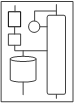
Model simulation flowsheet of biomass gasification combined cycle system for simultaneous power and hydrogen production coupled with direct air capture in Aspen Plus.
[0.04 s]