

Browse
Subjects
Records with Subject: Modelling and Simulations

5062. LAPSE:2023.0108
Molecular Model Construction and Optimization Study of Gas Coal in the Huainan Mining Area
February 17, 2023 (v1)
Subject: Modelling and Simulations
Keywords: gas coal, molecular modeling, quantum chemistry, structure optimization
To construct the macromolecular model of gas coal in the Huainan mining area, 13C nuclear magnetic resonance spectroscopy (13C-NMR), X-ray diffraction (XRD), and X-ray photoelectron spectroscopy (XPS) tests were used to analyze the microstructure characteristics of coal including the aromatic ring type, the linkage mode, and the chemical bonding composition. The model was simulated and optimized by molecular mechanics (MM) and molecular dynamics (MD). The experimental results showed that the coal macromolecular formula in the Huainan mine was expressed as C181H150O9N3. The aromatic ring was dominated by anthracene and phenanthrene. Aliphatic carbon mainly existed in the form of methylene and methine. The oxygen atoms existed in the form of ether−oxygen bonds. The ratio of pyridine nitrogen to pyrrolic nitrogen was 2:1. The molecular simulation results showed the π−π interaction between the aromatic lamellae within the molecule. The van der Waals energy was the major factor of coal mole... [more]
5063. LAPSE:2023.0088
Influence of Tip Clearance on Cavitation Characteristics of an Inducer of Turbopump: CFD Study
February 17, 2023 (v1)
Subject: Modelling and Simulations
Keywords: blade loading, inducer, radial force, rotating cavitation, tip clearance, tip leakage
The tip clearance, a compact gap between the inducer blade tip and casing wall, is critical to both the liquid leakage and cavitation-induced forces of a turbopump. In this study, we numerically investigate the effect of tip clearance on the cavitation characteristics of an inducer. Six different tip clearances, 0.1, 0.3, 0.5, 1.0, 1.5, and 2 mm, namely Models A−F, were designed to evaluate the cavitation performance, cavity structure, blade loading, radial force, etc. Model D (1.0 mm) had the relatively highest head coefficient and smallest cavity area on each blade as compared to all other models. The pressure coefficient distribution and blade loading further confirmed that Model D can maintain a higher pressure head and better suppress the cavitation onset than the other models. The radial force signals in the time and frequency domains show that Model D has an intermediate force magnitude with slightly higher noises at the rotating frequency and its harmonic frequencies. Model D a... [more]
5064. LAPSE:2023.0080
Numerical Simulations of Particle Motions at Continuous Rotational Speed Changes in Horizontal Rotating Drums
February 17, 2023 (v1)
Subject: Modelling and Simulations
Keywords: discrete element method, number of contacts, numerical simulations, particle segregation, rotating drums
The motion of binary particles in three horizontal rotating drums with continuous rotational speed changes was studied based on the Discrete Element Method (DEM). Different simulation conditions were compared between two circular drums and an elliptical drum using the same number of physical properties for binary particles and drums, rotating at a speed series from 0.01 to 21.9 rad/s. By varying the rotational speed, four flow regimes were produced in the simulation. Flow regimes, velocity vectors, normal forces, and the number of contacts between 1 mm particles and 3 mm particles were comparatively analyzed, especially the particle velocity at transient changing rotational speeds. The results showed that four flow regimes were found at the same rotational speed for three different rotating drums, and normal forces were weakest for the cataracting regime; moreover, the three layers of particles were damaged when the rotational speed was suddenly decreased and the velocity direction of... [more]
5065. LAPSE:2023.0079
Computational Fluid Dynamics Modeling of Single Isothermal and Non-Isothermal Impinging Jets in a Scaled-Down High-Temperature Gas-Cooled Reactor Facility
February 17, 2023 (v1)
Subject: Modelling and Simulations
Keywords: computational fluid dynamics (CFD), high-temperature gas-cooled reactor (HTGR), isothermal impinging jet, non-isothermal impinging plume, Reynolds numbers (Re), upper plenum
In the current work, the flow characteristics of single isothermal and non-isothermal jets discharging into the upper plenum of a 1/16th scaled-down high-temperature gas-cooled reactor (HTGR) facility were studied. ANSYS Fluent simulations were carried out in the central plane of the jet water flow and the upper plenum for different Reynolds numbers (Re) ranging from 3413 to 12,819. Then, the statistical jet water flow characteristics, such as the mean velocity, root-mean-square fluctuating velocity, Reynolds stress, and the mean temperature in the upper plenum, were computed and presented. The current study’s results showed that the flow maximum velocity occurred far from the jet inlet. Finally, the temperature profiles were plotted, and it was found that the maximum temperature of the flow occurred close to the plume inlet and after that decreased downstream.
5066. LAPSE:2023.0073
Numerical Simulation and Optimization of SCR-DeNOx Systems for Coal-Fired Power Plants Based on a CFD Method
February 17, 2023 (v1)
Subject: Modelling and Simulations
Keywords: Computational Fluid Dynamics, concentration field, flow field, optimal design, SCR
In order to solve the problem of the uneven distribution of the flow and ammonia concentration field in the selective catalytic reduction (SCR) denitrification system of a 660 MW coal-fired power plant, a three-dimensional computational fluid dynamics (CFD) model was established at a scale of 1:1. The existing flow guide and ammonia fume mixing device were then calibrated and optimized. The relative standard deviation of the velocity field distribution upstream of the ammonia injection grid (AIG) was optimized from 15.4% to 9.9%, with a reasonable radius of the deflector at the inlet flue elbows, and the relative standard deviation of the velocity field distribution above the inlet surface of the first catalyst layer in the reactor was optimized from 25.4% to 10.2% by adjusting the angle between the deflector and the wall plate of the inlet hood. Additionally, with the use of a double-layer spoiler ammonia fume mixing device, the relative standard deviation of the ammonia mass concentr... [more]
5067. LAPSE:2023.0070
The Numerical Analysis of Non-Newtonian Blood Flow in a Mechanical Heart Valve
February 17, 2023 (v1)
Subject: Modelling and Simulations
Keywords: Computational Fluid Dynamics, mechanical heart valve, non-Newtonian viscosity model, wall shear stress
Background: The non-physiological structure of mechanical heart valves (MHVs) affects the blood flow field, especially the complex microstructure at the hinge. Numerous studies suggest that the blood flow field in the aortic area with an MHV can be considered Newtonian. However, the Newtonian assumption is occasionally unreasonable, where blood viscosity changes with shear rate, exhibiting non-Newtonian shear-thinning characteristics. Methods: In this research, a comprehensive study of the non-Newtonian effects on the hemodynamic behavior of MHVs was performed. The impact of the Newtonian hypothesis was investigated on the internal hemodynamics of MHVs. Several non-Newtonian and Newtonian models were used to analyze the chamber flow and blood viscosity. MHVs were modeled and placed in simplified arteries. After the unstructured mesh was generated, a simulation was performed in OpenFOAM to analyze its hemodynamic parameters. Results: In the study of the non-Newtonian viscosity model, th... [more]
5068. LAPSE:2023.0068
Effect of Pouch Size on Sterilization of Ready-to-Eat (RTE) Bracken Ferns: Numerical Simulation and Texture Evaluation
February 17, 2023 (v1)
Subject: Modelling and Simulations
Keywords: bracken fern, heat transfer simulation, home meal replacement, sterilization, texture of cooked vegetable
Bracken fern (Pteridium aquilium, BF) is a widely consumed vegetable. It has the potential to be manufactured as a ready-to-eat (RTE) product as a cooking ingredient and a side dish. The aim of the current study was to develop sterilized BF RTE products and to investigate textural qualities depending on the size of the pouches. The F0-value at the cold point according to pouch size (100, 150, and 200 g) targeted at 15 min was determined through heat transfer simulation using the calibrated heat transfer coefficient. The location of the cold points in the stand-up pouches was moved upward from the bottom of the pouch by increasing the pouch size. The sterilization time for 100, 150, and 200 g was evaluated as 35.0, 41.5, and 47.5 min, respectively. The textural properties measured using the cutting test showed significant differences according to the location in the pouch. The textural degradation of BF in the top part of the pouch was more extensive than that at the bottom due to the s... [more]
5069. LAPSE:2023.0065
CFD Analysis of Mixing Process of Detergents in Rotational and Displacement Vessels
February 17, 2023 (v1)
Subject: Modelling and Simulations
Keywords: CFD simulation, detergent mixing, response surface for digital twin
As part of the European Commission research project DIY4U focused on the development of machinery to be installed in supermarket allowing customers to define their customized detergent according to their needs. These machines will mix the detergent components (surfactant, fatty acid, water, perfume, etc.) already in the detergent canister as sold to consumers. To avoid long waiting times for customers, and to obtain a product with good quality and consistency, mixing must be very efficient. A mixing process with rotation and displacement by means of rotating the canister around an axis below the canister bottom has been checked by means of Computational Fluid Dynamics (CFD) tools after validation of one case with lab results. This is a new approach for liquid detergents, as commonly is a powder detergent production process. The mixing process has been simulated for 39 different combinations of components mass fraction percentages and the mixing quality observed during the mixing period... [more]
5070. LAPSE:2023.0050
Numerical Simulation and Process Optimization of Magnesium Alloy Vehicle Dashboard Cross Car Beam (CCB) Based on MAGMA
February 17, 2023 (v1)
Subject: Modelling and Simulations
Keywords: die casting, magnesium alloy, process optimization, response surface experiments
At present, the qualified rate of large thin-walled magnesium alloy castings is low. In this study, the effects of mold structure and process parameters were investigated to improve the production qualification rate of castings. The filling process of die castings was simulated by numerical simulation technology to optimize their structure. On the basis of an optimized mold structure, the process parameters of die castings were optimized using a response surface model, and a group of optimal process combinations were obtained: pouring temperature—660 °C; mold preheating temperature—200 °C; injection speed—6.5 m/s. The rationality of the optimized mold structure and process parameters is verified by die-casting experiments. The results show that the optimized mold structure and process parameters can effectively reduce the internal shrinkage cavity casting defects of automotive CCB castings, and effectively improve the production qualification rate of magnesium alloy CCB castings. This... [more]
5071. LAPSE:2023.0041
A Review on Modeling Variable Renewable Energy: Complementarity and Spatial−Temporal Dependence
February 17, 2023 (v1)
Subject: Modelling and Simulations
Keywords: correlation, dependence, hydro generation, interdependence, Renewable and Sustainable Energy, scenario generation, solar generation, wind generation
The generation from renewable sources has increased significantly worldwide, mainly driven by the need to reduce the global emissions of greenhouse gases, decelerate climate changes, and meet the environmental, social, and governance agenda (ESG). The main characteristics of variable renewable energy (VRE) are the stochastic nature, its seasonal aspects, spatial and time correlations, and the high variability in a short period, increasing the complexity of modeling, planning, operating, and the commercial aspects of the power systems. The research on the complementarity and dependence aspects of VREs is gaining importance, given the development of hybrid generation systems and an array of VREs generators spread over a large region, which could be compounded by different renewable sources, such as hydro, solar, and wind. This review is based on a systematic literature review, providing a comprehensive overview of studies that investigated applied methodologies and methods to address dep... [more]
5072. LAPSE:2023.0035
Review: The Calibration of DEM Parameters for the Bulk Modelling of Cohesive Materials
February 17, 2023 (v1)
Subject: Modelling and Simulations
Keywords: bulk calibration, cohesive material, contact models, discrete element method, review
Granular materials are abundant in nature, and in most industries, either the initial constituents or final products are in granular form during a production or processing stage. Industrial processes and equipment for the handling of bulk solids can only be improved if we can understand, model and predict the material behaviour. The discrete element method (DEM) is a numerical tool well-suited for this purpose and has been used by researchers and engineers to analyse various industrial applications and processes. However, before any bulk scale modelling can be undertaken, the input parameters must be carefully calibrated to obtain accurate results. The calibration of parameter values for non-cohesive materials has reached a level of maturity; however, the calibration of cohesive materials requires more research. This paper details the most prevalent contact models used to model cohesive materials—presented in a consistent notation. Moreover, the significant differences between the mode... [more]
5073. LAPSE:2023.0019
A Simple Analytical Approach to Simulate Underbalanced- drilling in Naturally Fractured Reservoirs—The Effect of Short Overbalanced Conditions and Time Effect
February 17, 2023 (v1)
Subject: Modelling and Simulations
Keywords: flow efficiency, formation damage, fractured reservoir, short overbalanced pressure, time effect, underbalanced drilling
This paper describes an analytical approach to investigate the nature of short overbalanced conditions and time effects during underbalanced drilling (UBD) in a naturally fractured reservoir. This study uses an analytical model which is developed for kinetic invasion of mud into the fractures. The model is based on fluid flow between two parallel plates, which is further extended to model the fluid flow in a fractured formation. The effect of short overbalanced pressure and the time effect during UBD as well as the aspects of well productivity and flow efficiency are explained. This model is an Excel-based program and provides a fast and convenient tool for analysis and evaluation of drilling conditions (mud properties, time, and pressure of drilling) in a fractured formation. The model can also predict the impact of the fracture and mud properties on the depth of invasion in the fractured formations.
5074. LAPSE:2023.0004
Exergy Tables: Aspen Simulation Examples
Eksergitabeller: Aspen Plus simuleringseksempler
March 21, 2023 (v2)
Subject: Modelling and Simulations
Keywords: Aspen Plus, Carbon Capture, Carbon Dioxide Capture, Carbon Dioxide Sequestration, Modelling, Natural Gas, Simulation
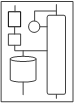
Example Aspen Plus chemical process simulations used in the book Exergy Tables: A Comprehensive Set of Exergy Values to Streamline Energy Efficiency Analysis, by Lingyan Deng, Thomas A. Adams II, and Truls Gundersen (McGraw-Hill Education, 2023). The examples are:
1. Medium-pressure steam generation using a natural-gas powered boiler
2. Medium-pressure steam generation using a natural-gas powered boiler with an economizer
3. Medium-pressure steam generation using an off-gas powered boiler
4. Postcombustion CO2 capture using diglycolamine (DGA) with CCS
Note, stream conditions may vary slightly from those in the book when simulated with different versions of the software.
Files are Aspen Plus v12.1, but should be openable on any version 12.1 or later.
1. Medium-pressure steam generation using a natural-gas powered boiler
2. Medium-pressure steam generation using a natural-gas powered boiler with an economizer
3. Medium-pressure steam generation using an off-gas powered boiler
4. Postcombustion CO2 capture using diglycolamine (DGA) with CCS
Note, stream conditions may vary slightly from those in the book when simulated with different versions of the software.
Files are Aspen Plus v12.1, but should be openable on any version 12.1 or later.
5075. LAPSE:2023.0002
Life cycle analyses of SOFC/gas turbine hybrid power plants accounting for long-term degradation effects
January 5, 2023 (v2)
Subject: Modelling and Simulations
SimaPro model used in this work.

5076. LAPSE:2022.0149
Cogeneration energy managment center with short-term thermal storage
November 16, 2022 (v1)
Subject: Modelling and Simulations
Keywords: Cogeneration, District Heating, TRNSYS
This file TRNSYS simulation studio file represents a cogeneration energy management center. It uses a mix of built-in and and in-house equipment models, as well as external data files. The external files used are in the context of Canada, province of Ontario, but they can easily be swapped by others.
The system is a closed loop that uses three temperature water headers to connect the following equipment: Cogeneration internal combustion engine, hot water tank, natural gas boiler, and heat exchanger that can be connected to an external, heat delivery loop such as the ones used in district heating.
The system is a closed loop that uses three temperature water headers to connect the following equipment: Cogeneration internal combustion engine, hot water tank, natural gas boiler, and heat exchanger that can be connected to an external, heat delivery loop such as the ones used in district heating.
5077. LAPSE:2022.0142
A Quality Integrated Fuzzy Inference System for the Reliability Estimating of Fluorochemical Engineering Processes
November 7, 2022 (v1)
Subject: Modelling and Simulations
Keywords: fluorochemical engineering process, fuzzy inference system, process reliability estimating, prognostics and health management, quality prediction
Hypertoxic materials make it critical to ensure the safety of the fluorochemical engineering processes. This mainly depends on the over maintenance or the manual operations due to the lack of precise models and mechanism knowledge. To quantify the deviations of the operating variables and the product quality from their target values at the same time and to overcome the measurement delay of the product quality, a novel quality integrated fuzzy inference system (QFIS) was proposed to estimate the reliability of the operation status as well as the product quality to enhance the performance of the safety monitoring system. To this end, a novel quality-weighted multivariate inverted normal loss function was proposed to quantify the deviation of the product quality from the target value to overcome the measurement delay. Vital safety process variables were identified according to the expert knowledge. Afterward, the quality loss and the vital variables were inputs to an elaborate fuzzy infer... [more]
5078. LAPSE:2022.0140
Effect of the Coupled Pitch−Yaw Motion on the Unsteady Aerodynamic Performance and Structural Response of a Floating Offshore Wind Turbine
November 7, 2022 (v1)
Subject: Modelling and Simulations
Keywords: aerodynamic performance, FOWT, platform pitching, platform yawing, structural response
The floating offshore wind turbines (FOWTs) have many more advantages than the onshore wind turbines, but they also have more complicated aerodynamic characteristics due to complex platform motions. The research objective of this paper is to investigate unsteady aerodynamic characteristics of a FOWT under the pitch, yaw, and coupled pitch−yaw platform motions using the computational fluid dynamics (CFD) method in the Unsteady Reynolds Averaged Navier-Stokes (URANS) simulations. The pitch, yaw, and coupled pitch−yaw motions are studied separately to analyze the platform motions’ effects on the rotor blade. The accuracy of the numerical simulation method is verified, and the overall performances, including power and thrust, are discussed. In addition, the comparison of total aerodynamic performance, force coefficients at different spans and structural dynamic response is provided. The numerical simulation results show that the platform pitching is the main influencing factor of power flu... [more]
5079. LAPSE:2022.0135
A Comparative Study on the Modelling of Soybean Particles Based on the Discrete Element Method
November 6, 2022 (v1)
Subject: Modelling and Simulations
Keywords: discrete element method, ellipsoidal equation model, multi-ball model, multiple contacts, particle modelling, soybean particles
To solve the poor universality in the existing modelling approaches of soybean particles, we proposed a soybean particle modelling approach by combining five, nine, and 13 balls. The soybean seeds from three varieties (Suinong42, Jidou17, and Zhongdou39 with a sphericity of 94.78%, 86.86%, and 80.6%, respectively) are chosen as the study objects. By the comparisons between the simulation results and the test results in the “self-flow screening” and “piling angle” tests, it is concluded that the soybean particle modelling approach we presented in this paper is a universal modelling approach appropriate for soybean particles with different sphericities. The five-ball model is appropriate for the soybean particles with high sphericity, and the nine- or 13-ball models are applicable to those with low sphericity. The soybean particle modelling approach we presented is also compared with the ellipsoidal equation modelling approach for soybean particles and with the modelling approaches prese... [more]
5080. LAPSE:2022.0129
Coarse-Grain DEM Modelling in Fluidized Bed Simulation: A Review
November 6, 2022 (v1)
Subject: Modelling and Simulations
Keywords: CFD-DEM, coarse graining, discrete element method, fluidization, multiphase flow, numerical modelling
In the last decade, a few of the early attempts to bring CFD-DEM of fluidized beds beyond the limits of small, lab-scale units to larger scale systems have become popular. The simulation capabilities of the Discrete Element Method in multiphase flow and fluidized beds have largely benefitted by the improvements offered by coarse graining approaches. In fact, the number of real particles that can be simulated increases to the point that pilot-scale and some industrially relevant systems become approachable. Methodologically, coarse graining procedures have been introduced by various groups, resting on different physical backgrounds. The present review collects the most relevant contributions, critically proposing them within a unique, consistent framework for the derivations and nomenclature. Scaling for the contact forces, with the linear and Hertz-based approaches, for the hydrodynamic and cohesive forces is illustrated and discussed. The orders of magnitude computational savings are... [more]
5081. LAPSE:2022.0127
Numerical Analysis of a Flow over Spheres Embedded on a Flat Wall
November 6, 2022 (v1)
Subject: Modelling and Simulations
Keywords: drag and separation control, flow control by wall shaping, flow over a rough wall, immersed boundary method, near-wall mixing intensification
This paper presents the results of numerical simulations of flow in a periodic channel with the walls covered in the central part by spherical elements that have the same overall surface areas but different radii. Two distributions of the sphere are considered, with the subsequent rows placed one after another or shifted. The computations are performed using the high-order code, whereas the solid elements are modelled with the help of the immersed boundary method. For selected cases, the results are validated by comparison with the solutions obtained using the ANSYS Fluent code on a very dense body-fitted mesh. It was found that the increase in the sphere diameter slows down the flow, which is attributed to the larger blockage of the channel cross-section caused by larger spheres and the occurrence of intense mixing (recirculation) between the spheres. The velocity profiles in the vicinity of the sphere are largely dependent on sphere diameter and rise when it increases. It was found t... [more]
5082. LAPSE:2022.0094
Hemoglobin Response Modeling under Erythropoietin Treatment: Physiological Model-Informed Machine Learning Method
October 21, 2022 (v1)
Subject: Modelling and Simulations
Keywords: Erythropoietin Therapy, Parameter Identification, Physics-Informed Neural Networks, Renal Anemia
Patients with renal anemia (RA) are usually treated with recombinant human erythropoietin (EPO) because of insufficient renal EPO secretion. The establishment of a good hemoglobin (Hgb) response model is a necessary condition for dose optimization design. The purpose of this paper is to apply physics-informed neural networks (PINN) to build the Hgb response model under EPO treatment. Neural network training is guided by physiological model to avoid overfitting problem. During the training process, the parameters of the physiological model can be estimated simultaneously. To handle differential equations with impulse inputs and time delays, we propose approximate analytical expressions for the pharmacokinetic (PK) model and weighted formulations for the pharmacology (PD) model, respectively. The improved PK/PD model was incorporated into PINN for training. Tests on simulated data show that the proposed method has good performance.
5083. LAPSE:2022.0118
Numerical Simulation of the Aerosol Particle Motion in Granular Filters with Solid and Porous Granules
October 31, 2022 (v1)
Subject: Modelling and Simulations
Keywords: Computational Fluid Dynamics, DEM, filter quality factor, granular filter, microporosity, particle deposition efficiency, pressure drop, spherical granules
In this work, a study was carried out to compare the filtering and hydrodynamic properties of granular filters with solid spherical granules and spherical granules with modifications in the form of micropores. We used the discrete element method (DEM) to construct the geometry of the filters. Models of granular filters with spherical granules with diameters of 3, 4, and 5 mm, and with porosity values of 0.439, 0.466, and 0.477, respectively, were created. The results of the numerical simulation are in good agreement with the experimental data of other authors. We created models of granular filters containing micropores with different porosity values (0.158−0.366) in order to study the micropores’ effect on the aerosol motion. The study showed that micropores contribute to a decrease in hydrodynamic resistance and an increase in particle deposition efficiency. There is also a maximum limiting value of the granule microporosity for a given aerosol particle diameter when a further increas... [more]
5084. LAPSE:2022.0116
Development of a Hydropower Turbine Using Seawater from a Fish Farm
October 31, 2022 (v1)
Subject: Modelling and Simulations
Keywords: Computational Fluid Dynamics, design factors, fish farm, optimum model, performance test, small hydropower, tubular turbine
Discharge water from fish farms is a clean, renewable, and abundant energy source that has been used to obtain renewable energy via small hydropower plants. Small hydropower plants may be installed at offshore fish farms where suitable water is obtained throughout the year. It is necessary to meet the challenges of developing small hydropower systems, including sustainability and turbine efficiency. The main objective of this study was to investigate the possibility of constructing a small hydropower plant and develop 100 kW class propeller-type turbines in a fish farm with a permanent magnet synchronous generator (PMSG). The turbine was optimized using a computer simulation, and an experiment was conducted to obtain performance data. Simulation results were then validated with experimental results. Results revealed that streamlining the designed shape of the guide vane reduced the flow separation and improved the efficiency of the turbine. Optimizing the shape of the runner vane decre... [more]
5085. LAPSE:2022.0115
Protonation Dynamics in the K-Channel of Cytochrome c Oxidase Estimated from Molecular Dynamics Simulations
October 31, 2022 (v1)
Subject: Modelling and Simulations
Keywords: hydrogen-bonded network, proton transfer, replica exchange, sampling
Proton transfer reactions are one of the most fundamental processes in biochemistry. We present a simplistic approach for estimating proton transfer probabilities in a membrane protein, cytochrome c oxidase. We combine short molecular dynamics simulations at discrete protonation states with a Monte Carlo approach to exchange between those states. Requesting for a proton transfer the existence of a hydrogen-bonded connection between the two source and target residues of the exchange, restricts the acceptance of transfers to only those in which a proton-relay is possible. Together with an analysis of the hydrogen-bonded connectivity in one of the proton-conducting channels of cytochrome c oxidase, this approach gives insight into the protonation dynamics of the hydrogen-bonded networks. The connectivity and directionality of the networks are coupled to the conformation of an important protein residue in the channel, K362, rendering proton transfer in the entire channel feasible in only o... [more]
5086. LAPSE:2022.0105
Analysis of the Heat Balance of a Metal Hydride Separator Used for the Separation of Hydrogen from Syngas
October 30, 2022 (v1)
Subject: Modelling and Simulations
Keywords: Energy, heat exchanger, modelling and simulation
The present article discusses the potential for hydrogen separation using a metal hydride separator, which facilitates the generation of hydrogen contained in syngas following the thermal recovery of wastes. The article provides a detailed description of the separator heat balance using analytical calculations and optimised calculations, and by applying numerical methods. The proposed concept of a separator intended for hydrogen separation from syngas offers a solution to a problem associated with the use of metal hydride alloy powders; in particular, their low thermal conductivity. In order to eliminate big temperature differences in the alloy, a heat transfer intensifier was implemented in the metal hydride alloy volume; the intensifier was made of metal and exhibited high thermal conductivity. For the purpose of comparing the thermal fields, the first stage comprised the creation of a numerical simulation of hydrogen absorption without the use of an intensifier. Subsequently, three... [more]
[Show All Subjects]