

Browse
Subjects
Records with Subject: Modelling and Simulations

369. LAPSE:2023.36915
Numerical Evaluation of the Effect of Buoyancy-Driven Flow on the Migration of Respiratory Droplets
November 30, 2023 (v1)
Subject: Modelling and Simulations
Keywords: buoyancy, dispersion, indoor, respiratory droplet, Simulation.
The understanding of the impact of buoyancy-driven flow on the migration of respiratory droplets remains limited. To investigate this phenomenon, the Lagrangian−Eulerian approach (k-ε turbulent model and discrete phase model) was employed to analyze the interaction between buoyancy-driven flow and coughing activity. The simulation approach was validated by simulating a jet problem in water. Although this problem describes the jet penetration in water, the governing equations for this problem are the same as those for coughing activity in the air. The results demonstrated that an umbrella-shaped airflow was generated above a person and a temperature stratification existed in the room. The buoyancy-driven flow significantly altered the dispersion pattern of the droplets. Notably, for large droplets with an initial diameter of 100 μm, the flow in the boundary layer led to an increased deposition time by about five times. Conversely, for small droplets with an initial diameter of 20 μm, th... [more]
370. LAPSE:2023.36879
Atomization of Borosilicate Glass Melts for the Fabrication of Hollow Glass Microspheres
November 30, 2023 (v1)
Subject: Modelling and Simulations
Keywords: CFD simulation, free-fall atomizer, glass melt atomization, hollow glass microspheres, low melting glass.
Direct atomization of a free-flowing glass melt was carried out using a high-speed flame with the aim of producing tiny, self-expanding glass melt droplets to form hollow glass microspheres. Atomization experiments were carried out using a specially adapted free-fall atomizer in combination with a high-power gas burner to achieve sufficient temperatures to atomize the melt droplets and to directly expand them into hollow glass spheres. In addition, numerical simulations were carried out to investigate non-measurable parameters such as hot gas velocities and temperatures in the flame region by the finite volume-based software Star CCM+® (v. 2022.1.1), using the Reynolds-Averaged Navier−Stokes (RANS) turbulence and the segregated flow model. To calculate the combustion process, the laminar flamelet method was used. The experiments and simulations indicated that a maximum gas velocity of about 170 m/s was achieved at the point of atomization in the flame. The particle size distribution of... [more]
371. LAPSE:2023.36873
Numerical Analysis of Viscous Polymer Resin Mixing Processes in High-Speed Blade-Free Planetary Blender Using Smoothed Particle Hydrodynamics
November 30, 2023 (v1)
Subject: Modelling and Simulations
Keywords: mixing processes, mixing simulation, planetary mixer, smoothed particle hydrodynamics, viscous fluid blending.
High-speed planetary mixers can rapidly and efficiently combine rheological liquids, such as polymer resins and paste materials, because of the large centrifugal forces generated by the planetary motion of the mixing vessel. Only a few attempts have been made to computationally model and analyze the intricate mixing patterns of highly viscous substances. This paper presents meshless flow simulations of the planetary mixing of polymeric fluids. This research utilized the smoothed particle hydrodynamics (SPH) approach for numerical calculations. This method has advantages over the finite-volume method, which is a grid-based computational technique, when it comes to modeling interfacial and free surface flow problems. Newtonian rheology and interfacial surface force models were used to calculate the dissipative forces in the partial differential momentum equation of fluid motion. Simulations of the flow of an uncured polyurethane resin were carried out while it was mixed in a planetary mi... [more]
372. LAPSE:2023.36871
Numerical Simulation and Experiment on Pill Coating of Red Clover Seeds under the Action of Vibrating Force Field
November 30, 2023 (v1)
Subject: Modelling and Simulations
Keywords: EDEM, red clover seeds, rotational speed, seed coating, vibration.
In order to solve the problem of the low qualification rate of the pilling and coating of small-grain forage seeds, a vibration force field is introduced to the traditional vertical disk coating machine to promote the mixing of materials and improve the qualification rate of the pilling. Using the typical small-grain forage seed red clover as an example, we used the vibration force field after adding seed powder particles to a coating pot for the theoretical analysis of the force situation, using the discrete element software EDEM to construct a red clover seed simulation model with the coefficient of discretization as the evaluation index. We studied the effects of the rotational speed of the coating pot, the vibration frequency of the pot, the amplitude of the vibration of the pot, and the other operating parameters of the pot on the uniformity of the seed powder mixing, with the pelletization of the pass rate as the physical evaluation standard, using a one-way test to study the eff... [more]
373. LAPSE:2023.36866
Numeric Investigation on the Stability of a Preformed Roadway under Backfill Body Subjected to Blasting Load
November 30, 2023 (v1)
Subject: Modelling and Simulations
Keywords: backfill body, blasting-induced damage, dynamic response, mine pillar recovery, preformed roadway.
Tungsten, essential in the industrial, military, and civilian domains and deemed a strategic resource by various nations, necessitates careful consideration in room and pillar mines due to the potential instability and safety hazards posed by untouched mine pillars, making tungsten recovery crucial for worker safety and economic gain. This research aims to provide guidance for recovering tungsten from mine pillars and making mining operations safer for workers in the Xianglushan mine. Numerical simulations are conducted to study the mechanical response of a preformed roadway in a backfill body subjected to static and dynamic loads with various explosive distances and positions. Blasting vibration velocity and blasting-induced damage in the backfill body are extracted to evaluate the mechanical response of the backfill body. The numerical results indicate that the steel frame and preformed roadway remain stable under the influence of both gravity and the impact from blasting, using a ch... [more]
374. LAPSE:2023.36861
Pneumatic Noise Study of Multi-Stage Sleeve Control Valve
November 30, 2023 (v1)
Subject: Modelling and Simulations
Keywords: aerodynamic noise, computational fluid dynamics (CFD), control valve, flow field, sound field.
This study considers the practical issue of severe noise observed in a multi-stage sleeve control valve within an engineering project. Employing computational fluid dynamics (CFD) methodology, we initially performed numerical simulations to analyze the steady-state flow field within the control valve. Subsequently, we identified the underlying factors contributing to the noise issue within the valve. To assess the aerodynamic noise of the control valve, we applied the FW-H acoustic analogy theory and determined the intensity and distribution characteristics of the aerodynamic noise. Finally, we validated the numerical simulation results of the aerodynamic noise against theoretical calculations. Our findings indicate that the steam medium experiences high-speed flow due to disturbances caused by various components within the valve, resulting in significant turbulence intensity. This intense turbulence leads to pressure fluctuations in the steam, serving as the main catalyst for noise ge... [more]
375. LAPSE:2023.36860
Molecular Modeling of Supercritical Processes and the Lattice—Gas Model
November 30, 2023 (v1)
Subject: Modelling and Simulations
Keywords: lattice gas model, non-ideal reaction systems, supercritical conditions, theory of the absolute rate of a reaction.
The existing possibilities for modeling the kinetics of supercritical processes at the molecular level are considered from the point of view that the Second Law of thermodynamics must be fulfilled. The only approach that ensures the fulfillment of the Second Law of thermodynamics is the molecular theory based on the discrete−continuous lattice gas model. Expressions for the rates of the elementary stage on its basis give a self-consistent description of the equilibrium states of the mixtures under consideration. The common usage today of ideal kinetic models in SC processes in modeling industrial chemistry contradicts the non-ideal equation of states. The used molecular theory is the theory of absolute reaction rates for non-ideal reaction systems, which takes into account intermolecular interactions that change the effective activation energies of elementary stages. This allows the theory to describe the rates of elementary stages of chemical transformations and molecular transport at... [more]
376. LAPSE:2023.36858
A Method for Defining Sedimentary Characteristics and Distributions and Its Application in Qinnan Depression, Bohai Bay Basin
November 30, 2023 (v1)
Subject: Modelling and Simulations
Keywords: geological model, paleogeomorphology, Qinnan depression, seismic facies, seismic forward modeling, stratigraphic pattern.
A new method incorporating geophysical analysis and geological analysis is proposed to define the sedimentary characteristics and distributions in basins with few drilling wells to promote the exploration of reservoirs. This method is applied to a study, through which its principles, closed-loop workflow and technologies are introduced in detail and the sedimentary characteristics and distributions of the study area are accurately defined. During the application process of the method, a compatible geological model is established, based on which the seismic data are interpreted and the results derived from the interpretation are further verified via seismic forward modeling. The study results exhibit a successive sand-rich deposition from the retrogradational gully-filling gravity flow deposition including near-shore fans, slope fans and basin-floor fans delimited by different slope break belts in transgressive sequences to the progradational delta deposition in a retrogressive sequence... [more]
377. LAPSE:2023.36854
Dynamic Characteristics Analysis of Metallurgical Waste Heat Radiative Drying of Thin Layers of Sewage Sludge
November 30, 2023 (v1)
Subject: Modelling and Simulations
Keywords: activation energy, dry model, effective diffusion coefficient, metallurgical waste heat, municipal sludge.
The utilization of metallurgical waste heat for urban sludge drying and dewatering not only affects the subsequent cost of sludge treatment but also provides a pathway for the rational utilization of metallurgical waste heat. The influence of different experimental conditions on sludge drying characteristics, such as drying temperature and thickness, was analyzed based on metallurgical waste heat. Based on the analysis and evaluation of the drying kinetics parameters of commonly used drying mathematical models, a modified Midilli drying kinetic model is proposed. The kinetic parameters and effective diffusivity of sludge drying were analyzed in three stages of sludge drying: rising rate, constant rate, and falling rate. By utilizing the Arrhenius equation, the relationship between the effective diffusion coefficient and thermodynamic temperature is established, revealing the apparent activation energies for the three stages of urban sludge drying as 29.772 kJ·mol−1, 37.129 kJ·mol−1, an... [more]
378. LAPSE:2023.36853
Research on the Positioning Accuracy of the Cutting Head of a Tunneling Machine Based on Ultra-Wideband Positioning Technology
November 30, 2023 (v1)
Subject: Modelling and Simulations
Keywords: cutting head of roadheader, distance measurement, positioning accuracy, ultra-wideband positioning.
Directed at the problems of low positioning accuracy and irregular section forming of cutting heads of road header in coal mine production sites, a new cutting head positioning system based on ultra-wideband positioning technology is proposed based on the cutting head motion model and the working principle of ultra-wideband positioning technology, which verifies the anti-interference and the accuracy of its positioning. Combined with the simulation experiment under on-site working conditions, the influence degree of three typical influencing factors on positioning accuracy was obtained, and the accuracy optimization of the ultra-wideband positioning system was guided. Through the dynamic solution experiment, the positioning accuracy of the system is measured, and the results are verified based on the positioning system solution accuracy evaluation standard.
379. LAPSE:2023.36852
Homogeneous Field Measurement and Simulation Study of Injector Nozzle Internal Flow and Near-Field Spray
November 30, 2023 (v1)
Subject: Modelling and Simulations
Keywords: Computational Fluid Dynamics, diesel fuel injector, internal flow, near-field spray, X-ray phase contrast imaging.
The homogeneous field measurement of internal flow and spray of internal combustion engine injector nozzles under high pressure has always been one of the difficulties in experimental research. In this paper, an actual-size aluminum alloy nozzle is designed, and the simultaneous measurement of internal flow and near-field spray is successfully realized with the help of synchrotron radiation X-ray phase contrast imaging technology under an injection pressure of 30~90 MPa. For a 0.25 mm aperture nozzle, different radii of the inlet corner can induce different cavitation layer thicknesses, and the measured flow section shrinkage ratio is 0.70. The flow characteristics in the nozzle are entirely connected to the jet characteristics, indicating a tight correlation between internal flow and jet morphology. Finally, the internal cavitation of the nozzle was studied by the CFD simulation, and the simulation results are in good agreement with the experiment.
380. LAPSE:2023.36848
Molecular Insight into the Occurrence Characteristics of Deep Oil with Associated Gas Methane and the Displacement Resistance in Water Flooding in Nano-Pore Throat
November 30, 2023 (v1)
Subject: Modelling and Simulations
Keywords: molecular dynamic simulation, oil with associated gas, the occurrence characteristics, water displacement oil and gas process.
In deep oil reservoirs, the existence of associated gas generally has a crucial impact on crude oil properties and flow performance. In this work, adopting molecular dynamic simulation, we studied the occurrence characteristics of oil with associate gas methane (the molar ratio of methane to oil rm/o were 1/4, 2/3, 3/2, and 4/1) in nano-pore throat and the displacement behavior of oil and methane in the water flooding process. Simulation results indicated: (1) an increasing replacement of the adsorption-status oil by methane as the methane content increased; (2) the oil and methane displacement efficiency was enhanced as the methane content increased in the water displacement oil and gas process; (3) the threshold displacement pressure gradually decreases as the methane content increases. The microscopic characteristics of the occurrence features and displacement performance of crude oil with associated methane in nano-pore throat were discussed in detail, and the underlying mechanism... [more]
381. LAPSE:2023.36832
Integration of a Chemical Heat pump with a Post- combustion Carbon Capture Sorption Unit
December 1, 2023 (v2)
Subject: Modelling and Simulations
Keywords: Chemical heat pump.
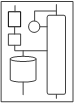
This is a aspen plus simulation of isopropanol based chemical heat pump. Here the products (mixture of isopropanol, acetone and hydrogen) from endothermic reactor/reboiler gets separated in the distillation column. The top distillate namely acetone and hydrogen go to the exothermic reactor where as the bottom product which is majorly isopropanol goes back to the endothermic reactor. The configuration 1 involves an exothermic reactor, a distillation column, and an endothermic reactor. The configuration 2 involves the reboiler acting as an endothermic reactor. In this case there is no separate endothermic reactor.
382. LAPSE:2023.36807
Gout Staging Diagnosis Method Based on Deep Reinforcement Learning
September 21, 2023 (v1)
Subject: Modelling and Simulations
Keywords: deep reinforcement learning, disease staging diagnosis, electronic medical records, gout.
In clinical practice, diseases with a prolonged course and disease characteristics at the time of diagnosis are often classified into specific stages. The precision of disease staging significantly impacts the therapeutic and curative outcomes for patients, and the diagnosis of multi-clinical-stage diseases based on electronic medical records is a problem that needs further research. Gout is a multi-stage disease. This paper focuses on the research of gout and proposes a staging diagnosis method for gout based on deep reinforcement learning. This method firstly uses the candidate binary classification model library for accurate diagnosis of gout, and then corrects the results of the binary classification through the set medical rules for diagnosis of gout, and then uses the machine learning model to diagnose different stages of corrected accurate data. In the course of the experiment, deep reinforcement learning was introduced to solve the hyperparameter tuning problem of the staging m... [more]
383. LAPSE:2023.36805
Semi-Analytical Modeling of Pyrolysis Front and Ignition Temperatures of Thermally Reactive Single Solid Particles
September 21, 2023 (v1)
Subject: Modelling and Simulations
Keywords: extremum temperature, ignition temperature, Modelling, pyrolysis, reaction-front temperature, thermally reactive solid.
A semi-analytical approach is developed for predicting pyrolysis front temperature in a charring solid undergoing thermal decomposition. The pre-reaction heating stage is described using an analytical formulation and invoking the concept of thermal penetration depth. The solution for the solid conversion stage accounts for decomposition enthalpy, the convective flow of volatiles, and a reaction front characterized by a uniform temperature that progresses toward the inner layers. This method incorporates empirical relations into the analytical model. Two scenarios are considered. First, the solution of the pyrolysis model combined with the data of conversion time versus external heat flux leads to an algebraic expression that reveals the existence of a maximum pyrolysis-front temperature. Explicit relations are derived for both the extremum pyrolysis temperature and optimum applied heat flux. In the second case, an expression is derived for the ignition temperature of a solid fuel (e.g.... [more]
384. LAPSE:2023.36790
Study of Tangential Effusion Cooling of a Combustor Liner
September 21, 2023 (v1)
Subject: Modelling and Simulations
Keywords: cooling efficiency, effusion cooling, heat and mass transfer, tangential inlet.
Tangential effusion cooling of a combustor liner has a large difference from traditional effusion cooling on a plate. In this paper, numerical simulation is carried out to study the flow field, heat transfer characteristics and the factors affecting the cooling effectiveness of tangential effusion cooling of a combustor liner. It is found that the cooling film formed by the tangential jet is distributed in a divergent “horsetail” shape and adheres tightly to the inner wall of the liner, which increases the cooling area and effectiveness. Three different tangential inlet cooling hole arrangements and their cooling efficiencies are studied, and several important parameters that affect the cooling effectiveness are summarized. Then, an improved cooling hole arrangement is proposed, and its cooling efficiency is studied and compared with those of the original three arrangements. The results show that the new arrangement significantly improves the comprehensive cooling efficiency and decrea... [more]
385. LAPSE:2023.36777
Influence of Blade Trailing-Edge Filing on the Transient Characteristics of the Centrifugal Pump during Startup
September 21, 2023 (v1)
Subject: Modelling and Simulations
Keywords: blade trailing-edge filing, centrifugal pump, startup, transient characteristics.
During the startup process of a centrifugal pump, the vibration and noise problems caused by unsteady flow are the focus of attention, and pressure pulsation is one of the main reasons for this problem. In the current research, a special impeller with blade pressure side trimming was proposed to reduce the strong pressure pulsation phenomenon during the startup process of centrifugal pumps. This article uses numerical simulation methods to simulate three typical blade trailing edges: original trailing edge (OTE), pressure side long linear (LLPS), and pressure side short linear (SLPS), and verifies them with experimental results. The results indicate that although the head of the centrifugal pump after filing has been reduced, its efficiency has been improved to a certain extent. Thirteen monitoring points were set up near the impeller outlet circumference and volute tongue to analyze the changes in pressure pulsation, verifying that blade trimming has a significant inhibitory effect on... [more]
386. LAPSE:2023.36775
CFD-DEM Simulation of Fast Fluidization of Fine Particles in a Micro Riser
September 21, 2023 (v1)
Subject: Modelling and Simulations
Keywords: back-mixing, cluster, DEM, fluidized bed, heterogeneous structure, numerical simulation.
In recent years, the discrete element method (DEM) has gradually been applied to the traditional fluidization simulation of fine particles in a micro fluidized bed (MFB). The application of DEM in the simulating fast fluidization of fine particles in MFB has not yet received attention. This article presents a drag model that relies on the surrounding environment of particles, namely the particle circumstance-dependent drag model or PCDD model. Fast fluidization in an MFB of fine particles is simulated using DEM based on the PCDD model. Simulations indicate that the local structure in an MFB exhibits particle aggregation, which is a natural property of fast fluidization, forming a structure where a continuous dilute phase and dispersed concentrated phase coexist. There exists a strong effect of solid back-mixing in an MFB, leading to relatively low outlet solid flux. The gas back-mixing effect is, however, not so distinct. The axial porosity shows a monotonically increasing distribution... [more]
387. LAPSE:2023.36772
Study on Oil Composition Variation and Its Influencing Factors during CO2 Huff-n-Puff in Tight Oil Reservoirs
September 21, 2023 (v1)
Subject: Modelling and Simulations
Keywords: CO2 huff-n-puff, influencing factors, numerical simulation, oil composition variation, tight oil.
With immense potential to enhance oil recovery, CO2 has been extensively used in the exploitation of unconventional tight oil reservoirs. Significant variations are observed to occur in the oil’s composition as well as in its physical properties after interacting with CO2. To explore the impacts of oil properties on CO2 extraction efficiency, two different types of crude oil (light oil and heavy oil) are used in CO2 huff-n-puff experiments. Moreover, numerical simulation is implemented to quantitatively inspect the impacts of different influencing factors including production time, reservoir pressure and reservoir temperature on physical properties as well as on the oil composition variation of the crude oil. The findings of the experiments demonstrate that, whether for the light oil sample or for the heavy oil sample, hydrocarbon distribution becomes lighter after interacting with CO2 compared with the original state. In addition, it is also discovered that the hydrocarbon distributio... [more]
388. LAPSE:2023.36768
Microparticles’ Lateral Oscillation Motion in Serpentine Micro-Channels without Inertial Lift Effects
September 21, 2023 (v1)
Subject: Modelling and Simulations
Keywords: dean drag, lateral motion, micro particles, serpentine microchannel.
Micro-particle manipulation, based solely on the Dean drag force, has begun to be advocated for with the goal of lowering the pumping pressure and simplifying the complexity of the coupling effects of the inertial lift force and the Dean drag force, thus reducing the difficulty of theoretically predicting particle motion. We employed the CFD-DEM two-way coupling method in this work to quantitatively study the lateral (z in axis) motion of particles (7−10 μm), in square or half-circle segment serpentine microchannels, that was only reliant on Dean drag with the blockage ratio dDh= 0.04 (the inertial lift effects show at dDh>0.07). In the square-segment serpentine channel, under the conditions of single-side-wall sheath flow and sedimentation, we discovered that the particles exhibit a twist-type lateral trajectory around each turn, with the larger particles always twisting in the opposite direction of the smaller particles, as a result of the four-grid-pattern distribution of the latera... [more]
389. LAPSE:2023.36728
Optimization of Drilling Parameters in Influence Area of Gas−Solid Interaction during Parallel Drilling Hole
September 21, 2023 (v1)
Subject: Modelling and Simulations
Keywords: directional boreholes, drilling parameters, gas extraction, numerical simulation, permeability.
Previous studies have established that the selection of gas extraction borehole parameters is crucial for the effectiveness of gas extraction. To more accurately determine the reasonable extraction radius of gas extraction boreholes in the coal seam, this study was based on the actual occurrence conditions of the coal body. A coal-seam gas-seepage model, considering dynamic changes in permeability under gas−solid coupling conditions, was constructed. It was combined with FLAC3D numerical simulations to develop a borehole extraction model closer to the field’s natural needs. The study revealed the influence of borehole diameter and spacing on gas extraction, obtained the radius of effect of borehole extraction, and optimized the gas extraction borehole parameters based on data simulation experiments. Multiple sets of experimental results indicated that the optimal parameters are a borehole diameter of φ = 113 mm and a borehole spacing of 5 m. Applying these parameters in on-site tests a... [more]
390. LAPSE:2023.36725
Mixing Characteristics and Parameter Effects on the Mixing Efficiency of High-Viscosity Solid−Liquid Mixtures under High-Intensity Acoustic Vibration
September 21, 2023 (v1)
Subject: Modelling and Simulations
Keywords: acoustic vibration, Computational Fluid Dynamics, high viscosity, Mixing, multiphase flow.
High-intensity acoustic vibration is a new technology for solving the problem of uniform dispersion of highly viscous materials. In this study, we investigate the mixing characteristics of high-viscosity solid−liquid phases under high-intensity acoustic vibration and explore the effect of vibration parameters on the mixing efficiency. A numerical simulation model of solid−liquid−gas multiphase flow, employing the volume of fluid (VOF) and discrete phase model (DPM), was developed and subsequently validated through experimental verification. The results show that the movement and deformation of the gas−liquid surface over the entire field are critical for achieving rapid and uniform mixing of the solid−liquid phases under acoustic vibration. Increasing the amplitude or frequency of vibration can intensify the movement and deformation of the free surface of gas and liquid, improve the mixing efficiency, and shorten the mixing time. Under the condition of constant acceleration, the mixing... [more]
391. LAPSE:2023.36724
Modified Model and Simulation Verification of Rock-Fatigue Damage Considering Repeated Discharge Impact
September 21, 2023 (v1)
Subject: Modelling and Simulations
Keywords: discharge shock wave, fatigue damage, micro-crack, modify the model, numerical simulation.
The existing rock-fatigue-damage constitutive model fails to consider the influence of discharge energy and discharge times on the effect of rock damage under discharge impact. In this regard, the impact load test of sandstone was carried out. Based on the test results, the quantitative characterization formula of different discharge parameters on the weakening degree of rock compressive strength was established. Based on the TCK (Taylor−Chen−Kuszmaul) model, a constitutive model considering the mechanical properties of rock and the dynamic hange of micro-crack geometric size is established, and the cohesive model is proposed to calculate the crack size. The constitutive model includes the relationship between crack width, crack number, and rock compressive strength, and the change of damage factor D is used to consider the fatigue-damage effect of discharge shock on the rock. The results show that the modified model can quantitatively and accurately reflect the dynamic damage and fail... [more]
392. LAPSE:2023.36723
Numerical Simulation of Flashing Flows in a Converging−Diverging Nozzle with Interfacial Area Transport Equation
September 21, 2023 (v1)
Subject: Modelling and Simulations
Keywords: flashing flow, interfacial area concentration, interfacial area transport equation (IATE), two-fluid model (TFM).
Flashing flows of initially sub-cooled water in a converging−diverging nozzle is investigated numerically in the framework of the two-fluid model (TFM). The thermal non-equilibrium effect of phase change is considered by an interfacial heat transfer model, while the pressure jump across the interface is ignored. The bubble size distribution induced by nucleation, bubble growth/shrinkage, coalescence, and breakup is described based on the interfacial area transport equation (IATE) and constant bubble number density model (CBND), respectively. The results are compared with the experimental data. Satisfactory prediction of the axial pressure distribution along the nozzle as well as the flashing inception, is achieved by the TFM-IATE coupling method. It was also found that the vapor production in the diverging section was overpredicted, and the radial gas volume fraction distribution deviated from the experiment. The radial diameter profiles exhibit opposite patterns at the nozzle throat a... [more]
393. LAPSE:2023.36720
Modelling the Effect of Water Removal by Reverse Osmosis on the Distillation of Mixtures of Short-Chain Organic Acids from Anaerobic Fermentation
September 21, 2023 (v1)
Subject: Modelling and Simulations
Keywords: anaerobic fermentation, Distillation, reverse osmosis, short-chain organic acids.
Anaerobic fermentation (AF) to produce sustainable short-chain organic acids (SCOAs) has found no commercial application so far. This is due to several limitations, including the high energy consumption of the SCOAs’ separation from water by distillation. This study used AspenPlus simulations to investigate the benefits of reverse osmosis (RO) to remove water and concentrate the SCOAs from AF before their separation by distillation. The effect of RO on distillation reflux ratio, heat energy requirements, column diameter and equipment costs was simulated for the processing of model SCOA-containing streams, representing AF effluents. A total of 90 simulations were carried out, investigating three different SCOA compositions, corresponding to different ratios of lactic, acetic and propionic acids, three different concentrations of the total SCOAs (10, 50, 100 g/kg in the stream entering RO) and different extents of water removal by RO. RO brought a reduction in the distillation reboilers’... [more]
[Show All Subjects]