

Browse
Keywords
Records with Keyword: Life Cycle Assessment

301. LAPSE:2023.1419
Life Cycle Energy Consumption and GHG Emissions of the Copper Production in China and the Influence of Main Factors on the above Performance
February 21, 2023 (v1)
Subject: Environment
Keywords: energy consumption, GHG emissions, life cycle assessment, refined copper, time-series
The copper demand and production in China are the largest in the world. In order to obtain the trends of the energy consumption and GHG emissions of copper production in China over a number of years, this paper uses a life cycle analysis method to calculate the above two indexes, in the years between 2004 and 2017. The life cycle energy consumption ranged between 101.78 and 31.72 GJ/t copper and the GHG emissions varied between 9.96 and 3.09 t CO2 eq/t copper due to the improvements in mining and smelting technologies. This study also analyses the influence of electricity sources, auxiliary materials consumption, and copper ore grade on the life cycle performance. Using wind or nuclear electricity instead of mixed electricity can reduce energy consumption by 63.67−76.27% or 64.23−76.94%, and GHG emissions by 64.42−77.84% or 65.08−78.63%, respectively. The GHG emissions and energy consumption of underground mining are approximately 2.97−7.03 times that of strip mining, while the influen... [more]
302. LAPSE:2023.1088
Life Cycle Assessment and Its Application in Wastewater Treatment: A Brief Overview
February 21, 2023 (v1)
Subject: Environment
Keywords: environmental impact, life cycle assessment, Sustainability, wastewater treatment plant
This paper provides a brief review on wastewater treatment system and the application of life cycle assessment (LCA) for assessing its environmental performance. An extensive review regarding the geographical relevance of LCA for WWTPs, and the evaluation of sustainable wastewater treatment by LCA in both developed and developing countries are also discussed. The objective of the review is to identify knowledge gap, for the improvement of the LCA application and methodology to WWTPs. A total of 35 published articles related to wastewater treatment (WWT) and LCA from international scientific journals were studied thoroughly and summarised from 2006 to 2022. This review found that there is lack of studies concerning LCA of WWTPs that consider specific local criteria especially in the developing countries. Thus, it is important to: (1) assess the influence of seasonality (i.e., dry and wet seasons) on the environmental impact of WWT, (2) investigate environmental impacts from WWTPs in dev... [more]
303. LAPSE:2023.0832
Tertiary Wastewater Treatment Technologies: A Review of Technical, Economic, and Life Cycle Aspects
February 21, 2023 (v1)
Subject: Environment
Keywords: chlorination, constructed wetlands, life cycle assessment, microalgae, ozonation, technoeconomic, tertiary wastewater treatment
The activated sludge process is the most widespread sewage treatment method. It typically consists of a pretreatment step, followed by a primary settling tank, an aerobic degradation process, and, finally, a secondary settling tank. The secondary effluent is then usually chlorinated and discharged to a water body. Tertiary treatment aims at improving the characteristics of the secondary effluent to facilitate its reuse. In this work, through a literature review of the most prominent tertiary treatment methods, a benchmarking of their technical efficiency, economic feasibility, and environmental impact was carried out. The photo-Fenton method proved to be the most technically efficient process, significantly reducing the microbial load and pharmaceutical content (by 4.9 log and 84%, respectively) of the secondary effluent. Chlorination and UV irradiation exhibited the lowest treatment costs (0.004 EUR/m−3) and the lowest global warming potential (0.04 and 0.09 kg CO2eq. m−3, respectivel... [more]
304. LAPSE:2023.0827
Life Cycle Energy Consumption and Greenhouse Gas Emissions Analysis of Primary and Recycled Aluminum in China
February 21, 2023 (v1)
Subject: Environment
Keywords: energy consumption, greenhouse gas emissions, Life Cycle Analysis, primary and recycled aluminum
Aluminum production is a major energy consumer and important source of greenhouse gas (GHG) emissions globally. Estimation of the energy consumption and GHG emissions caused by aluminum production in China has attracted widespread attention because China produces more than half of the global aluminum. This paper conducted life cycle (LC) energy consumption and GHG emissions analysis of primary and recycled aluminum in China for the year 2020, considering the provincial differences on both the scale of self-generated electricity consumed in primary aluminum production and the generation source of grid electricity. Potentials for energy saving and GHG emissions reductions were also investigated. The results indicate that there are 157,207 MJ of primary fossil energy (PE) consumption and 15,947 kg CO2-eq of GHG emissions per ton of primary aluminum ingot production in China, with the LC GHG emissions as high as 1.5−3.5 times that of developed economies. The LC PE consumption and GHG emiss... [more]
305. LAPSE:2023.0069
Assessing Long-Term Medical Remanufacturing Emissions with Life Cycle Analysis
February 17, 2023 (v1)
Subject: Environment
Keywords: carbon footprint, greenhouse gas emissions, Life Cycle Analysis, medical remanufacturing, single-use devices
The unsustainable take-make-dispose linear economy prevalent in healthcare contributes 4.4% to global Greenhouse Gas emissions. A popular but not yet widely-embraced solution is to remanufacture common single-use medical devices like electrophysiology catheters, significantly extending their lifetimes by enabling a circular life cycle. To support the adoption of catheter remanufacturing, we propose a comprehensive emission framework and carry out a holistic evaluation of virgin manufactured and remanufactured carbon emissions with Life Cycle Analysis (LCA). We followed ISO modelling standards and NHS reporting guidelines to ensure industry relevance. We conclude that remanufacturing may lead to a reduction of up to 60% per turn (−1.92 kg CO2eq, burden-free) and 57% per life (−1.87 kg CO2eq, burdened). Our extensive sensitivity analysis and industry-informed buy-back scheme simulation revealed long-term emission reductions of up to 48% per remanufactured catheter life (−1.73 kg CO2eq).... [more]

306. LAPSE:2023.0003
Life cycle analyses of SOFC/gas turbine hybrid power plants accounting for long-term degradation effects
January 5, 2023 (v1)
Subject: Uncategorized
In this study, cradle-to-product life cycle analyses were conducted for a variety of natural-gas-based and coal-based SOFC power plant conceptual designs, while also accounting for long-term SOFC degradation. For each type of plant, four base case designs were considered: a standalone SOFC plant, a standalone SOFC plant with a steam cycle, an SOFC/GT hybrid plant, and an SOFC/GT hybrid plant with a steam cycle. The boundary of each base case was subsequently expanded to include either wet cooling or dry cooling options and DC to AC conversion, and was subjected to additional cradle-to-product life cycle analyses. The environmental impact results were computed using ReCiPe 2016 (H) and TRACI 2.1 V1.05 in SimaPro. The main factors affecting the midpoint impacts between cases were the plant efficiency and total SOFC manufacturing required over the plant’s lifetime, which were both strongly connected to long-term degradation effects. The findings also showed that the standalone SOFC plant... [more]
307. LAPSE:2023.0002
Life cycle analyses of SOFC/gas turbine hybrid power plants accounting for long-term degradation effects
January 5, 2023 (v2)
Subject: Modelling and Simulations
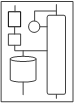
SimaPro model used in this work.
308. LAPSE:2022.0031
Comparative Life Cycle Assessment of Co-Processing of Bio-Oil and Vacuum Gas Oil in an Existing Refinery
October 12, 2022 (v1)
Subject: Process Design
Keywords: bio-oil, co-processing, Eco-indicator 99, FCC, LCA, vacuum gas oil
The co-cracking of vacuum gas oil (VGO) and bio-oil has been proposed to add renewable carbon into the co-processing products. However, the environmental performance of the co-processing scheme is still unclear. In this paper, the environmental impacts of the co-processing scheme are calculated by the end-point method Eco-indicator 99 based on the data from actual industrial operations and reports. Three scenarios, namely fast pyrolysis scenario, catalytic pyrolysis scenario and pure VGO scenario, for two cases with different FCC capacities and bio-oil co-processing ratios are proposed to present a comprehensive comparison on the environmental impacts of the co-processing scheme. In Case 1, the total environmental impact for the fast pyrolysis scenario is 1.14% less than that for the catalytic pyrolysis scenario while it is only 26.1% of the total impacts of the pure VGO scenario. In Case 2, the environmental impact of the fast pyrolysis scenario is 0.07% more than that of the catalyti... [more]
309. LAPSE:2022.0024
Is CCS really so expensive? An analysis of cascading costs and CO2 emissions reduction of industrial CCS implementation applied to a bridge
July 19, 2022 (v1)
Subject: Energy Policy
Keywords: Bridge, Carbon Capture and Storage, CCS, Cement, Cost-Benefit analysis, Life Cycle Analysis, Steel, Technoeconomic Analysis
Carbon capture, transport, and storage (CCS) is an essential technology to mitigate global CO2 emissions from power and industry sectors. Despite the increasing recognition and interest in both the scientific community and stakeholders, current CCS deployment is far behind targeted ambitions. A key reason is that CCS is often perceived as too expensive to reduce CO2 emissions. The costs of CCS have however traditionally been looked at from the industrial plant point of view which does not necessarily reflect the end-user’s perspective. This paper addresses the incomplete view by investigating the impact of implementing CCS in industrial facilities on the overall costs and CO2 emissions of end-user products and services. As an example, this work examines the extent to which an increase in costs of raw materials (cement and steel) due to CCS impact the costs of building a bridge. Our results show that although CCS significantly increases the cost of cement and steel, the subsequent incre... [more]

310. LAPSE:2021.0808
Dynamic Lifecycle Assessment of Solid Oxide Fuel Cell System Considering Long-Term Degradation Effects
December 15, 2021 (v1)
Subject: Process Operations
Keywords: Environmental impacts, Life Cycle Analysis, Performance degradation, SOFC
The submission includes SimaPro project for LCA of SOFCs with 10-year replacement plan, a text file explaining how to run the SimaPro file, and SOFC inventory tables provided in an Excel file.
311. LAPSE:2021.0278
Life Cycle Assessment Analysis of Alfalfa and Corn for Biogas Production in a Farm Case Study
April 29, 2021 (v1)
Subject: Food & Agricultural Processes
Keywords: alfalfa, bioenergy, biogas, corn, LCA
In the last years the greenhouse effect has been significantly intensified due to human activities, generating large additional amounts of Greenhouse gases (GHG). The fossil fuels are the main causes of that. Consequently, the attention on the composition of the national fuel mix has significantly grown, and the renewables are becoming a more significant component. In this context, biomass is one of the most important sources of renewable energy with a great potential for the production of energy. The study has evaluated, through an LCA (Life Cycle Assessment) study, the attitude of alfalfa (Medicago sativa) as “no food” biomass alternative to maize silage (corn), in the production of biogas from anaerobic digestion. Considering the same functional unit (1 m3 of biogas from anaerobic digestion) and the same time horizon, alfalfa environmental impact was found to be much comparable to that of corn because it has an impact of about 15% higher than corn considering the total score from di... [more]
312. LAPSE:2021.0174
Life-Cycle Assessment of Dairy Products—Case Study of Regional Cheese Produced in Portugal
April 16, 2021 (v1)
Subject: Food & Agricultural Processes
Keywords: cheese production process, cradle-to-gate, dairy industry, life cycle assessment, ReCiPe method
Nowadays, there is a growing promotion to label products ecologically in European markets. Knowing that daily products have relevant environmental impact associated with their production, it is of utmost importance to analyse all the related production processes for a better understanding of each process impact. The present study analysed the potential environmental impacts of a Portuguese regional product, the Beira Baixa cheese, coming from the largest national sheep milk region. So, a life cycle assessment (LCA) methodology is used from -cradle-to -gate, including the supplying of the animal feedstock. Impact calculations are performed using the ReCiPe midpoint 2008 method, allowing an analysis of the environmental impacts contributing to climate change, terrestrial acidification, freshwater and marine eutrophication of all productive processes. The results have shown that the greatest impacts occur within the milk production process for all four selected impact categories. This hap... [more]
313. LAPSE:2021.0109
Solar Photo-Assisted Degradation of Bipyridinium Herbicides at Circumneutral pH: A Life Cycle Assessment Approach
March 14, 2021 (v1)
Subject: Food & Agricultural Processes
Keywords: carbon footprint, circumneutral pH, diquat, ferrioxalate complexes, life cycle assessment, paraquat, photo-Fenton
This study investigated the degradation of the herbicides diquat (DQ) and paraquat (PQ) by a solar photo-Fenton process that is mediated by Fe(III)-oxalate complexes at circumneutral pH = 6.5 in compound parabolic collectors (CPC)-type reactors. The photo-Fenton process operates efficiently at acidic pH; however, circumneutral operation was key to overcome drawbacks, such as acidification and neutralization steps, reagent costs, and the environmental footprint of chemical auxiliaries. This work revealed a remarkable reduction of total organic carbon for PQ (87%) and DQ (80%) after 300 min (at ca. 875 kJ L−1). Phytotoxicity assays confirmed that the treatment led to a considerable increase in the germination index for DQ (i.e., from 4.7% to 55.8%) and PQ (i.e., from 16.5% to 59.7%) using Cucumis sativus seeds. Importantly, treatment costs (DQ = USD$8.05 and PQ = USD$7.72) and the carbon footprint of the process (DQ = 7.37 and PQ = 6.29 kg CO2-Eqv/m3) were within the ranges that were rep... [more]
314. LAPSE:2021.0104
Life Cycle Assessment and Economic Analysis of Biomass Energy Technology in China: A Brief Review
March 14, 2021 (v1)
Subject: Energy Policy
Keywords: biomass power generation, economic evaluation, environment load, life cycle assessment
This study describes the technological processes and characteristics of biomass direct combustion power generation, biomass gasification power generation, biomass mixed combustion power generation, and biomass biogas power generation in terms of their importance and application in China. Under the perspective of environmental and economic sustainability, the life cycle assessment (LCA) method and dynamic analysis method based on time value are used to simulate and evaluate the environmental loads and economic benefits of different power generation processes. By comparing with coal-fired power generation systems, the environmental and economic benefits of different biomass power generation technologies are illustrated. The results shows that biomass gasification power generation has the best environmental benefits, with a total load of 1.05 × 10⁻⁵, followed by biomass biogas power generation (9.21 × 10⁻⁵), biomass direct combustion power generation (1.23 × 10⁻⁴), and biomass mixed combu... [more]
315. LAPSE:2020.1138
Integrated Biorefinery of Empty Fruit Bunch from Palm Oil Industries to Produce Valuable Biochemicals
November 9, 2020 (v1)
Subject: Food & Agricultural Processes
Keywords: empty fruit bunch, fuzzy analytical hierarchy process, inherent safety, integrated biorefinery, life cycle assessment, multi-objective optimization, palm oil industry, technique for order preference by similarity to ideal solution, Technoeconomic Analysis
Empty fruit bunch (EFB) utilization to produce valuable bio-chemicals is seen as an economical and sustainable alternative to waste management in palm oil industries. This work proposed an integrated biorefinery configuration of EFB valorization considering sustainability pillars—namely, economic, environmental, and safety criteria. Techno-economic analysis, life cycle assessment, and hazard identification ranking methods were used to estimate annual profit, global warming potential (GWP), fire explosion damage index (FEDI), and toxicity damage index (TDI) of the proposed integrated biorefinery. A multi-objective optimization problem was then formulated and solved for simultaneous maximization of profit and minimization of GWP, FEDI and TDI. The resulting Pareto-optimal solutions convey the trade-off among the economic, environmental, and safety performances. To choose one of these optimal solutions for implementation, a combined approach of fuzzy analytical hierarchy process and a tec... [more]
316. LAPSE:2020.1046
Is Recycling Always the Best Option? Environmental Assessment of Recycling of Seashell as Aggregates in Noise Barriers
October 26, 2020 (v1)
Subject: Process Operations
Keywords: circular economy, construction, environmental sustainability, life cycle assessment, mollusk shell, porous concrete
Waste recycling is an essential part of waste management. The concrete industry allows the use of large quantities of waste as a substitute for a conventional raw material without sacrificing the technical properties of the product. From a circular economy point of view, this is an excellent opportunity for waste recycling. Nevertheless, in some cases, the recycling process can be undesirable because it does not involve a net saving in resource consumption or other environmental impacts when compared to the conventional production process. In this study, the environmental performance of conventional absorption porous barriers, composed of 86 wt % of natural aggregates and 14 wt % cement, was compared with barriers composed of 80 wt % seashell waste and 20 wt % cement through an attributional cradle-to-grave life cycle assessment. The results show that, for the 11 environmental impact categories considered, the substitution of the natural aggregates with seashell waste involves higher e... [more]
317. LAPSE:2020.0905
Comparison of Steel Manufacturing Off-Gas Utilization Methods via Life Cycle Analysis
July 31, 2020 (v1)
Subject: Other
Keywords: blast furnace gas, coke oven gas, combined cycle power plant, Life Cycle Analysis, methanol production
This study utilizes life cycle analysis to compare three steel manufacturing off-gas utilization systems: a status quo system, which produces electricity via a low-pressure steam turbine; a combined cycle power plant (CCPP) system, which produces electricity using gas and steam turbines; and a methanol (MeOH) system, which converts coke oven gas (COG) and blast furnace gas (BFG) into MeOH (CBMeOH). This research seeks to compare the environmental impacts of each system based on equivalent raw material inputs. Since the systems have different products, system expansion is used to ensure that they have the same outputs and are therefore comparable. The system boundary consists of a combination of cradle-to-gate and gate-to-gate boundaries. The environmental effects of each system are compared at five locations—Ontario, the USA, Finland, Mexico, and China—using TRACI, CML-IA baseline, ReCiPe2016, and IMPACT2002+ in SimaPro v9. The results show that in Ontario, Finland, and China, CBMeOH s... [more]
318. LAPSE:2020.0895
Environmental Assessment of Olive Mill Solid Waste Valorization via Anaerobic Digestion Versus Olive Pomace Oil Extraction
July 17, 2020 (v1)
Subject: Food & Agricultural Processes
Keywords: biogas, environmental impact, life cycle assessment, olive pomace, Sustainability
Anaerobic digestion is a promising alternative to valorize agrifood wastes, which is gaining interest under an environmental sustainability overview. The present research aimed to compare anaerobic digestion with olive pomace oil extraction, by using life cycle assessment, as alternatives for the valorization of the olive mill solid waste generated in the centrifugation process with a two-outlet decanter from oil mills. In the case of olive pomace oil extraction, two cases were defined depending on the type of fuel used for drying the wet pomace before the extraction: natural gas or a fraction of the generated extracted pomace. The anaerobic digestion alternative consisted of the production of biogas from the olive mill solid waste, heat and electricity cogeneration by the combustion of the generated biogas, and composting of the anaerobic digestate. The life cycle assessment showed that anaerobic digestion was the best alternative, with a global environmental impact reduction of 88.1... [more]
319. LAPSE:2020.0544
Spatial Life Cycle Analysis of Soybean-Based Biodiesel Production in Indiana, USA Using Process Modeling
June 3, 2020 (v1)
Subject: Modelling and Simulations
Keywords: biodiesel, Indiana, life cycle assessment, soybean, spatial
Life Cycle Analysis (LCA) has long been utilized for decision making about the sustainability of products. LCA provides information about the total emissions generated for a given functional unit of a product, which is utilized by industries or consumers for comparing two products with regards to environmental performance. However, many existing LCAs utilize data that is representative of an average system with regards to life cycle stage, thus providing an aggregate picture. It has been shown that regional variation may lead to large variation in the environmental impacts of a product, specifically dealing with energy consumption, related emissions and resource consumptions. Hence, improving the reliability of LCA results for decision making with regards to environmental performance needs regional models to be incorporated for building a life cycle inventory that is representative of the origin of products from a certain region. In this work, we present the integration of regionalized... [more]
320. LAPSE:2020.0308
Human Health Impacts of Aviation Biofuel Production: Exploring the Application of Different Life Cycle Impact Assessment (LCIA) Methods for Biofuel Supply Chains
March 25, 2020 (v1)
Subject: Energy Policy
Keywords: aviation biofuel, human health impacts, human toxicity, LCIA method, life cycle assessment, life cycle impacts assessment, sustainability assessment
The life cycle human health (HH) impacts related to aviation biofuels have been understood in a limited way. Life cycle impact assessment (LCIA) methods for assessing HH are often associated with a high level of uncertainty and a low level of consensus. As a result, it remains challenging to perform a robust assessment of HH impacts with a suitable LCIA method. This study aims to systematically compare six commonly used LCIA methods for quantifying HH impacts, in order to empirically understand the potential impacts of aviation biofuel production on HH and how the results are affected by the choice of methods. Three aviation biofuel production pathways based on different feedstocks (sugarcane, eucalyptus, and macauba) were analyzed and compared to fossil aviation biofuels, on the basis of a functional unit of 1 MJ aviation fuel. The majority of the LCIA methods suggest that, in respect to midpoint impacts, macauba-based biofuel is associated with the lowest impacts and eucalyptus-based... [more]
321. LAPSE:2020.0305
Comprehensive Environmental Impact Assessment of a Combined Petroleum Coke and Natural Gas to Fischer-Tropsch Diesel Process
March 13, 2020 (v1)
Subject: Other
In this study, a well-to-wheels life cycle assessment was conducted to determine the environmental impacts from disposing of petroleum coke by converting it into liquid fuel. Specifically, three processes for converting petroleum coke and natural gas to Fischer Tropsch diesel were investigated, both with and without carbon capture and sequestration (CCS). Impact categories were calculated using the EPA’s TRACI 2.1 US-Canada 2008 midpoint method in SimaPro software. In addition, the impact of grid emissions on the overall process was assessed using two representative Canadian locations with high (Alberta) and low (Ontario) grid emissions. The results of each impact category were compared among the designs and against conventional petroleum and oil-sands derived diesel. Key findings showed that the proposed designs when operated using CCS in the low-emissions-grid location had lower life cycle GHG emissions than conventional petroleum and oil-sands derived diesel. Nevertheless, the vario... [more]

322. LAPSE:2020.0267
Comparison of Steel Manufacturing Off-Gas Utilization Methods via Life Cycle Analysis
March 4, 2020 (v1)
Subject: Other
Keywords: Blast furnace gas, Coke oven gas, Combined cycle power plant, Life Cycle Analysis, Methanol production, SimaPro
This is a submission of source file of the life cycle analysis of steel manufacturing off-gas utilization systems using SimaPro V9. It includes five locations: Ontario, the USA, Finland, Mexico, and China.
323. LAPSE:2019.1616
Knowledge Mapping of Carbon Footprint Research in a LCA Perspective: A Visual Analysis Using CiteSpace
December 16, 2019 (v1)
Subject: Information Management
Keywords: a visual analysis, carbon footprint, CiteSpace, life cycle assessment
Carbon emissions are inevitably linked to lifestyle and consumption behaviours, and the concept of “carbon footprinting” is now well-recognised beyond academia. Life cycle assessment (LCA) is one of the primary tools for assessing carbon footprints. The aim of this paper is to present a systematic review of literatures focusing on carbon footprint calculated with life cycle assessment. We used CiteSpace software to draw the knowledge map of related research to identify and trace the knowledge base and frontier terminology. It was found that the LCA application in respects of carbon footprint studies was completed mainly for the following aspect: beef production and dairy industry, seafood and fishery, nutrition, urban structure and energy use. The CiteSpace analysis showed the development path of the above aspects, for example, beef production and dairy industry has been a long-term topic in this kind of research, while the topic of nutrition appeared in recent years. There was also a... [more]
324. LAPSE:2019.1595
Determination of the Least Impactful Municipal Solid Waste Management Option in Harare, Zimbabwe
December 16, 2019 (v1)
Subject: Energy Policy
Keywords: acidification, eutrophication, global warming, Harare, human health, life cycle assessment, life cycle impacts, life cycle stages, municipal solid waste management, Zimbabwe
Six municipal solid waste management (MSWM) options (A1−A6) in Harare were developed and analyzed for their global warming, acidification, eutrophication and human health impact potentials using life cycle assessment methodology to determine the least impactful option in Harare. Study findings will aid the development of future MSWM systems in Harare. A1 and A2 considered the landfilling and incineration, respectively, of indiscriminately collected MSW with energy recovery and byproduct treatment. Source-separated biodegradables were anaerobically treated with the remaining non-biodegradable fraction being incinerated in A3 and landfilled in A4. A5 and A6 had the same processes as in A3 and A4, respectively, except the inclusion of the recovery of 20% of the recoverable materials. The life cycle stages considered were collection and transportation, materials recovery, anaerobic digestion, landfilling and incineration. A5 emerged as the best option. Materials recovery contributed to imp... [more]

325. LAPSE:2019.0631
Systems Design of a Petroleum Coke IGCC Power Plant: Technical, Economic, and Life cycle Perspectives
July 12, 2019 (v1)
Subject: Modelling and Simulations
Keywords: Carbon Dioxide Capture, Electricity, Gasification, IGCC, Life Cycle Analysis, Petroleum Coke
The petroleum coke gasification integrated gasification combined cycle power plant (petcoke-IGCC) is a promising avenue for disposal of the ever-growing amount of stockpiled petroleum coke. In this work, we present a novel techno-economic and life cycle assessment of the process operated with carbon capture and sequestration. The proposed petcoke-to-electricity plant is designed and simulated in Aspen Plus v10. The proposed power plant was compared against coal integrated gasification combined cycle (coal-IGCC) and supercritical pulverized coal power plants operated with carbon capture and sequestration. The results showed that although the efficiency of the coal-IGCC plant is higher than the petcoke-IGCC plant, the higher energy density of the petcoke and lower resource costs were such that the levelized cost of electricity of petcoke-IGCC was lower than coal-IGCC. Furthermore, the feed flow rate of petcoke to the petcoke-IGCC process is approximately 15% lower than the coal feed rate... [more]
[Show All Keywords]
[0.07 s]