

Browse
Keywords
Records with Keyword: Modelling

451. LAPSE:2019.1013
PEM Fuel Cell Voltage Neural Control Based on Hydrogen Pressure Regulation
September 23, 2019 (v1)
Subject: Process Control
Keywords: control, feature selection, Modelling, neural network, PEM fuel cell, principal component analysis, system identification
Fuel cells are promising devices to transform chemical energy into electricity; their behavior is described by principles of electrochemistry and thermodynamics, which are often difficult to model mathematically. One alternative to overcome this issue is the use of modeling methods based on artificial intelligence techniques. In this paper is proposed a hybrid scheme to model and control fuel cell systems using neural networks. Several feature selection algorithms were tested for dimensionality reduction, aiming to eliminate non-significant variables with respect to the control objective. Principal component analysis (PCA) obtained better results than other algorithms. Based on these variables, an inverse neural network model was developed to emulate and control the fuel cell output voltage under transient conditions. The results showed that fuel cell performance does not only depend on the supply of the reactants. A single neuro-proportional−integral−derivative (neuro-PID) controller... [more]
452. LAPSE:2019.0974
Modeling of the Free Radical Copolymerization Kinetics of n-Butyl Acrylate, Methyl Methacrylate and 2-Ethylhexyl Acrylate Using PREDICI®
September 5, 2019 (v1)
Subject: Reaction Engineering
Keywords: 2-ethylhexyl acrylate, methyl methacrylate, Modelling, n-butyl acrylate, polymerization kinetics
Kinetic modeling of the bulk free radical copolymerizations of n-butyl acrylate (BA) and 2-ethylhexyl acrylate (EHA); methyl methacrylate (MMA) and EHA; as well as BA, MMA and EHA was performed using the software PREDICI®. Predicted results of conversion versus time, composition versus conversion, and molecular weight development are compared against experimental data at different feed compositions. Diffusion-controlled effects and backbiting for BA were incorporated into the model as they proved to be significant in these polymerizations. The set of estimated global parameters allows one to assess the performance of these copolymerization systems over a wide range of monomer compositions.
453. LAPSE:2019.0871
Distinct and Quantitative Validation Method for Predictive Process Modeling with Examples of Liquid-Liquid Extraction Processes of Complex Feed Mixtures
July 31, 2019 (v1)
Subject: Modelling and Simulations
Keywords: atpe, biologics, design-of-experiments, liquid-liquid extraction, Modelling, monte-carlo, quality-by-design, Simulation, validation, verification
As of today, industrial process development for liquid-liquid extraction and scale-up of extraction columns is based on an experimental procedure that requires tests in pilot-scale. This methodology consumes large amounts of material and time and the utilized scale-up equations are crude estimates including considerable safety margins. This approach is practical for well-known systems or low-value products coupled with high production scale, where such a scale-up methodology has less impact on the overall profitability. However, for new high-value products in biologics manufacturing, a process development based on process understanding and the use of validated process models is imperative. Therefore, a distinct and quantitative validation workflow for liquid-liquid extraction modeling is presented on the example of two complex feed mixtures. Monte-Carlo simulations based on the presented model parameter determination concept result for both examples in prediction accuracy comparable to... [more]

454. LAPSE:2019.0854
Poster: Graphical User Interfaces as Chemical Engineering Educational Tools in University and Informal Learning Environments
July 30, 2019 (v1)
Subject: Education
Keywords: Computational science, Curriculum, Education, Graphical user interface, Modelling, STEM Outreach
This presentation discusses the development and use of graphical user interfaces (GUIs) as cyber-assisted educational tools for instructing and engaging undergraduate chemical engineering students, training graduate students for computational research in science and engineering, and introducing lay audiences to chemical engineering concepts in informal learning environments outside of the classroom. A GUI encapsulates computational software within a visual environment where users can provide interactive input through brief text or point-and-click controls and display query or simulation results through an automated process without needing to learn a programming language or specific commands. MATLAB and Python are two popular software environments for science and engineering used in many university chemical engineering programs worldwide. Both provide excellent user support for rapid development of professional-quality GUIs by engineering educators, academic researchers, and science and... [more]
455. LAPSE:2019.0735
Experimental Analysis and Full Prediction Model of a 5-DOF Motorized Spindle
July 26, 2019 (v1)
Subject: Other
Keywords: experimental analysis, magnetic bearing, Modelling, prediction model, suspension force
The cost and power consumption of DC power amplifiers are much greater than that of AC power converters. Compared to a motorized spindle supported with DC magnetic bearings, a motorized spindle supported with AC magnetic bearings is inexpensive and more efficient. This paper studies a five-degrees-of-freedom (5-DOF) motorized spindle supported with AC hybrid magnetic bearings (HMBs). Most models of suspension forces, except a “switching model”, are quite accurate, but only in a particular operating area and not in regional coverage. If a “switching model” is applied to a 5-DOF motorized spindle, the real-time performance of the control system can be significantly decreased due to the large amount of data processing for both displacement and current. In order to solve this defect, experiments based on the “switching model” are performed, and the resulting data are analyzed. Using the data analysis results, a “full prediction model” based on the operating state is proposed to improve rea... [more]
456. LAPSE:2019.0665
Accelerating Biologics Manufacturing by Upstream Process Modelling
July 25, 2019 (v1)
Subject: Biosystems
Keywords: biologics, manufacturing, Modelling, Monod kinetics, Process Intensification, upstream processing
Intensified and accelerated development processes are being demanded by the market, as innovative biopharmaceuticals such as virus-like particles, exosomes, cell and gene therapy, as well as recombinant proteins and peptides will possess no available platform approach. Therefore, methods that are able to accelerate this development are preferred. Especially, physicochemical rigorous process models, based on all relevant effects of fluid dynamics, phase equilibrium, and mass transfer, can be predictive, if the model is verified and distinctly quantitatively validated. In this approach, a macroscopic kinetic model based on Monod kinetics for mammalian cell cultivation is developed and verified according to a general valid model validation workflow. The macroscopic model is verified and validated on the basis of four decision criteria (plausibility, sensitivity, accuracy and precision as well as equality). The process model workflow is subjected to a case study, comprising a Chinese hamst... [more]

457. LAPSE:2019.0639
Modernizing the Undergraduate Process Design Curriculum
July 20, 2019 (v1)
Subject: Education
In this talk, I give an overview of the chemical engineering curriculum at McMaster University as it relates to the 1.5 year process design sequence. The courses outside the design sequence were recently restructured and redesigned to create an environment with more modelling and algorithmic thinking/algorithmic problem solving. This includes a statistics course and a big data / machine learning course. The end result is that the design sequence is able to focus on state of the art tools and methods for process design because students receive many fundamental principles before the design sequence begins.
458. LAPSE:2019.0596
Extraction of Oil and Minor Compounds from Oil Palm Fruit with Supercritical Carbon Dioxide
June 10, 2019 (v1)
Subject: Process Design
Keywords: carotenoids, Modelling, supercritical extraction, tocopherols, tocotrienols
A significant quantity of tocochromanols and carotenoids remains in the residual from palm oil production by traditional screw pressing. Supercritical carbon dioxide extraction was used as alternative method with the purpose to recover better these valuable minor compounds. Total oil yield and co-extracted water were investigated in the course of extraction. Tocochromanols and carotenoids were evaluated, not only in the extraction oil, but also in the oil of residual fibre. Modelling of extraction process was also performed for a further up-scaling. The results showed that oil yield up to 90% could be observed within 120 min. Supercritical carbon dioxide (SCCO₂) could extract tocochromanols and carotenoids with concentration in the same range of normal commercial processing palm oil, while co-extracted water remained rather low at a level of 2⁻4%. Moreover, recovery efficiencies of these minor compounds were much higher in case of extraction processed with supercritical carbon dioxide... [more]
459. LAPSE:2019.0584
Accelerating Biologics Manufacturing by Modeling or: Is Approval under the QbD and PAT Approaches Demanded by Authorities Acceptable without a Digital-Twin?
June 10, 2019 (v1)
Subject: Biosystems
Keywords: biologics, continuous bioprocessing, manufacturing, Modelling, modular plants, Process Intensification, Sustainability
Innovative biologics, including cell therapeutics, virus-like particles, exosomes, recombinant proteins, and peptides, seem likely to substitute monoclonal antibodies as the main therapeutic entities in manufacturing over the next decades. This molecular variety causes a growing need for a general change of methods as well as mindset in the process development stage, as there are no platform processes available such as those for monoclonal antibodies. Moreover, market competitiveness demands hyper-intensified processes, including accelerated decisions toward batch or continuous operation of dedicated modular plant concepts. This indicates gaps in process comprehension, when operation windows need to be run at the edges of optimization. In this editorial, the authors review and assess potential methods and begin discussing possible solutions throughout the workflow, from process development through piloting to manufacturing operation from their point of view and experience. Especially,... [more]
460. LAPSE:2019.0555
Advances in Mathematical Modeling of Gas-Phase Olefin Polymerization
May 16, 2019 (v1)
Subject: Reaction Engineering
Keywords: gas phase, kinetics, Modelling, olefin
Mathematical modeling of olefin polymerization processes has advanced significantly, driven by factors such as the need for higher-quality end products and more environmentally-friendly processes. The modeling studies have had a wide scope, from reactant and catalyst characterization and polymer synthesis to model validation with plant data. This article reviews mathematical models developed for olefin polymerization processes. Coordination and free-radical mechanisms occurring in different types of reactors, such as fluidized bed reactor (FBR), horizontal-stirred-bed reactor (HSBR), vertical-stirred-bed reactor (VSBR), and tubular reactor are reviewed. A guideline for the development of mathematical models of gas-phase olefin polymerization processes is presented.
461. LAPSE:2019.0486
FFANN Optimization by ABC for Controlling a 2nd Order SISO System’s Output with a Desired Settling Time
April 9, 2019 (v1)
Subject: Intelligent Systems
Keywords: ABC, buck converter, control, FFANN, Modelling, Optimization, settling time
In this study, a control strategy is aimed to ensure the settling time of a 2nd order system’s output value while its input reference value is changed. Here, Feed Forward Artificial Neural Network (FFANN) nonlinear structure has been chosen as a control algorithm. In order to implement the intended control strategy, FFANN’s normalization coefficient (K), learning coefficients (ŋ), momentum coefficients (μ) and the sampling time (Ts) were optimized by Artificial Bee Colony (ABC) but FFANN’s values of weights were chosen arbitrary on start time of control system. After optimization phase, the FFANN behaves as an adaptive optimal discrete time non-linear controller that forces the system output to take the same value with the input reference for a desired settling time (ts). The success of the optimization algorithm was proved with close loop feedback control simulations on Matlab’s Simulink platform based on 2nd order transfer functions. Also, the success was proved with a 2nd order phys... [more]
462. LAPSE:2019.0468
Mathematical Modeling of RBC Count Dynamics after Blood Loss
April 8, 2019 (v1)
Subject: Biosystems
Keywords: erythropoiesis, Modelling, numerical simulation, parameter estimation, phlebotomy
The regeneration of red blood cells (RBCs) after blood loss is an individual complex process. We present a novel simple compartment model which is able to capture the most important features and can be personalized using parameter estimation. We compare predictions of the proposed and personalized model to a more sophisticated state-of-the-art model for erythropoiesis, and to clinical data from healthy subjects. We discuss the choice of model parameters with respect to identifiability. We give an outlook on how extensions of this novel mathematical model could have an important impact for personalized clinical decision support in the case of polycythemia vera (PV). PV is a slow-growing type of blood cancer, where especially the production of RBCs is increased. The principal treatment targeting the symptoms of PV is bloodletting (phlebotomy), at regular intervals that are based on personal experiences of the physicians. Model-based decision support might help to identify optimal and ind... [more]
463. LAPSE:2019.0423
Finding better limit cycles of semicontinuous distillation
March 22, 2019 (v1)
Subject: Process Design
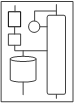
There are three different ways of operating the distillation process based on production requirements and operational flexibility. Semicontinuous distillation of multicomponent mixtures is a cost-effective technology in the intermediate production range when compared with traditional batch and continuous distillation processes. The process, which has both continuous and discrete dynamics, operates in a limit cycle (an isolated periodic orbit). Design of this process entails finding the system’s time-invariant parameters, for example, equipment design parameters, reflux rate etc., to operate in a limit cycle having acceptable performance. In semicontinuous distillation studies, the performance metric chosen is the separation cost, which is defined as the total annualized cost-per-production. The state-of-the-art design procedure involves determining an initial state for estimating the limit cycle through the dynamic simulation of the process and is found to be effective. However, it lac... [more]
464. LAPSE:2019.0393
Modeling of a Field-Modulated Permanent-Magnet Machine
February 27, 2019 (v1)
Subject: Modelling and Simulations
Keywords: d-q frame, field-modulated permanent magnet (FMPM) machine, finite element analysis (FEA), Modelling
In this work, an effective field-modulated permanent-magnet (FMPM) machine was investigated, in which the spoke-magnet outer rotor and open-slot stator were employed. The objective of this paper is to provide the mathematical modeling analysis that was performed for the purpose of control research on this type of FMPM machine. The simulation results by means of finite element analysis (FEA) are given to verify the theoretical analysis and the validity of mathematical model. A prototype machine was also fabricated for experimentation. Both the analytical model and the FEA results are validated by experimental tests on the prototype machine.
465. LAPSE:2019.0185
Lumped Parameters Model of a Crescent Pump
January 31, 2019 (v1)
Subject: Modelling and Simulations
Keywords: crescent pump, fluid power, internal gear pump, Modelling
This paper presents the lumped parameters model of an internal gear crescent pump with relief valve, able to estimate the steady-state flow-pressure characteristic and the pressure ripple. The approach is based on the identification of three variable control volumes regardless of the number of gear teeth. The model has been implemented in the commercial environment LMS Amesim with the development of customized components. Specific attention has been paid to the leakage passageways, some of them affected by the deformation of the cover plate under the action of the delivery pressure. The paper reports the finite element method analysis of the cover for the evaluation of the deflection and the validation through a contactless displacement transducer. Another aspect described in this study is represented by the computational fluid dynamics analysis of the relief valve, whose results have been used for tuning the lumped parameters model. Finally, the validation of the entire model of the p... [more]
466. LAPSE:2019.0103
An Integer Linear Programming Model for an Ecovat Buffer
January 7, 2019 (v1)
Subject: Optimization
Keywords: integer linear programming, Modelling, seasonal thermal storage, smart grids
An increase in the number of volatile renewables in the electricity grid enhances the imbalance of supply and demand. One promising candidate to solve this problem is to improve the energy storage. The Ecovat system is a new seasonal thermal energy storage system currently under development. In this paper, an integer linear programming model is developed to describe the behaviour and potential of this system. Furthermore, it is compared with a previously developed model, which is simplifying the behaviour of the Ecovat system much more, but is much less computationally expensive. It is shown that the new approach performs significantly better for several cases. For controlling a real Ecovat system in the future we may incorporate a number of improvements identified by our comparison analysis into the previously developed approach, which may help increase the quality of the obtained results without increasing the computational effort too much.
467. LAPSE:2018.1080
Modelling, Testing and Analysis of a Regenerative Hydraulic Shock Absorber System
November 27, 2018 (v1)
Subject: Modelling and Simulations
Keywords: Modelling, parameter identification, power regeneration, shock absorber, suspension
To improve vehicle fuel economy whilst enhancing road handling and ride comfort, power generating suspension systems have recently attracted increased attention in automotive engineering. This paper presents our study of a regenerative hydraulic shock absorber system which converts the oscillatory motion of a vehicle suspension into unidirectional rotary motion of a generator. Firstly a model which takes into account the influences of the dynamics of hydraulic flow, rotational motion and power regeneration is developed. Thereafter the model parameters of fluid bulk modulus, motor efficiencies, viscous friction torque, and voltage and torque constant coefficients are determined based on modelling and experimental studies of a prototype system. The model is then validated under different input excitations and load resistances, obtaining results which show good agreement between prediction and measurement. In particular, the system using piston-rod dimensions of 50⁻30 mm achieves recovera... [more]
468. LAPSE:2018.1055
Lithium Ion Batteries—Development of Advanced Electrical Equivalent Circuit Models for Nickel Manganese Cobalt Lithium-Ion
November 27, 2018 (v1)
Subject: Materials
Keywords: begin of life (BoL) parameters, cell characterization, dynamic discharge pulse test (DDPT), equivalent circuit model (ECM), lithium ion, Modelling, nickel manganese cobalt (NMC), validation profile, worldwide harmonized light vehicle test procedure (WLTC)
In this paper, advanced equivalent circuit models (ECMs) were developed to model large format and high energy nickel manganese cobalt (NMC) lithium-ion 20 Ah battery cells. Different temperatures conditions, cell characterization test (Normal and Advanced Tests), ECM topologies (1st and 2nd Order Thévenin model), state of charge (SoC) estimation techniques (Coulomb counting and extended Kalman filtering) and validation profiles (dynamic discharge pulse test (DDPT) and world harmonized light vehicle profiles) have been incorporated in the analysis. A concise state-of-the-art of different lithium-ion battery models existing in the academia and industry is presented providing information about model classification and information about electrical models. Moreover, an overview of the different steps and information needed to be able to create an ECM model is provided. A comparison between begin of life (BoL) and aged (95%, 90% state of health) ECM parameters (internal resistance (Ro), pola... [more]
469. LAPSE:2018.1015
A New Approach of Modeling an Ultra-Super-Critical Power Plant for Performance Improvement
November 27, 2018 (v1)
Subject: Process Control
Keywords: coordinated control system, Modelling, performance improvement, T-S fuzzy model, ultra super-critical power plant
A suitable model of coordinated control system (CCS) with high accuracy and simple structure is essential for the design of advanced controllers which can improve the efficiency of the ultra-super-critical (USC) power plant. Therefore, with the demand of plant performance improvement, an improved T-S fuzzy model identification approach is proposed in this paper. Firstly, the improved entropy cluster algorithm is applied to identify the premise parameters which can automatically determine the cluster numbers and initial cluster centers by introducing the concept of a decision-making constant and threshold. Then, the learning algorithm is used to modify the initial cluster center and a new structure of concluding part is discussed, the incremental data around the cluster center is used to identify the local linear model through a weighted recursive least-square algorithm. Finally, the proposed approach is employed to model the CCS of a 1000 MW USC one-through boiler power plant by using... [more]
470. LAPSE:2018.0963
Gas-Phase Mass-Transfer Resistances at Polymeric Electrolyte Membrane Fuel Cells Electrodes: Theoretical Analysis on the Effectiveness of Interdigitated and Serpentine Flow Arrangements
November 27, 2018 (v1)
Subject: Materials
Keywords: gas flow mode, Modelling, polymeric membrane fuel cells, transport phenomena
Mass transfer phenomena in polymeric electrolyte membrane fuel cells (PEMFC) electrodes has already been analyzed in terms of the interactions between diffusive and forced flows. It was demonstrated that the whole phenomenon could be summarized by expressing the Sherwood number as a function of the Peclet number. The dependence of Sherwood number on Peclet one Sh(Pe) function, which was initially deduced by determining three different flow regimes, has now been given a more accurate description. A comparison between the approximate and the accurate results for a reference condition of diluted reactant and limit current has shown that the former are useful for rapid, preliminary calculations. However, a more precise and reliable estimation of the Sherwood number is worth attention, as it provides a detailed description of the electrochemical kinetics and allows a reliable comparison of the various geometrical arrangements used for the distribution of the reactants.
471. LAPSE:2018.0926
Predictive Control Applied to a Solar Desalination Plant Connected to a Greenhouse with Daily Variation of Irrigation Water Demand
November 27, 2018 (v1)
Subject: Process Control
Keywords: dynamic simulation, Modelling, multi-effect distillation, process control, solar energy
The water deficit in the Mediterranean area is a known matter severely affecting agriculture. One way to avoid the aquifers’ exploitation is to supply water to crops by using thermal desalination processes. Moreover, in order to guarantee long-term sustainability, the required thermal energy for the desalination process can be provided by solar energy. This paper shows simulations for a case study in which a solar multi-effect distillation plant produces water for irrigation purposes. Detailed models of the involved systems are the base of a predictive controller to operate the desalination plant and fulfil the water demanded by the crops.
472. LAPSE:2018.0859
Parameter Sensitivity Analysis for Fractional-Order Modeling of Lithium-Ion Batteries
November 27, 2018 (v1)
Subject: Modelling and Simulations
Keywords: dynamic effects, fractional calculus, lithium-ion battery, Modelling, parameters sensitivity
This paper presents a novel-fractional-order lithium-ion battery model that is suitable for use in embedded applications. The proposed model uses fractional calculus with an improved Oustaloup approximation method to describe all the internal battery dynamic behaviors. The fractional-order model parameters, such as equivalent circuit component coefficients and fractional-order values, are identified by a genetic algorithm. A modeling parameters sensitivity study using the statistical Multi-Parameter Sensitivity Analysis (MPSA) method is then performed and discussed in detail. Through the analysis, the dynamic effects of parameters on the model output performance are obtained. It has been found out from the analysis that the fractional-order values and their corresponding internal dynamics have different degrees of impact on model outputs. Thus, they are considered as crucial parameters to accurately describe a battery’s dynamic voltage responses. To experimentally verify the accuracy o... [more]
473. LAPSE:2018.0576
Lifetime Prediction of a Polymer Electrolyte Membrane Fuel Cell under Automotive Load Cycling Using a Physically-Based Catalyst Degradation Model
September 21, 2018 (v1)
Subject: Reaction Engineering
Keywords: catalyst degradation, driving cycle, durability estimation, Modelling, polymer electrolyte membrane fuel cell (PEMFC)
One of the bottlenecks hindering the usage of polymer electrolyte membrane fuel cell technology in automotive applications is the highly load-sensitive degradation of the cell components. The cell failure cases reported in the literature show localized cell component degradation, mainly caused by flow-field dependent non-uniform distribution of reactants. The existing methodologies for diagnostics of localized cell failure are either invasive or require sophisticated and expensive apparatus. In this study, with the help of a multiscale simulation framework, a single polymer electrolyte membrane fuel cell (PEMFC) model is exposed to a standardized drive cycle provided by a system model of a fuel cell car. A 2D multiphysics model of the PEMFC is used to investigate catalyst degradation due to spatio-temporal variations in the fuel cell state variables under the highly transient load cycles. A three-step (extraction, oxidation, and dissolution) model of platinum loss in the cathode cataly... [more]
474. LAPSE:2018.0566
DC/DC Boost Converter⁻Inverter as Driver for a DC Motor: Modeling and Experimental Verification
September 21, 2018 (v1)
Subject: Modelling and Simulations
Keywords: bidirectional angular velocity, DC motor, DC/DC boost converter, differential flatness, experimental verification, inverter, Modelling
In this paper, the modeling and the experimental verification of the “bidirectional DC/DC boost converter⁻DC motor„ system are presented. By using circuit theory along with the model of a DC motor, the mathematical model of the system is derived. This model was experimentally tested under time-varying duty cycles obtained via the system differential flatness property. The experimental verification was carried out using Matlab-Simulink and a DS1104 board in a built prototype of the system.
475. LAPSE:2018.0490
Dry Fuel Jet Half-Angle Measurements and Correlation for an Entrained Flow Gasifier
September 21, 2018 (v1)
Subject: Modelling and Simulations
Keywords: gasification, imaging, jet half-angle, Modelling
Reduced order models (ROMs) are increasingly applied to entrained flow gasification development due to reduced computational requirements relative to computational fluid dynamics (CFD) models. However, they require greater a posteriori knowledge of the reactor physics. A significant parameter influencing ROM outputs is the jet half-angle of the solid fuel and oxidant mixture in the gasifier. Thus, it is important to understand the geometry of the jet in the gasifier, and how it is dependent on operating parameters, such as solid and carrier gas flow rates. In this work, an existing model for jet half-angles, which considers the ratio of surrounding gas density to jet core density, is extended to a dry solids jet with impinging gas. The model is fitted to experimental jet half-angles. The jet half-angle of a non-reactive flow was measured using laser-sheet imaging for solid fluxes in the range of 460⁻880 kg/m²·s and carrier gas fluxes in the range of 43⁻90 kg/m²·s at the transport line... [more]
[Show All Keywords]
[0.13 s]