

Browse
Subjects
Records with Subject: Process Design

2154. LAPSE:2019.0463
Energy and Exergy Analysis of the S-CO₂ Brayton Cycle Coupled with Bottoming Cycles
April 8, 2019 (v1)
Subject: Process Design
Keywords: combined cycle, efficiency, exergy loss, organic Rankine cycle, recompression cycle, second law efficiency, supercritical carbon dioxide
Supercritical carbon dioxide (S-CO₂) Brayton cycles (BC) are soon to be a competitive and environment friendly power generation technology. Progressive technological developments in turbo-machineries and heat exchangers have boosted the idea of using S-CO₂ in a closed-loop BC. This paper describes and discusses energy and exergy analysis of S-CO₂ BC in cascade arrangement with a secondary cycle using CO₂, R134a, ammonia, or argon as working fluids. Pressure drop in the cycle is considered, and its effect on the overall performance is investigated. No specific heat source is considered, thus any heat source capable of providing temperature in the range from 500 °C to 850 °C can be utilized, such as solar energy, gas turbine exhaust, nuclear waste heat, etc. The commercial software ‘Aspen HYSYS version 9’ (Aspen Technology, Inc., Bedford, MA, USA) is used for simulations. Comparisons with the literature and simulation results are discussed first for the standalone S-CO₂ BC. Energy analys... [more]
2155. LAPSE:2019.0449
Valorization of Shale Gas Condensate to Liquid Hydrocarbons through Catalytic Dehydrogenation and Oligomerization
April 8, 2019 (v1)
Subject: Process Design
Keywords: process synthesis and design, shale gas condensate, shale gas condensate-to-heavier liquids, Technoeconomic Analysis
The recent shale gas boom has transformed the energy landscape of the United States. Compared to natural gas, shale resources contain a substantial amount of condensate and natural gas liquids (NGLs). Many shale basin regions located in remote areas are lacking the infrastructure to distribute the extracted NGLs to other regions—particularly the Gulf Coast, a major gas processing region. Here we present a shale gas transformation process that converts NGLs in shale resources into liquid hydrocarbons, which are easier to transport from these remote basins than NGL or its constituents. This process involves catalytic dehydrogenation followed by catalytic oligomerization. Thermodynamic process analysis shows that this process has the potential to be more energy efficient than existing NGL-to-liquid fuel (NTL) technologies. In addition, our estimated payback period for this process is within the average lifetime of shale gas wells. The proposed process holds the promise to be an energy eff... [more]

2156. LAPSE:2019.0442
Finding the Signal in the Noise: Determining North America’s best path forward for sustainable energy
August 1, 2019 (v3)
Subject: Process Design
Keywords: Calcium Looping, Carbon Dioxide Capture, Chemical Looping, Life Cycle Analysis, Meta-Study, Oxyfuels, Postcombustion Capture, Solid Oxide Fuel Cells, Technoeconomic Analysis
One of the largest engineering challenges of our time is finding technical solutions that permit the use of our energy resources in a sustainable way. In order to achieve meaningful and positive change, new energy systems must adhere to the triple bottom line of sustainability. This means that new technical solutions must be economically, socio-politically, and environmentally sustainable, such that they can be rapidly adopted and accepted. The engineering literature is full of a great many technical proposals for new energy systems, but it turns out to be quite hard to objectively look at them all, see through the hype, and decide which are the best and most promising technologies in which to invest our research and development dollars. In this talk, I will present a case study with the results of our recent meta-study covering over 100 candidate electricity generation systems with carbon dioxide capture, in order to determine which are the most promising classes of technologies. I wi... [more]
2157. LAPSE:2019.0423
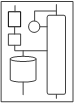
Finding better limit cycles of semicontinuous distillation
March 22, 2019 (v1)
Subject: Process Design
There are three different ways of operating the distillation process based on production requirements and operational flexibility. Semicontinuous distillation of multicomponent mixtures is a cost-effective technology in the intermediate production range when compared with traditional batch and continuous distillation processes. The process, which has both continuous and discrete dynamics, operates in a limit cycle (an isolated periodic orbit). Design of this process entails finding the system’s time-invariant parameters, for example, equipment design parameters, reflux rate etc., to operate in a limit cycle having acceptable performance. In semicontinuous distillation studies, the performance metric chosen is the separation cost, which is defined as the total annualized cost-per-production. The state-of-the-art design procedure involves determining an initial state for estimating the limit cycle through the dynamic simulation of the process and is found to be effective. However, it lac... [more]
2158. LAPSE:2019.0418
Thermo-Economic Comparison and Parametric Optimizations among Two Compressed Air Energy Storage System Based on Kalina Cycle and ORC
March 15, 2019 (v1)
Subject: Process Design
Keywords: CAES, integrated energy storage system, Kalina cycle, ORC, thermo-economic
The compressed air energy storage (CAES) system, considered as one method for peaking shaving and load-levelling of the electricity system, has excellent characteristics of energy storage and utilization. However, due to the waste heat existing in compressed air during the charge stage and exhaust gas during the discharge stage, the efficient operation of the conventional CAES system has been greatly restricted. The Kalina cycle (KC) and organic Rankine cycle (ORC) have been proven to be two worthwhile technologies to fulfill the different residual heat recovery for energy systems. To capture and reuse the waste heat from the CAES system, two systems (the CAES system combined with KC and ORC, respectively) are proposed in this paper. The sensitivity analysis shows the effect of the compression ratio and the temperature of the exhaust on the system performance: the KC-CAES system can achieve more efficient operation than the ORC-CAES system under the same temperature of exhaust gas; mea... [more]
2159. LAPSE:2019.0387
Design of an Energy Efficient Future Base Station with Large-Scale Antenna System
February 27, 2019 (v1)
Subject: Process Design
Keywords: base station (BS), energy efficiency (EE), large-scale (LS) antenna system
Due to the continuous increase in data demanded by end-users, an energy-efficient base station (BS) is a vital topic of interest that would not only result in a substantial economic impact on service providers, but would also reduce the carbon footprint of operating a network. In this regard, we propose the structure and systematic operation of a BS with a large-scale (LS) antenna system that can increase the energy efficiency (EE) of cellular systems. The proposed BS structure includes various power-related units, such as a central management apparatus, power controller, EE calculator, radio site-dependent parameter space (RSD-PS) and determiner. With the information provided from each unit, the decision unit determines how to adjust each component of the BS in order to maximize the EE. Extensive simulations show that the proposed BS improves the EE performance by about 83.05% relative to the reference BS.
2160. LAPSE:2019.0364
Evaluation of Strategies to Improve the Thermal Performance of Steel Frames in Curtain Wall Systems
February 27, 2019 (v1)
Subject: Process Design
Keywords: curtain wall, hot-box test, steel frame, thermal transmittance, U-value
Recently, metal curtain wall systems have been widely used in high-rise buildings due to many advantages, including being lightweight, rapid construction, and aesthetic features. Since the metal frame may lead to lower energy performance, thermal discomfort, and condensation risk due to the high thermal conductivity, its thermal performance can be important for the improvement of the overall thermal performance of the curtain wall system, as well as the energy efficiency of the building envelope. This study aims to evaluate variety of design strategies to improve the thermal performance of steel curtain wall frames. Five base cases and three further steps were selected for two different head profile shapes based on a state-of-the art technology review, and their thermal transmittances were calculated through simulations according to the ISO 12631 standard which is an international standard for calculating thermal transmittance of curtain wall system. Measured results that were obtained... [more]
2161. LAPSE:2019.0359
Comparison of Two Processes Forming CaCO₃ Precipitates by Electrolysis
February 27, 2019 (v1)
Subject: Process Design
Keywords: CaCO3, electrolysis, mineral carbonation
As one of the carbon capture and utilization (CCU) technologies, mineral carbonation which has been introduced to reduce the carbon dioxide (CO₂) concentration in the atmosphere is a technology that makes it possible to capture CO₂ and recycle byproducts as resources. However, existing mineral carbonation requires additional energy and costs, as it entails high temperature and high pressure reaction conditions. This study compared two processes which electrolyze NaCl and CaCl₂ solution to produce CO₂ absorbent needed to generate CaCO₃, and which were conducted at room temperature and pressure unlike existing mineral carbonation. As a result, high-purity calcite was obtained through Process 1 using NaCl solution, and aragonite and portlandite were obtained in addition to calcite through Process 2 (two steps) using CaCl₂ solution.
2162. LAPSE:2019.0335
Comparative Study of Shell and Helically-Coiled Tube Heat Exchangers with Various Dimple Arrangements in Condensers for Odor Control in a Pyrolysis System
February 27, 2019 (v1)
Subject: Process Design
Keywords: condenser, dimple, heat exchanger, heat transfer, odor control, pyrolysis, RANS, shell and tube
This study performed evaluations of the shell and helically-coiled tube heat exchangers with various dimple arrangements, that is, flat, inline, staggered, and bulged, at different Dean numbers (De) and inlet temperatures of a hot channel. Conjugated heat transfer was analyzed to evaluate the heat transfer performance of the exchangers through temperature difference between the inlet and outlet, Nusselt number inside the coiled tube, and pressure drop of the coiled tube by using 3-D Reynolds-averaged Navier⁻Stokes (RANS) equations with shear stress transport turbulence closure. A grid dependency test was performed to determine the optimal number of the grid system. The numerical results were validated using the experimental data, and showed good agreement. The inline and staggered arrangements show the highest temperature differences through all De. The staggered arrangement shows the best heat transfer performance, whereas the inline arrangement shows the second highest performance wi... [more]
2163. LAPSE:2019.0332
Inverse Aerodynamic Optimization Considering Impacts of Design Tip Speed Ratio for Variable-Speed Wind Turbines
February 27, 2019 (v1)
Subject: Process Design
Keywords: aerodynamic optimization, design tip speed ratio (TSR), inverse design, maximum power point tracking (MPPT), variable-speed wind turbine (VSWT)
Because of the slow dynamic behavior of the large-inertia wind turbine rotor, variable-speed wind turbines (VSWTs) are actually unable to keep operating at the design tip speed ratio (TSR) during the maximum power point tracking (MPPT) process. Moreover, it has been pointed out that although a larger design TSR can increase the maximum power coefficient, it also greatly prolongs the MPPT process of VSWTs. Consequently, turbines spend more time operating at the off-design TSRs and the wind energy capture efficiency is decreased. Therefore, in the inverse aerodynamic design of VSWTs, the static aerodynamic performance (i.e., the maximum power coefficient) and the dynamic process of MPPT should be comprehensively modeled for determining an appropriate design TSR. In this paper, based on the inverse design method, an aerodynamic optimization method for VSWTs, fully considering the impacts of the design TSR on the static and dynamic behavior of wind turbines is proposed. In this method, to... [more]
2164. LAPSE:2019.0331
Research on a Household Dual Heat Source Heat Pump Water Heater with Preheater Based on ASPEN PLUS
February 27, 2019 (v1)
Subject: Process Design
Keywords: Aspen Plus, coefficient of performance (COP), dual heat source, heat pump, household water heater, preheater
This article proposes a dual heat source heat pump bathroom unit with preheater which is feasible for a single family. The system effectively integrates the air source heat pump (ASHP) and wastewater source heat pump (WSHP) technologies, and incorporates a preheater to recover shower wastewater heat and thus improve the total coefficient of performance (COP) of the system, and it has no electric auxiliary heating device, which is favorable to improve the security of the system operation. The process simulation software ASPEN PLUS, widely used in the design and optimization of thermodynamic systems, was used to simulate various cases of system use and to analyze the impact of the preheater on the system. The average COP value of a system with preheater is 6.588 and without preheater it is 4.677. Based on the optimization and analysis, under the standard conditions of air at 25 °C, relative humidity of 70%, wastewater at 35 °C, wastewater flow rate of 0.07 kg/s, tap water at 15 °C, and c... [more]
2165. LAPSE:2019.0320
Development of Correlations for Windage Power Losses Modeling in an Axial Flux Permanent Magnet Synchronous Machine with Geometrical Features of the Magnets
February 27, 2019 (v1)
Subject: Process Design
Keywords: AFPMSM, Computational Fluid Dynamics, magnet parameters, windage losses
In this paper, a set of correlations for the windage power losses in a 4 kW axial flux permanent magnet synchronous machine (AFPMSM) is presented. In order to have an efficient machine, it is necessary to optimize the total electromagnetic and mechanical losses. Therefore, fast equations are needed to estimate the windage power losses of the machine. The geometry consists of an open rotor⁻stator with sixteen magnets at the periphery of the rotor with an annular opening in the entire disk. Air can flow in a channel being formed between the magnets and in a small gap region between the magnets and the stator surface. To construct the correlations, computational fluid dynamics (CFD) simulations through the frozen rotor (FR) method are performed at the practical ranges of the geometrical parameters, namely the gap size distance, the rotational speed of the rotor, the magnet thickness and the magnet angle. Thereafter, two categories of formulations are defined to make the windage losses dim... [more]
2166. LAPSE:2019.0316
Experimental and Potential Analysis of a Single-Valve Expander for Waste Heat Recovery of a Gasoline Engine
February 27, 2019 (v1)
Subject: Process Design
Keywords: gasoline engine, intake valve timing, piston expander, Rankine cycle, waste heat recovery
In this paper, a Rankine cycle test system is established to recover exhaust energy from a 2.0 L gasoline engine. Experiments on the system’s performance are carried out under various working conditions. The experimental results indicate that the recovery power of the expander is strongly related to the load and speed of the gasoline engine. It is found that when the output power of the gasoline engine is 39.8⁻76.6 kW, the net power of the expander is 1.8⁻2.97 kW, which is equivalent to 3.9%⁻4.9% of the engine power. The performance simulation shows that the mass flow rate, power output, and isentropic efficiency of the piston expander are directly determined by the intake valve timing. Selecting a suitable intake valve timing can optimize the performance of the expander. The simulation results show that a 1 kW increment in power can be obtained only by selecting an optimum intake open timing. The experimental results further verify that the single-valve piston expander, because of its... [more]
2167. LAPSE:2019.0303
A New Design Optimization Method for Permanent Magnet Synchronous Linear Motors
February 27, 2019 (v1)
Subject: Process Design
Keywords: 3D finite element analysis (3D-FEA), gravity center neighborhood algorithm (GCNA), multiple support vector machine (multi-SVM), non-parametric quick calculation model, permanent magnet linear synchronous motors (PMSLM), thrust, thrust ripple
This study focused on the design optimization of permanent magnet synchronous linear motors (PMSLM) that are applied in microsecond laser cutting machines. A new design optimization method was introduced to enhance PMSLM performances in terms of motor thrust, thrust ripple, and inductive electromotive force (EMF). Based on accurate 3D finite element analysis (3D-FEA), a multiple support vector machine (multi-SVM) was proposed to build a non-parametric quick calculation model by mapping the relation between multivariate structure parameters and multivariate operation performances. The gravity center neighborhood algorithm (GCNA) was also applied to search the global optimal combination of the structure parameters by locating the gravity center of the multi-SVM model. The superiority and validity of this method are verified by experiments.
2168. LAPSE:2019.0302
Strategy Design of Hybrid Energy Storage System for Smoothing Wind Power Fluctuations
February 27, 2019 (v1)
Subject: Process Design
Keywords: battery, hybrid energy storage system (HESS), power allocation, state-of-charge (SOC), supercapacitor, wind power, wind power regulation system
With the increasing contribution of wind power plants, the reliability and security of modern power systems have become a huge challenge due to the uncertainty and intermittency of wind energy sources. In this paper, a hybrid energy storage system (HESS) consisting of battery and supercapacitor is built to smooth the power fluctuations of wind power. A power allocation strategy is proposed to give full play to the respective advantages of the two energy storage components. In the proposed strategy, the low-frequency and high-frequency components of wind power fluctuations are absorbed by battery groups and supercapacitor groups, respectively. By inhibiting the low-frequency components of supercapacitor current, the times of charging-discharging of battery groups can be significantly reduced. A DC/AC converter is applied to achieve the power exchange between the HESS and the grid. Adjustment rules for regulating state-of-charge (SOC) of energy storage elements are designed to avoid over... [more]
2169. LAPSE:2019.0281
Multi-Objective Optimization of a Solar Chimney Power Plant with Inclined Collector Roof Using Genetic Algorithm
February 5, 2019 (v1)
Subject: Process Design
Keywords: inclined collector roof, multi-objective genetic algorithm, Renewable and Sustainable Energy, solar chimney power plant
This paper presents an optimization of a solar chimney power plant with an inclined collector roof using genetic algorithms. Five design parameters that affect the system performance are the collector radius, collector inlet height, collector outlet height, chimney height and diameter. A multi-objective design to simultaneously optimize three conflicting objectives including system efficiency, power output and expenditure is used. Based on this approach, obtaining the best combination of the possible geometrical parameters, performance of two built pilot power plants in Kerman (Iran) and Manzanares (Spain) are optimized thermo-economically. The heights of the zero-slope collectors of the Kerman and Manzanares systems are 2 m and 1.85 m, respectively. The results show that in the Kerman pilot the optimal collector inlet and outlet heights are 1.5 m and 2.95 m, respectively, while those optimal heights in the Manzanares prototype are 1.5 m and 4.6 m, respectively. It is found that select... [more]
2170. LAPSE:2019.0253
Simple Design Approach for Low Torque Ripple and High Output Torque Synchronous Reluctance Motors
February 5, 2019 (v1)
Subject: Process Design
Keywords: design, finite element method (FEM), flux-barriers, sensitivity analysis, synchronous reluctance motor, torque ripple
The rotor design of Synchronous Reluctance Motors (SynRMs) has a large effect on their efficiency, torque density and torque ripple. In order to achieve a good compromise between these three goals, an optimized rotor geometry is necessary. A finite element method (FEM) is a good tool for the optimization. However, the computation time is an obstacle as there are many geometrical parameters to be optimized. The flux-barrier widths and angles are the two most crucial parameters for the SynRM output torque and torque ripple. This paper proposes an easy-to-use set of parametrized equations to select appropriate values for these two rotor parameters. With these equations, the reader can design a SynRM of distributed windings with a low torque ripple and with a better average torque. The methodology is valid for a wide range of SynRMs. To check the validity of the proposed equations, the sensitivity analysis for the variation of these two parameters on the SynRM torque and torque ripple is c... [more]
2171. LAPSE:2019.0240
Comparison of Cooling System Designs for an Exhaust Heat Recovery System Using an Organic Rankine Cycle on a Heavy Duty Truck
February 5, 2019 (v1)
Subject: Process Design
Keywords: 1-D simulation, cooling system, Ethanol, heat recovery, heavy-duty truck, Organic Rankine Cycle (ORC)
A complex simulation model of a heavy duty truck, including an Organic Rankine Cycle (ORC) based waste heat recovery system and a vehicle cooling system, was applied to determine the system fuel economy potential in a typical drive cycle. Measures to increase the system performance were investigated and a comparison between two different cooling system designs was derived. The base design, which was realized on a Mercedes-Benz Actros vehicle revealed a fuel efficiency benefit of 2.6%, while a more complicated design would generate 3.1%. Furthermore, fully transient simulation results were performed and are compared to steady state simulation results. It is shown that steady state simulation can produce comparable results if averaged road data are used as boundary conditions.
2172. LAPSE:2019.0195
Exergy and Thermoeconomic Analyses of Central Receiver Concentrated Solar Plants Using Air as Heat Transfer Fluid
January 31, 2019 (v1)
Subject: Process Design
Keywords: concentrated solar plant, exergoeconomic cost analysis, exergy cost analysis
The latest developments in solar technologies demonstrated that the solar central receiver configuration is the most promising application among concentrated solar power (CSP) plants. In CSPs solar-heated air can be used as the working fluid in a Brayton thermal cycle and as the heat transfer fluid for a Rankine thermal cycle as an alternative to more traditional working fluids thereby reducing maintenance operations and providing the power section with a higher degree of flexibility To supply thermal needs when the solar source is unavailable, an auxiliary burner is requested. This configuration is adopted in the Julich CSP (J-CSP) plant, operating in Germany and characterized by a nominal power of 1.5 MW, the heat transfer fluid (HTF) is air which is heated in the solar tower and used to produce steam for the bottoming Rankine cycle. In this paper, the J-CSP plant with thermal energy storage has been compared with a hybrid CSP plant (H-CSP) using air as the working fluid. Thermodynam... [more]
2173. LAPSE:2019.0166
Comprehensive Exergy Analysis of Three IGCC Power Plant Configurations with CO₂ Capture
January 31, 2019 (v1)
Subject: Process Design
Keywords: coal gasification, exergy analysis, precombustion CO2 capture, process system modeling
We have conducted comprehensive exergy analyses of three integrated gasification combined cycle with carbon capture and storage (IGCC-CCS) power plant configurations: (1) a baseline model using Selexol™ for H₂S/CO₂ removal; (2) a modified version that adds a H₂-selective membrane before the Selexol™ acid gas removal system; and (3) a modified baseline version that uses a CO₂-selective membrane before the Selexol™ acid gas removal system. While holding the coal input flow rate and the CO₂ captured flow rates constant, it was determined that the H₂-selective membrane case had a higher net power output (584 MW) compared to the baseline (564 MW) and compared to the CO₂-selective membrane case (550 MW). Interestingly, the CO₂-selective membrane case destroyed the least amount of exergy within the power plant (967 MW), compared with the Baseline case (999 MW) and the H₂-membrane case (972 MW). The main problem with the CO₂-selective membrane case was the large amount of H₂ (48 MW worth of H₂... [more]
2174. LAPSE:2019.0153
A New Switching Impulse Generator Based on Transformer Boosting and Insulated Gate Bipolar Transistor Trigger Control
January 30, 2019 (v1)
Subject: Process Design
Keywords: boosting transformer, impulse generator, impulse waveform parameters, insulated gate bipolar transistor (IGBT), switching impulse (SI)
To make the switching impulse (SI) generator more compact, portable and feasible in field tests, a new approach based on transformer boosting was developed. To address problems such as triggering synchronization and electromagnetic interference involved with the traditional spark gap, an insulated gate bipolar transistor (IGBT) module with drive circuit was employed as the impulse trigger. An optimization design for the component parameters of the primary winding side of the transformer was realized by numerical calculation and error correction. Experiment showed that the waveform parameters of SI and oscillating switching impulse (OSI) voltages generated by the new generator were consistent with the numerical calculation and the error correction. The generator was finally built on a removable high voltage transformer with small size. Thus the volume of the generator is significantly reduced. Experiments showed that the waveform parameters of SI and OSI voltages generated by the new ge... [more]
2175. LAPSE:2019.0151
A Concentrator Photovoltaic System Based on a Combination of Prism-Compound Parabolic Concentrators
January 30, 2019 (v1)
Subject: Process Design
Keywords: compound parabolic concentrator, concentrator photovoltaic, solar cell
We present a cost-effective concentrating photovoltaic system composed of a prism and a compound parabolic concentrator (P-CPC). In this approach, the primary collector consists of a prism, a solid compound parabolic concentrator (CPC), and a slab waveguide. The prism, which is placed on the input aperture of CPC, directs the incoming sunlight beam to be parallel with the main axes of parabolic rims of CPC. Then, the sunlight is reflected at the parabolic rims and concentrated at the focal point of these parabolas. A slab waveguide is coupled at the output aperture of the CPC to collect focused sunlight beams and to guide them to the solar cell. The optical system was modeled and simulated with commercial ray tracing software (LightTools™). Simulation results show that the optical efficiency of a P-CPC can achieve up to 89%. when the concentration ratio of the P-CPC is fixed at 50. We also determine an optimal geometric structure of P-CPC based on simulation. Because of the simplicity... [more]
2176. LAPSE:2019.0149
Effect of Photoanode Design on the Photoelectrochemical Performance of Dye-Sensitized Solar Cells Based on SnO₂ Nanocomposite
January 30, 2019 (v1)
Subject: Process Design
Keywords: dye-sensitized solar cells (DSSCs), nanocomposite, nanoflower, nanoparticle, photoanode
Li-doped ZnO (LZO) aggregated nanoparticles are used as an insulating layer in SnO₂ nanocomposite (SNC) photoanodes to suppress the recombination process in dye-sensitized solar cells (DSSCs). Various weight percentages of SnO₂ nanoparticles (SNPs) and SnO₂ nanoflowers (SNFs) were used to prepare SNC photoanodes. The photocurrent-voltage characteristics showed that the incorporation of an LZO insulating layer in an SNC photoanode increased the conversion efficiency of DSSCs. This was due to an increase in the surface area, charge injection, and charge collection, and the minimization of the recombination rate of photoanodes. Electrochemical impedance spectroscopy (EIS) results showed lower series resistance, charge injection resistance, and shorter lifetimes for DSSCs based on an SNC photoanode with an LZO insulating layer. The open circuit voltage and fill factor of the DSSCs based on SNC photoanodes with an LZO insulating layer significantly increased. The DSSC based on a SNC photoan... [more]
2177. LAPSE:2019.0123
Comparison of Organic Rankine Cycle Systems under Varying Conditions Using Turbine and Twin-Screw Expanders
January 7, 2019 (v1)
Subject: Process Design
Keywords: expander, geothermal, Organic Rankine Cycle, turbine, twin screw, waste heat
A multi-variable optimization program has been developed to investigate the performance of Organic Rankine Cycles (ORCs) for low temperature heat recovery applications using both turbine and twin-screw expanders when account is taken of performance variation due to changes in ambient conditions. The cycle simulation contains thermodynamic models of both types of expander. In the case of the twin-screw machine, the methods used to match the operation of the expander to the requirements of the cycle are described. The performance of turbine expanders in a superheated ORC has been modelled using correlations derived from operational data for single stage reaction turbines to predict the turbine efficiency at “off-design” conditions. Several turbine configurations have been considered including variable nozzle area and variable speed. The capability of the cycle model has been demonstrated for the case of heat recovery from a steady source of pressurized hot water at 120 °C. The system par... [more]
2178. LAPSE:2019.0116
Unshrouded Plate Fin Heat Sinks for Electronics Cooling: Validation of a Comprehensive Thermal Model and Cost Optimization in Semi-Active Configuration
January 7, 2019 (v1)
Subject: Process Design
Keywords: cost optimization, electronics cooling, genetic algorithms, heat transfer enhancement, plate fin heat sinks
Plate Fin Heat Sinks (PFHS) are among the simplest and most widespread devices for electronics cooling. Because of the many design parameters to be considered, developing both cost and thermal effective PFHS is a critical issue. Here, a novel thermal model of PFHS is presented. The model has a broad field of applicability, being comprehensive of the effects of flow bypass, developing boundary layers, fin efficiency and spreading resistance. Experiments are then carried out to validate the proposed thermal model, and its good accuracy is demonstrated. Finally, an optimization methodology based on genetic algorithms is proposed for a cost-effective selection of the design parameters of PFHS, which is particularly effective with semi-active configurations. Such an optimization methodology is then tested on a commercial heat sink, resulting in a possible 53% volume reduction at fixed thermal performances.
[Show All Subjects]
[0.05 s]