

Browse
Keywords
Records with Keyword: Biomass

366. LAPSE:2023.0943
Evaluation of the Gas Emissions during the Thermochemical Conversion of Eucalyptus Woodchips
February 21, 2023 (v1)
Subject: Environment
Keywords: Biomass, combustion, gas emissions, macro thermogravimetric analysis, pyrolysis, woodchips
The combustion of solid biomass in industrial boilers involves a sequence of processes that include heating, drying, devolatilization, and char conversion. To maintain a repeatable and fully controlled environment, and to monitor all the dynamics involved in the phenomena at a real scale, field-scale experiments become necessary to perform investigations. In this way, to evaluate different thermochemical conversion conditions of biomass particles under an oxidative atmosphere, and to quantify the emission of the main gas compounds continuously, a small-scale reactor was developed and presented in this paper. Hence, in this work, larger particles of eucalyptus are burned at 400 and 800 °C under different stoichiometric conditions to understand the differences between different biomass conversion regimes (gasification and combustion). The analysis of the mass loss at the different temperatures was characterized by only two different and consecutive stages for both thermochemical conditio... [more]
367. LAPSE:2023.0903
CO2 Adsorption Performance on Surface-Functionalized Activated Carbon Impregnated with Pyrrolidinium-Based Ionic Liquid
February 21, 2023 (v1)
Subject: Materials
Keywords: activated carbon, Biomass, Carbon Dioxide Capture, functionalization, ionic liquid, wet impregnation
The serious environmental issues associated with CO2 emissions have triggered the search for energy efficient processes and CO2 capture technologies to control the amount of gas released into the atmosphere. One of the suitable techniques is CO2 adsorption using functionalized sorbents. In this study, a functionalized activated carbon (AC) material was developed via the wet impregnation technique. The AC was synthesized from a rubber seed shell (RSS) precursor using chemical activation and was later impregnated with different ratios of [bmpy][Tf2N] ionic liquid (IL). The AC was successfully functionalized with IL as confirmed by FTIR and Raman spectroscopy analyses. Incorporation of IL resulted in a reduction in the surface area and total pore volume of the parent adsorbent. Bare AC showed the largest SBET value of 683 m2/g, while AC functionalized with the maximum amount of IL showed 14 m2/g. A comparative analysis of CO2 adsorption data revealed that CO2 adsorption performance of AC... [more]
368. LAPSE:2023.0889
Techno-Economic Assessment of Producer Gas from Heavy Oil and Biomass Co-Gasification Aiming Electricity Generation in Rankine Cycle
February 21, 2023 (v1)
Subject: Process Design
Keywords: Biomass, economic assessment, electricity generation, gasification, heavy oil, Rankine cycle
Heavy oil and biomass co-gasification has been analyzed through a model developed in Aspen Plus™ v 11.0 software. The model was used to assess main gasification parameters, such as cold gas efficiency, yield, low heating value (LHV), and producer gas composition, using air and oxygen as gasification agents. Subsequently, producer gas energy use in the Rankine cycle was performed using a model developed in GateCycle™ v11.1.2.4.850 software. Likewise, the economic indicators of the integrated Rankine cycle-gasification system were calculated. The economic evaluation was developed through Monte Carlo simulation using Crystalball™. The results showed a LHV producer gas decreasing trend as the equivalence ratio (ER) increased, oscillating between 6.37 and 3.63 MJ/Nm3 for ER values greater than 0.30 in the air co-gasification case, while the scenario that used oxygen presented better LHV results, ranging from 9.40 to 11.79 MJ/Nm3. For air co-gasification, the Rankine cycle efficiency range w... [more]
369. LAPSE:2023.0720
Comparative Evaluation of Pyrolysis and Hydrothermal Liquefaction for Obtaining Biofuel from a Sustainable Consortium of Microalgae Arthrospira platensis with Heterotrophic Bacteria
February 20, 2023 (v1)
Subject: Energy Systems
Keywords: bio-oil, Biomass, hydrothermal liquefaction, microalgae, pyrolysis
This article presents a comparative evaluation of pyrolysis and hydrothermal liquefaction (HTL) for obtaining biofuel from microalgal biomass (MAB). The research was carried out using biomass of a stable microalgae-bacteria consortium based on Arthrospira platensis. A. platensis was chosen because of its simple cultivation and harvesting. Pyrolysis was carried out at temperatures of 300, 400, 500, and 600 °C with a constant rate of temperature change of 10 °C/min; HTL was carried out at temperatures of 270, 300, and 330 °C. The bio-oil yield obtained by HTL (38.8−45.7%) was significantly higher than that of pyrolysis (up to 21.9%). At the same time, the bio-coal yields using both technologies were almost the same—about 27%. Biochar (bio-coal) can be considered as an alternative strategy for CO2 absorption and subsequent storage since it is 90% geologically stabilized carbon.
370. LAPSE:2023.0089
Modern Technologies of Hydrogen Production
February 17, 2023 (v1)
Subject: Energy Systems
Keywords: biohydrogen, Biomass, hydrogen production, hydrogen storage, membrane catalysis, Steam Reforming, water electrolysis
Transitioning to energy-saving and renewable energy sources is impossible without accelerated development of hydrogen energy and hydrogen technologies. This review summarizes the state-of-the-art and recent advances of various hydrogen production processes, including but not limited to thermochemical and electrolytic processes. Their opportunities and limitations, operating conditions, and catalysts are discussed. Nowadays, most hydrogen is still produced by steam reforming of methane, its partial oxidation, or coal gasification. Considerable attention is also paid to natural gas pyrolysis. However, hydrogen produced using these technologies has a lot of impurities and needs additional purification. A series of technologies for hydrogen purification, including its filtration through palladium alloy membranes, and membrane catalysis, allowing hydrogen production and purification in one stage, are discussed. The main way to produce carbon-free hydrogen is water electrolysis using low-cos... [more]
371. LAPSE:2023.0051
Renewable Power and Heat for the Decarbonisation of Energy-Intensive Industries
February 17, 2023 (v1)
Subject: Energy Systems
Keywords: Biomass, decarbonisation, energy-intensive industries, geothermal, green hydrogen, heat pumps, renewable energies, Solar Thermal
The present review provides a catalogue of relevant renewable energy (RE) technologies currently available (regarding the 2030 scope) and to be available in the transition towards 2050 for the decarbonisation of Energy Intensive Industries (EIIs). RE solutions have been classified into technologies based on the use of renewable electricity and those used to produce heat for multiple industrial processes. Electrification will be key thanks to the gradual decrease in renewable power prices and the conversion of natural-gas-dependent processes. Industrial processes that are not eligible for electrification will still need a form of renewable heat. Among them, the following have been identified: concentrating solar power, heat pumps, and geothermal energy. These can supply a broad range of needed temperatures. Biomass will be a key element not only in the decarbonisation of conventional combustion systems but also as a biofuel feedstock. Biomethane and green hydrogen are considered essenti... [more]
372. LAPSE:2022.0111
Low-Viscosity Ether-Functionalized Ionic Liquids as Solvents for the Enhancement of Lignocellulosic Biomass Dissolution
October 30, 2022 (v1)
Subject: Materials
Keywords: Biomass, dissolution, ionic liquids, Optimization, RSM, ultrasonic
Due to the substantial usage of fossil fuels, the utilization of lignocellulosic biomass as renewable sources for fuels and chemical production has been widely explored. The dissolution of lignocellulosic biomass in proper solvents is vital prior to the extraction of its important constituents, and ionic liquids (ILs) have been found to be efficient solvents for biomass dissolution. However, the high viscosity of ILs limits the dissolution process. Therefore, with the aim to enhance the dissolution of lignocellulosic biomass, a series of new ether-functionalized ILs with low viscosity values were synthesized and characterized. Their properties, such as density, viscosity and thermal stability, were analyzed and discussed in comparison with a common commercial IL, namely 1-butyl-3-methylimidazolium chloride (BMIMCl). The presence of the ether group in the new ILs reduces the viscosity of the ILs to some appreciable extent in comparison to BMIMCl. 1-2(methoxyethyl)-3-methylimidazolium ch... [more]
373. LAPSE:2022.0047
Role of Microalgae in the Recovery of Nutrients from Pig Manure
October 12, 2022 (v1)
Subject: Food & Agricultural Processes
Keywords: Biomass, biotechnology, photosynthesis, respirometry, Scenedesmus, waste treatment
Animal production inevitably causes the emission of greenhouse gases and the generation of large amounts of slurry, both representing a serious environmental problem. Photosynthetic microorganisms such as microalgae and cyanobacteria have been proposed as alternative strategies to bioremediate agricultural waste while consuming carbon dioxide and producing valuable biomass. The current study assessed the potential of the microalga Scenedesmus sp. to remove nutrients from piggery wastewater (PWW) and the influence of the microalga on the microbial consortia. Maximum N-NH4+ consumption was 55.3 ± 3.7 mg·L−1·day−1 while P-PO43− removal rates were in the range 0.1−1.9 mg·L−1·day−1. N-NH4+ removal was partially caused by the action of nitrifying bacteria, which led to the production of N-NO3−. N-NO3− production values where lower when microalgae were more active. This work demonstrated that the photosynthetic activity of microalgae allows us to increase nutrient removal rates from PWW and t... [more]
374. LAPSE:2021.0725
Torrefaction of Woody and Agricultural Biomass: Influence of the Presence of Water Vapor in the Gaseous Atmosphere
September 21, 2021 (v1)
Subject: Food & Agricultural Processes
Keywords: Biomass, solid mass loss, TGA, torrefaction, water vapor
Biomass preheating in torrefaction at an industrial scale is possible through a direct contact with the hot gases released. However, their high water-content implies introducing moisture (around 20% v/v) in the torrefaction atmosphere, which may impact biomass thermochemical transformation. In this work, this situation was investigated for wheat straw, beech wood and pine forest residue in torrefaction in two complementary experimental devices. Firstly, experiments in chemical regime carried out in a thermogravimetric analyzer (TGA) showed that biomass degradation started from lower temperatures and was faster under a moist atmosphere (20% v/v water content) for all biomass samples. This suggests that moisture might promote biomass components’ degradation reactions from lower temperatures than those observed under a dry atmosphere. Furthermore, biomass inorganic composition might play a role in the extent of biomass degradation in torrefaction in the presence of moisture. Secondly, tor... [more]
375. LAPSE:2021.0657
Current State of Porous Carbon for Wastewater Treatment
July 29, 2021 (v1)
Subject: Materials
Keywords: activated carbon, activating agent, Adsorption, applications, Biomass, pollutants, porous materials
Porous materials constitute an attractive research field due to their high specific surfaces; high chemical stabilities; abundant pores; special electrical, optical, thermal, and mechanical properties; and their often higher reactivities. These materials are currently generating a great deal of enthusiasm, and they have been used in large and diverse applications, such as those relating to sensors and biosensors, catalysis and biocatalysis, separation and purification techniques, acoustic and electrical insulation, transport gas or charged species, drug delivery, and electrochemistry. Porous carbons are an important class of porous materials that have grown rapidly in recent years. They have the advantages of a tunable pore structure, good physical and chemical stability, a variable specific surface, and the possibility of easy functionalization. This gives them new properties and allows them to improve their performance for a given application. This review paper intends to understand... [more]
376. LAPSE:2021.0591
Aspen Plus Simulations of a Lignocellulosic Biomass-to-Butanol Thermochemical Process
July 6, 2021 (v1)
Subject: Modelling and Simulations
Keywords: Aspen Plus, Biofuels, Biomass, Butanol, Kinetic Model, Lignocellulosic, Mixed Alcohol Synthesis, Simulation, Thermochemical
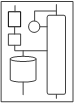
Several Aspen Plus simulation files are presented which were used in the research paper by Chinedu Okoli and Thomas A. Adams II: "Design and Assessment of Advanced Thermochemical Plants for Second Generation Biobutanol Production Considering Mixed Alcohols Synthesis Kinetics" published in Industrial and Engineering Chemistry Research, vol 56, pp 1543-1558 (2017). Four Aspen Plus V8.4 workbook files are provided AS IS, with no guarantee of accuracy or functionality. They are the original files used in the underlying work and have not been groomed or sanitized.
The four base cases considered in this study are:
1. A "biomass only" process in which the entire plant's energy supply comes from biomass.
2. A "biomass only" process that uses a divided wall column as a part of the distillation sequence
3. A "NG and power import" process in which natural gas and grid electricity are used to provide supplementary power.
4. A "NG import" case in which natural gas (but not grid... [more]
The four base cases considered in this study are:
1. A "biomass only" process in which the entire plant's energy supply comes from biomass.
2. A "biomass only" process that uses a divided wall column as a part of the distillation sequence
3. A "NG and power import" process in which natural gas and grid electricity are used to provide supplementary power.
4. A "NG import" case in which natural gas (but not grid... [more]
377. LAPSE:2021.0587
Biosorption: A Review of the Latest Advances
June 29, 2021 (v1)
Subject: Materials
Keywords: bioaccumulation, biocomposite, Biomass, biosorption, dyes, emerging organic contaminants, metals, pollutants
Biosorption is a variant of sorption techniques in which the sorbent is a material of biological origin. This technique is considered to be low cost and environmentally friendly, and it can be used to remove pollutants from aqueous solutions. The objective of this review is to report on the most significant recent works and most recent advances that have occurred in the last couple of years (2019−2020) in the field of biosorption. Biosorption of metals and organic compounds (dyes, antibiotics and other emerging contaminants) is considered in this review. In addition, the use and possibilities of different forms of biomass (live or dead, modified or immobilized) are also considered.
378. LAPSE:2021.0438
Microwave-Assisted Pyrolysis of Pine Wood Sawdust Mixed with Activated Carbon for Bio-Oil and Bio-Char Production
May 26, 2021 (v1)
Subject: Food & Agricultural Processes
Keywords: activated carbon, Biomass, microwave absorber, pine wood sawdust, pyrolysis
Pyrolysis of pine wood sawdust was carried out using microwave-heating technology in the presence of activated carbon (AC). Experimental conditions were of 20 min processing time, 10 wt.% of AC, and a microwave power varying from 100 to 800 W. The results obtained showed that the microwave absorber allowed increasing the bio-oil yield up to 2 folds by reducing the charcoal fraction. The maximum temperature reached was 505 °C at 800 W. The higher heating values (HHV) of the solid residues ranged from 17.6 to 30.3 MJ/kg. The highest HHV was obtained for the sample heated at 800 W with 10 wt.% of AC, which was 33% higher than the non-charged sample heated at the same power. Furthermore, the addition of AC allowed showing the probable catalytic effect of the AC in the charged sample pyrolysis bio-oils.
379. LAPSE:2021.0427
Comparative Performances of Microalgal-Bacterial Co-Cultivation to Bioremediate Synthetic and Municipal Wastewaters Whilst Producing Biodiesel Sustainably
May 25, 2021 (v1)
Subject: Biosystems
Keywords: biodiesel, Biomass, lipid, microalgal-bacterial cultures, wastewater treatment
The potentiality of a microalgal-bacterial culture system was explored in bioremediating wastewater while generating biomass for biodiesel production. A pre-determined optimal activated sludge and microalgal ratio was adopted and cultivation performance was evaluated in both synthetic and municipal wastewater media for nitrogen removal along with biomass and lipid generation for biodiesel production. The microalgal-bacterial consortium grown in the municipal wastewater medium produced higher biomass and lipid yields than those in the synthetic wastewater medium. The presence of trace elements in the municipal wastewater medium, e.g., iron and copper, contributed to the upsurge of biomass, thereby leading to higher lipid productivity. Both the microbial cultures in the synthetic and municipal wastewater media demonstrated similar total nitrogen removal efficiencies above 97%. However, the nitrification and assimilation rates were relatively higher for the microbial culture in the munici... [more]
380. LAPSE:2021.0376
Gasification Applicability of Korean Municipal Waste Derived Solid Fuel: A Comparative Study
May 17, 2021 (v1)
Subject: Reaction Engineering
Gaining energy independence by utilizing new and renewable energy resources has become imperative for Korea. Energy recovery from Korean municipal solid waste (MSW) could be a promising option to resolve the issue, as Korean MSW is highly recyclable due to its systematic separation, collection and volume-based waste disposal system. In this study, gasification experiments were conducted on Korean municipal waste-derived solid fuel (SRF) using a fixed bed reactor by varying the equivalence ratio (ER) to assess the viability of syngas production. Experiments were also conducted on coal and biomass under similar conditions to compare the experimental results, as the gasification applicability of coal and biomass are long-established. Experimental results showed that Korean SRF could be used to recover energy in form of syngas. In particular, 50.94% cold gas efficiency and 54.66% carbon conversion ratio with a lower heating value of 12.57 MJ/Nm3 can be achieved by gasifying the SRF at 0.4... [more]
381. LAPSE:2021.0307
Process Strategies for the Transition of 1G to Advanced Bioethanol Production
April 30, 2021 (v1)
Subject: Energy Policy
Keywords: bioeconomy, bioethanol, Biomass, integrated biorefineries, retrofitting
Nowadays, the transport sector is one of the main sources of greenhouse gas (GHG) emissions and air pollution in cities. The use of renewable energies is therefore imperative to improve the environmental sustainability of this sector. In this regard, biofuels play an important role as they can be blended directly with fossil fuels and used in traditional vehicles’ engines. Bioethanol is the most used biofuel worldwide and can replace gasoline or form different gasoline-ethanol blends. Additionally, it is an important building block to obtain different high added-value compounds (e.g., acetaldehyde, ethylene, 1,3-butadiene, ethyl acetate). Today, bioethanol is mainly produced from food crops (first-generation (1G) biofuels), and a transition to the production of the so-called advanced ethanol (obtained from lignocellulosic feedstocks, non-food crops, or industrial waste and residue streams) is needed to meet sustainability criteria and to have a better GHG balance. This work gives an ov... [more]
382. LAPSE:2021.0182
Microwave-Assisted Pyrolysis of Biomass Waste: A Mini Review
April 16, 2021 (v1)
Subject: Food & Agricultural Processes
Keywords: bio-char, bio-oil, Biomass, microwave-assisted pyrolysis, operating parameters
The utilization of biomass waste as a raw material for renewable energy is a global concern. Pyrolysis is one of the thermal treatments for biomass wastes that results in the production of liquid, solid and gaseous products. Unfortunately, the complex structure of the biomass materials matrix needs elevated heating to convert these materials into useful products. Microwave heating is a promising alternative to conventional heating approaches. Recently, it has been widely used in pyrolysis due to easy operation and its high heating rate. This review tries to identify the microwave-assisted pyrolysis treatment process fundamentals and discusses various key operating parameters which have an effect on product yield. It was found that several operating parameters govern this process such as microwave power and the degree of temperature, microwave absorber addition and its concentration, initial moisture content, initial sweep gas flow rate/residence time. Moreover, this study highlighted t... [more]
383. LAPSE:2021.0039
Determination of Hemicellulose, Cellulose, and Lignin Content in Different Types of Biomasses by Thermogravimetric Analysis and Pseudocomponent Kinetic Model (TGA-PKM Method)
February 22, 2021 (v1)
Subject: Food & Agricultural Processes
Keywords: Biomass, cellulose, hemicellulose, lignin, pseudocomponent kinetic model, TGA
The standard method for determining the biomass composition, in terms of main lignocellulosic fraction (hemicellulose, cellulose and lignin) contents, is by chemical method; however, it is a slow and expensive methodology, which requires complex techniques and the use of multiple chemical reagents. The main objective of this article is to provide a new efficient, low-cost and fast method for the determination of the main lignocellulosic fraction contents of different types of biomasses from agricultural by-products to softwoods and hardwoods. The method is based on applying deconvolution techniques on the derivative thermogravimetric (DTG) pyrolysis curves obtained by thermogravimetric analysis (TGA) through a kinetic approach based on a pseudocomponent kinetic model (PKM). As a result, the new method (TGA-PKM) provides additional information regarding the ease of carrying out their degradation in comparison with other biomasses. The results obtained show a good agreement between exper... [more]
384. LAPSE:2020.1069
Recent Insights into Lignocellulosic Biomass Pyrolysis: A Critical Review on Pretreatment, Characterization, and Products Upgrading
October 26, 2020 (v1)
Subject: Reaction Engineering
Keywords: bio-oil, biofuel, Biomass, catalytic upgrading, pyrolysis
Pyrolysis process has been considered to be an efficient approach for valorization of lignocellulosic biomass into bio-oil and value-added chemicals. Bio-oil refers to biomass pyrolysis liquid, which contains alkanes, aromatic compounds, phenol derivatives, and small amounts of ketone, ester, ether, amine, and alcohol. Lignocellulosic biomass is a renewable and sustainable energy resource for carbon that is readily available in the environment. This review article provides an outline of the pyrolysis process including pretreatment of biomass, pyrolysis mechanism, and process products upgrading. The pretreatment processes for biomass are reviewed including physical and chemical processes. In addition, the gaps in research and recommendations for improving the pretreatment processes are highlighted. Furthermore, the effect of feedstock characterization, operating parameters, and types of biomass on the performance of the pyrolysis process are explained. Recent progress in the identificat... [more]
385. LAPSE:2020.1003
Image-Based Model for Assessment of Wood Chip Quality and Mixture Ratios
September 23, 2020 (v1)
Subject: Intelligent Systems
Keywords: Biomass, biomass power plant, fuel quality, image analysis, Machine Learning, regression modeling
This article focuses on fuel quality in biomass power plants and describes an online prediction method based on image analysis and regression modeling. The main goal is to determine the mixture fraction from blends of two wood chip species with different qualities and properties. Starting from images of both fuels and different mixtures, we used two different approaches to deduce feature vectors. The first one relied on integral brightness values while the latter used spatial texture information. The features were used as input data for linear and non-linear regression models in nine training classes. This permitted the subsequent prediction of mixture ratios from prior unknown similar images. We extensively discuss the influence of model and image selection, parametrization, the application of boosting algorithms and training strategies. We obtained models featuring predictive accuracies of R2 > 0.9 for the brightness-based model and R2 > 0.8 for the texture based one during the valid... [more]
386. LAPSE:2020.0816
Optimizing Yield and Quality of Bio-Oil: A Comparative Study of Acacia tortilis and Pine Dust
July 7, 2020 (v1)
Subject: Reaction Engineering
Keywords: Acacia tortilis, biofuel, Biomass, pine dust, pyrolysis
We collected pine dust and Acacia tortilis samples from Zimbabwe and Botswana, respectively. We then pyrolyzed them in a bench-scale plant under varying conditions. This investigation aimed to determine an optimum temperature that will give result to maximum yield and quality of the bio-oil fraction. Our experimental results show that we obtain the maximum yield of the oil fraction at a pyrolysis temperature of 550 °C for the acacia and at 500 °C for the pine dust. Our results also show that we obtain an oil fraction with a heating value (HHV) of 36.807 MJ/kg using acacia as the feed material subject to a primary condenser temperature of 140 °C. Under the same pyrolysis temperature, we obtain an HHV value of 15.78 MJ/kg using pine dust as the raw material at a primary condenser temperature of 110 °C. The bio-oil fraction we obtain from Acacia tortilis at these condensation temperatures has an average pH value of 3.42 compared to that of 2.50 from pine dust. The specific gravity of the... [more]
387. LAPSE:2020.0814
Characterizations of Biomasses for Subsequent Thermochemical Conversion: A Comparative Study of Pine Sawdust and Acacia Tortilis
July 7, 2020 (v1)
Subject: Food & Agricultural Processes
Keywords: bioenergy, Biomass, characterization, lignocellulosic
The bioenergy production potential from biomasses is dependent on their characteristics. This study characterized pine sawdust samples from Zimbabwe and acacia tortilis samples from Botswana using conventional and spectrometry techniques. The ultimate analysis results for pine were 45.76% carbon (C), 5.54% hydrogen (H), 0.039% nitrogen (N), 0% sulphur (S) and 48.66% oxygen (O) and, for acacia, were 41.47% C, 5.15% H, 1.23% N, 0% S and 52.15% O. Due to the low N and S in the biomasses, they promise to provide cleaner energy than fossil-based sources. Proximate analysis results, on a dry basis, for acacia were 3.90% ash, 15.59% fixed carbon and 76.51% volatiles matter and 0.83%, 20% and 79.16%, respectively, for pine. A calorific value of 17.57 MJ/kg was obtained for pine, compared with 17.27 MJ/kg for acacia, suggesting they are good thermochemical feedstocks. Acacia’s bulk energy density is five times that of pine, making it excellent for compressed wood applications. Though the ash co... [more]
388. LAPSE:2020.0783
Thermal Biomass Conversion: A Review
July 2, 2020 (v1)
Subject: Reaction Engineering
Keywords: Biomass, gasification, pyrolysis, thermal conversion, torrefaction
In this paper, the most important methods of thermal conversion of biomass, such as: hydrothermal carbonization (180−250 °C), torrefaction (200−300 °C), slow pyrolysis (carbonization) (300−450 °C), fast pyrolysis (500−800 °C), gasification (800−1000 °C), supercritical steam gasification, high temperature steam gasification (>1000 °C) and combustion, were gathered, compared and ranked according to increasing temperature. A comprehensive model of thermal conversion as a function of temperature, pressure and heating rate of biomass has been provided. For the most important, basic process, which is pyrolysis, five mechanisms of thermal decomposition kinetics of its components (lignin, cellulose, hemicellulose) were presented. The most important apparatuses and implementing devices have been provided for all biomass conversion methods excluding combustion. The process of combustion, which is energy recycling, was omitted in this review of biomass thermal conversion methods for two reasons.... [more]
389. LAPSE:2020.0736
Energy Requirements for Biomass Harvest and Densification
June 23, 2020 (v1)
Subject: Food & Agricultural Processes
This research quantified the unit and bulk density of several biomass crops across a variety of harvest and processing methods, as well as the energy and fuel requirements for these operations. A load density of approximately 240 kg·m−3 is needed to reach the legal weight limit of most transporters. Of the three types of balers studied, only the high density (HD) large square baler achieved this target density. However, the specific energy and fuel requirements increased exponentially with bale density, and at the maximum densities for corn stover and switchgrass, the dry basis energy and fuel requirements ranged from 4.0 to 5.0 kW·h·Mg−1 and 1.2 to 1.4 L·Mg−1, respectively. Throughputs of tub grinders when grinding bales was less than any other harvesting or processing methods investigated, so specific energy and fuel requirements were high and ranged from 13 to 32 kW·h·Mg−1 and 5.0 to 11.3 L·Mg−1, respectively. Gross size-reduction by pre-cutting at baling increased bale density by l... [more]
390. LAPSE:2020.0558
Temperature Distribution Estimation in a Dwight−Lloyd Sinter Machine Based on the Combustion Rate of Charcoal Quasi-Particles
June 10, 2020 (v1)
Subject: Reaction Engineering
Keywords: Biomass, charcoal combustion rate, coke combustion rate, iron ore sintering process, quasi-particle, temperature distribution
The coke combustion rate in an iron ore sintering process is one of the most important determining factors of quality and productivity. Biomass carbon material is considered to be a coke substitute with a lower CO2 emission in the sintering process. The purpose of this study was to investigate the combustion rate of a biomass carbon material and to use a sintering simulation model to calculate its temperature profile. The samples were prepared using alumina powder and woody biomass powder. To simplify the experimental conditions, alumina powder, which cannot be reduced, was prepared as a substitute of iron ore. Combustion experiments were carried out in the open at 1073 K~1523 K. The results show that the combustion rates of the biomass carbon material were higher than that of coke. The results were analyzed using an unreacted core model with one reaction interface. The kinetic analysis found that the kc of charcoal was higher than that of coke. It is believed that the larger surface a... [more]
[Show All Keywords]
[0.78 s]