

Browse
Records Added in August 2024
Records added in August 2024
Change month: January | February | March | April | May | June | July | August | September | October | November | December

232. LAPSE:2024.1774
Design and Characterization of a Continuous Melt Milling Process Tailoring Submicron Drug Particles
August 23, 2024 (v1)
Subject: Materials
Keywords: comminution, continuous process, pharmaceutical application, prototype, solid crystalline suspension, submicron particles
Solid crystalline suspensions (SCSs) containing submicron particles were introduced as a competitive solution to increase dissolution rates and the bioavailability of poorly water-soluble drugs. In an SCS, poorly water-soluble drug crystals are finely dispersed in a hydrophilic matrix. Lately, melt milling as an adapted wet milling process at elevated temperatures has been introduced as a suitable batch manufacturing process for such a formulation. In this work, the transfer from batch operation to a two-step continuous process is demonstrated to highlight the potential of this technology as an alternative to other dissolution-enhancing methods. In the first step, a powder mixture of a model drug (griseofulvin) and a carrier (xylitol) is fed to an extruder, where a uniform suspension is obtained. In the second step, the suspension is transferred to a custom-built annular gap mill, where comminution down to the submicron region takes place. The prototype’s design was based on batch grin... [more]
233. LAPSE:2024.1773
Harnessing the Potential of Harpin Proteins: Elicitation Strategies for Enhanced Secondary Metabolite Accumulation in Grapevine Callus Cultures
August 23, 2024 (v1)
Subject: Biosystems
Keywords: callus, harpin proteins, phenolic compounds, secondary metabolite, Vitis vinifera L.
Grapes and grape products are rich in secondary metabolites such as phenolic compounds and anthocyanins, which have antioxidant properties. These compounds possess health-promoting attributes, including cardioprotective, antimicrobial, and anticancer effects. In recent years, biotechnological methods have been employed to produce high quantities and purity of secondary metabolites under in vitro conditions, aiming to elucidate their complex functions and optimize production methods. However, the potential effects of harpin proteins on the accumulation of secondary compounds in callus cultures have not been investigated thus far. Harpin proteins, encoded by the hrp gene clusters in Gram-negative phytopathogens, are known to trigger defense responses in various plant species by promoting the accumulation of secondary compounds. These findings suggest that harpin proteins may have the potential to enhance secondary metabolite accumulation in callus cultures. This study therefore investiga... [more]
234. LAPSE:2024.1772
Quantitative Fault Diagnosis of Planetary Gearboxes Based on Improved Symbolic Dynamic Entropy
August 23, 2024 (v1)
Subject: Information Management
Keywords: entropy, fault diagnosis, signal analysis, signal processing algorithms, signal-to-noise ratio
To realize a quantitative diagnosis of faults in the planetary gearboxes of wind turbines by processing the complex frequency signals of the planetary gear boxes and avoiding the aliasing problem of the resulting frequencies, this paper proposes a diagnosis method based on improved variational mode decomposition (IVMD) and average multi-scale double symbolic dynamic entropy (AMDSDE). Moreover, an IVMD algorithm based on multi-scale permutation entropy is introduced to reduce noise interference and realize signal demodulation. Considering the effects of complex transfer paths and the correlation between current and adjacent state modes, AMDSDE is proposed. Each fault size is obtained based on the entropy curve, and the AMDSDE of unknown faults is calculated. To verify the accuracy of the proposed method, simulations and experimental signals are processed. The quantitative diagnosis of the planetary gearboxes of wind turbines is realized, providing a reliable basis for evaluating the hea... [more]
235. LAPSE:2024.1771
Predicting the Liquid Steel End-Point Temperature during the Vacuum Tank Degassing Process Using Machine Learning Modeling
August 23, 2024 (v1)
Subject: Numerical Methods and Statistics
Keywords: Machine Learning, model stability, predictive performance, secondary metallurgy, statistical modeling, temperature prediction, vacuum tank degasser
The present work focuses on predicting the steel melt temperature following the vacuum treatment step in a vacuum tank degasser (VTD). The primary objective is to establish a comprehensive methodology for developing and validating machine learning (ML) models within this context. Another objective is to evaluate the model by analyzing the alignment of the SHAP values with metallurgical domain expectations, thereby validating the model’s predictions from a metallurgical perspective. The proposed methodology employs a Random Forest model, incorporating a grid search with domain-informed variables grouped into batches, and a robust model-selection criterion that ensures optimal predictive performance, while keeping the model as simple and stable as possible. Furthermore, the Shapley Additive Explanations (SHAP) algorithm is employed to interpret the model’s predictions. The selected model achieved a mean adjusted R2 of 0.631 and a hit ratio of 75.3% for a prediction error within ±5 °C. De... [more]
236. LAPSE:2024.1770
MULTITHMT: A MATLAB Application for Multidimensional Transient Heat and Mass Transfer Processes
August 23, 2024 (v1)
Subject: Energy Systems
Keywords: application, drying, Matlab, multidimension, transient heat conduction, transient mass transfer
Transient heat conduction and mass transfer have many applications in industry such as heating, cooling, cooking, quenching of steels, freezing, and convective drying of vegetables or fruits. A novel, interactive, and fast MATLAB application, named MULTITHMT, is improved to solve multidimensional transient heat and mass transfer problems. Exact solutions are obtained for infinite rectangular bars, short cylinders, rectangular prisms, and spherical geometries. Instantaneous temperature and moisture content at any location in the objects are obtained and temperature and moisture content at the final time are displayed in two- and three-dimensional graphics. Quenching of steel for rectangle bars and cooking of cylindrical or rectangular prism-shaped meat are represented for transient heat transfer. Cooling of spherical commercial bronze and iron is also investigated. For transient mass transfer, convective drying of rectangular prunes, bananas of short cylinders, and spherical cornelian c... [more]
237. LAPSE:2024.1769
Efficient, Facile, and Green Synthesis of Ruthenium Carboxylate Complexes by Manual Grinding
August 23, 2024 (v1)
Subject: Environment
Keywords: acetate, carboxylate, manual grinding, ruthenium(II) complexes, sustainable processes
Recently, scientists have been developing sustainable processes, and in this context, mechanochemistry is commonly associated with green chemistry for its ability to reduce waste generation from chemical reactions. The well-known acetate complex, diacetate bis(triphenylphosphine) ruthenium(II) [Ru(OAc)2(PPh3)2], is a versatile precursor for preparing active complexes for several catalytic reactions. This report presents an efficient and straightforward manual grinding protocol for the sustainable synthesis of ruthenium carboxylate complexes starting from the commercially available [RuCl2(PPh3)3] and metal carboxylates. This work represents a novel and preliminary investigation into carboxylate precursors’ alternative solventless synthesis route based on manual grinding. To our knowledge, this is the first time [Ru(OAc)2(PPh3)2] has been prepared via a mechanochemical procedure. The synthesis method has also been investigated for other alkali metal carboxylates and yields ranging from 3... [more]
238. LAPSE:2024.1768
Parallel Disassembly Sequence Planning Using a Discrete Whale Optimization Algorithm for Equipment Maintenance in Hydropower Station
August 23, 2024 (v1)
Subject: Planning & Scheduling
Keywords: discrete whale optimization algorithm, equipment maintenance, heuristic mutation, parallel disassembly sequence planning, repetitive pairwise exchange
In a hydropower station, equipment needs maintenance to ensure safe, stable, and efficient operation. And the essence of equipment maintenance is a disassembly sequence planning problem. However, the complexity arises from the vast number of components in a hydropower station, leading to a significant proliferation of potential combinations, which poses considerable challenges when devising optimal solutions for the maintenance process. Consequently, to improve maintenance efficiency and decrease maintenance time, a discrete whale optimization algorithm (DWOA) is proposed in this paper to achieve excellent parallel disassembly sequence planning (PDSP). To begin, composite nodes are added into the constraint relationship graph based on the characteristics of hydropower equipment, and disassembly time is chosen as the optimization objective. Subsequently, the DWOA is proposed to solve the PDSP problem by integrating the precedence preservative crossover mechanism, heuristic mutation mech... [more]
239. LAPSE:2024.1767
An Improved Porosity Calculation Algorithm for Particle Flow Code
August 23, 2024 (v1)
Subject: Modelling and Simulations
Keywords: algorithm, discrete element particle, PFC, porosity
The widely used discrete-element particle flow software PFC’s (PFC 7.0 and previous versions) algorithm for calculating porosity is not sufficiently accurate. Because of this, when the particles are densely packed, the solution to the equation produces an algorithm exception for odd calculations of porosity, which results in the inability to calculate the results. This paper, based on a Darcy seepage model of fluid flow through a granular bed, analyzed the shortcomings of the two porosity calculation methods of PFC and the function analysis method. Combining this analysis with the theory of computer graphics, a new and efficient porosity calculation algorithm was proposed. The result showed that the new proposed porosity calculation algorithm calculated a more accurate and reasonable porosity field and made the iterative solution of the CFD equation more stable. This method makes porosity-related models of PFC more accurate. The algorithm can be not only used to calculate porosity, but... [more]
240. LAPSE:2024.1766
Determination of High Concentration Copper Ions Based on Ultraviolet—Visible Spectroscopy Combined with Partial Least Squares Regression Analysis
August 23, 2024 (v1)
Subject: Numerical Methods and Statistics
Keywords: determination, high concentration of copper ions, partial least squares regression analysis, ultraviolet-visible spectroscopy
With the rapid development of industrialization, the problem of concentration determination based on the copper production process has been widely concerned, and the accurate determination of high-concentration copper ions (Cu2+) is of great significance for enterprise production, resource utilization, and pollution prevention. The characteristics of different spectrophotometric methods for the determination of Cu2+ are discussed, and it is found that these methods are suitable for the determination of trace or low concentration of Cu2+ (0.5 μg/L−5 mg/L), whereas for the determination of high Cu2+ concentration pre-treatments such as dilution, complexation, and coloring are required. In this study, a method based on ultraviolet-visible spectroscopy (UV-Vis) combined with partial least squares regression analysis (PLS) was proposed for the determination of high copper ions (>100 mg/L), which performs rapid and accurate determination of high Cu2+ concentration by preprocessing and featur... [more]
241. LAPSE:2024.1765
A Maxwell−Stefan Approach to Ion and Water Transport in a Reverse Electrodialysis Stack
August 23, 2024 (v1)
Subject: Energy Systems
Keywords: electrodialysis, Maxwell–Stefan theory, Renewable and Sustainable Energy, reverse electrodialysis, salinity gradient energy
Reverse electrodialysis (RED) is one of the methods able to generate energy from the salinity gradient between sea- and river water. The technique is based on the diffusion of ions through membranes that specifically allow either cations or anions to pass through. This ion current is converted into an external electric current at electrodes via suitable redox reactions. Seawater contains mainly eight different ions and the description of transport phenomena in membranes in classical terms of isolated species is not sufficient because the different particles have different velocities—in the same direction or opposite—in the same membrane. More realistic is the Maxwell−Stefan (MS) theory that takes all interactions between the different particles in account; however, such a model is complex and validation is difficult. Therefore, a simplified system is used with solely NaCl in solution, using only 9 diffusivities in the calculation. These values are estimated from the literature and are... [more]
242. LAPSE:2024.1764
Method for the Quantitative Evaluation of Low-Permeability Reservoir Damage in the East China Sea Based on Experimental Evaluation and Modeling Calculation
August 23, 2024 (v1)
Subject: Modelling and Simulations
Keywords: dynamic damage test, invasion depth, permeability damage rate, skin factor
Reservoir damage is a key factor affecting reservoir evaluation, ensuring stable reservoir production and improving the utilization rate of oil and gas resources. At present, the evaluation of damage caused by reservoir drilling fluid is too empirical, and there is a lack of methods for the high-precision evaluation of reservoir damage after drilling fluid invasion and pollution. In a block in the East China Sea, the production capacity is limited due to an excessive balance of drilling fluid and long exposure time. In order to ensure safe drilling, the dynamic damage mechanism of drilling fluid during drilling was analyzed. The core of the main reservoir of well XH-1 in a block in the East China Sea was selected for carrying out an experiment evaluating the dynamic damage caused by drilling fluid. According to the experimental results, the damage rate of reservoir permeability caused by drilling fluid invasion ranges between 58.25 and 87.25%, and the overall dynamic damage degree can... [more]
243. LAPSE:2024.1763
Fluid Modeling of a Non-Thermal Plasma with Dielectric Barrier Discharge and Argon as a Diluent Gas
August 23, 2024 (v1)
Subject: Modelling and Simulations
Keywords: atmospheric pressure plasma, dielectric barrier discharge, fluid flow simulation, non-thermal plasma, plasma physics, plasma simulation
Non-thermal plasma (NTP) conversion applications have become an emerging technology of increasing global interest due to their particular ability to perform at atmospheric pressure and ambient temperature. This study focuses on a specific case of a dielectric barrier discharge NTP reactor for carbon dioxide conversion with the usage of argon as diluent gas. The plasma computations in COMSOL® Multiphysics are compared to experimental results and coupled with previous thermodynamic characterization of argon species and fluid dynamic calculations. The model is defined as a time-dependent study with a 2D-Geometry of pure argon, with both fluid flow and plasma phenomena. Firstly, the model showcases an accurate understanding of the plasma physics involved, in the form of electron density, excited argon, argon ions, and mean electron energy. It also allows a direct comparison of the velocity, vorticity, pressure, and dynamic viscosity results with fluid flow computations. Secondly, the impac... [more]
244. LAPSE:2024.1762
Hepatoprotective Effects of Aqueous Extract of Perilla fructescens against Alcohol-Induced Liver Injury in Mice
August 23, 2024 (v1)
Subject: Food & Agricultural Processes
Keywords: antioxidative capacity, ethanol-induced liver injury, Perilla frutescens Briton Var
Excessive alcohol intake leads to significant physiological complications, particularly alcoholic liver diseases (ALD). The extent of liver damage caused by ethanol correlates with increased oxidative stress and accumulation of lipids in the hepatic tissue. In this study, we investigated the defense properties of the aqueous extract of Perilla frutescens Briton Var. acuta Kudo (PF) on hepatic injury in chronically ethanol-treated mice. The mice were orally administered the water extract from PF for 4 weeks with ethanol treatment (3 g/kg. P.O.). The level of malondialdehyde (MDA) in the liver tissues was determined. A substantial increase in MDA generation was detected in the livers of mice subjected to ethanol exposure, whereas the administration of PF markedly reduced MDA levels in hepatic tissues. Additionally, histological analysis of the liver tissue was performed. Histopathological investigation revealed a significant reduction in hepatocellular necrosis in the PF-treated group. T... [more]
245. LAPSE:2024.1761
RETRACTED: Wong et al. In-Situ Yeast Fermentation Medium in Fortifying Protein and Lipid Accumulations in the Harvested Larval Biomass of Black Soldier Fly. Processes 2020, 8, 337
August 23, 2024 (v1)
Subject: Biosystems
The Processes Editorial Office retracts the article titled “RETRACTED: In-Situ Yeast Fermentation Medium in Fortifying Protein and Lipid Accumulations in the Harvested Larval Biomass of Black Soldier Fly” [...]
246. LAPSE:2024.1760
The Analysis of Transient Temperature in the Wellbore of a Deep Shale Gas Horizontal Well
August 23, 2024 (v1)
Subject: Energy Systems
Keywords: deep shale gas, heat exchange, horizontal well, sensitivity analysis, wellbore temperature
The transient temperature of the wellbore plays an important role in the selection of downhole tools during the drilling of deep shale gas horizontal wells. This study established a transient temperature field model of horizontal wells based on the convection heat transfer between wellbore and formation and the principle of energy conservation. The model verification shows that the root mean squared error (RMSE) between the measured annular temperature neat bit and the predicted value is 0.54 °C, indicating high accuracy. A well in Chongqing, China, is taken as an example to study the effects of bottom hole assembly (BHA), drill pipe size, drilling fluid density, flow rate, inlet temperature of drilling fluid, and drilling fluid circulation time on the temperature distribution in wellbore annulus. It is found that the increase in annular temperature is about 1 °C/100 m in the horizontal section when a positive displacement motor (PDM) is used. A Φ139.7 mm drill pipe is more favorable f... [more]
247. LAPSE:2024.1759
Tiny Particles, Big Problems: The Threat of Microplastics to Marine Life and Human Health
August 23, 2024 (v1)
Subject: Environment
Keywords: fish species, human health, marine environment, microplastics, sources
Microplastics, primarily derived from plastic waste, are pervasive environmental pollutants found across aquatic and terrestrial ecosystems. This review investigates microplastics’ presence, distribution, and impacts in marine ecosystems, with a particular focus on fish species. Research indicates that microplastics are present in various anatomical parts of fish, including the gastrointestinal tracts and gills, with significant implications for marine biodiversity and human health through seafood consumption. The review also highlights the sources of microplastics, such as synthetic textiles, packaging, and personal care products, and explores the pathways through which these particles enter marine environments. Advanced detection techniques have identified microplastics in human tissues, underscoring the urgency of addressing this environmental threat. Comprehensive strategies are essential to mitigate microplastic pollution and protect both marine life and human health.
248. LAPSE:2024.1677
Models of Chemical recycling of plastic waste via production of ethylene from gasification syngas
August 23, 2024 (v1)
Subject: Modelling and Simulations
Keywords: Carbon Capture, chemical recycling, DGA, Distillation, methanation, oxidative coupling of methane
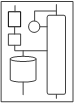
Herein, the Aspen models to the paper "Chemical recycling of plastic waste via production of ethylene from gasification syngas" are published. The model starts at syngas, as gasification was not modeled in Aspen Plus. Syngas is treated and fed into a methanation reactor. Ethylene is then produced via oxidative coupling of methane. The fractionation involves cryogenic distillation as well as CO2 capture. Latter one was modeled in a separate file.
249. LAPSE:2024.1758
Mitigation of Sugar Industry Wastewater Pollution: Efficiency of Lab-Scale Horizontal Subsurface Flow Wetlands
August 23, 2024 (v1)
Subject: Environment
Keywords: constructed wetlands, degradation, microbes, sugar industry, toxicity
Sugarcane accounts for around 80% of global sugar production. However, the sugar industry is known for producing significant amounts of organic wastewater with a high COD (5000−8000 mg/L) that severely pollutes the environment. A lab-scale trial was conducted to evaluate the efficacy of a horizontal subsurface flow wetland planted with Typha latifolia and Phragmites australis in removing pollutants from sugar industry wastewater. The wetland system was subjected to rigorous testing, operating at a high flow rate of 2.166 gallons per day and exposed to a high organic loading rate (3800 mg/L COD and 2470 mg/L BOD), as well as elevated levels of inorganic nitrogen, sulfate, and phosphate (100 mg/L, 80 mg/L, and 10 mg/L, respectively). Our findings indicate significant removal efficiencies, with the wetland system achieving removal rates of 88% for COD, 97% for BOD, 96% for total nitrogen, and 95% for sulfate. Remarkably, the system exhibited enhanced removal efficiency when exposed to dom... [more]
250. LAPSE:2024.1757
Geochemical Characteristics and Hydrocarbon Generation Potential of Coal-Measure Source Rocks in Julu Sag
August 23, 2024 (v1)
Subject: Other
Keywords: coal-measure gas, hydrocarbon generation evolution, Julu sag, source rock, tectonic evolution
To uncover the reservoir characteristics and enrichment law of coal-measure gas in Julu sag, Hebei Province, and achieve co-exploration and co-mining, it is necessary to conduct a comprehensive analysis. In this study, we investigated the characteristics of coal-measure gas accumulation in the Taiyuan Formation and Shanxi Formation in the Julu area. This was achieved by collecting data on coal-measure source rocks and organic geochemistry, which were then combined with regional geological conditions. This study indicates that the coal seams and shales of Shanxi Formation and Taiyuan Formation in the study area serve as the primary source rocks. The predominant macerals found in coal rock are vitrinite. Furthermore, the organic matter type present in shale is primarily categorized as type II2, with the organic matter maturity falling within the immature−mature stage. Based on the simulation results of tectonic-burial history, thermal evolution history, and hydrocarbon generation history... [more]
251. LAPSE:2024.1756
Failure Characteristics and Cooperative Control Strategies for Gob-Side Entry Driving near an Advancing Working Face: A Case Study
August 23, 2024 (v1)
Subject: Process Control
Keywords: coal pillar width, cooperative control strategies, double-yield model, gob-side entry driving near an advancing working face, stability of surrounding rock
Gob-side entry driving near an advancing working face can improve the recovery rate of coal resources and keep the balance between mining and development. However, the large displacement of the gob-side entry caused by the mining dynamics of abutment pressure challenges the safety and processes of coal mining. This article takes the 15102 tailentry of Xizhang Coal Mine in Changzhi City, Shanxi Province, as an example to study the stability of the coal pillar and the failure characteristics of the surrounding rock and proposes cooperative control strategies of surrounding rock stability. Field tests indicated that when the coal pillar width was 15 m, the displacements of the entry floor, roof, coal pillar side, and solid coal side were 1121 mm, 601 mm, 783 mm, and 237 mm, respectively. A meticulously validated numerical model, incorporating a double-yield model for the gob materials and calibrated parameters, was developed to investigate the stress changes and yield zone distribution ac... [more]
252. LAPSE:2024.1755
Information Gap Decision Theory-Based Robust Economic Dispatch Strategy Considering the Uncertainty of Electric Vehicles
August 23, 2024 (v1)
Subject: Energy Systems
Keywords: decision conservatism, electric vehicles (EVs), information gap decision theory (IGDT), Monte Carlo method, power system
With the development of renewable energy power systems, electric vehicles, as an important carrier of green transportation, are gradually having an impact on the power grid load curve due to their charging behavior. However, the significant influx of electric vehicles (EVs) and distributed power sources has led to multiple uncertainties, increasing the difficulty in making grid scheduling decisions. Traditional robust scheduling strategies tend to be overly conservative, resulting in poor economic performance. Therefore, this paper proposes a robust and economic dispatch strategy for park power grids based on the information gap decision theory (IGDT). Firstly, based on the probabilistic characteristics of the spatial and temporal distribution of EVs charging, the Monte Carlo method is used to generate typical electricity usage scenarios for EVs. Simultaneously, an economic dispatch model for the park power grid is established with the objective of minimizing operating costs. Taking in... [more]
253. LAPSE:2024.1754
Research on the Supercritical CO2 Extraction Process of Hetian Rose Essential Oil
August 23, 2024 (v1)
Subject: Materials
Keywords: extraction influencing factors, extraction pressure, extraction temperature, preprocessing method, rose essential oils, supercritical CO2 extraction
A longstanding concern in plant essential oil extraction is how to optimize extraction efficiency with limited materials. Supercritical CO2 extraction has been proven effective in enhancing the yield and efficiency of extracting plant essential oils. However, the impact of temperature, pressure, and co-solvent content on extracting Hetian rose essential oil remains unclear. There is a lack of research on the influence of pretreatment methods. This study focuses on investigating supercritical CO2 extraction of rose essential oils from Xinjiang Hetian. The research analyzes the effects of pressure and temperature on the extraction rate and validates the efficiency by calculating the solubility of essential oils in supercritical fluid. Under conditions of 35 MPa, 40 °C, 10 L/h, and a particle size of 0.8 mm, this study evaluates the extraction efficiency using Xinjiang Hetian rose materials pretreated with salt solutions at concentrations of 5%, 10%, and 20%, as well as enzyme solutions a... [more]
254. LAPSE:2024.1753
Efficient Identification Method for Power Quality Disturbance: A Hybrid Data-Driven Strategy
August 23, 2024 (v1)
Subject: System Identification
Keywords: disturbance identification, extreme learning machine (ELM), local mean decomposition (LMD) algorithm, power quality, wavelet packet transform (WPT) method
The massive integration of distributed renewable energy sources and nonlinear power electronic equipment has given rise to power quality issues such as waveform distortion, voltage instability, and increased harmonic components. Nowadays, the pollution of power quality is becoming increasingly severe, posing a potential threat to the security of the power grid and the stable operation of electrical equipment. Due to the presence of significant noise interference in the collected signals, existing methods still face issues such as low accuracy in disturbance identification and high computational complexity. To address these problems, this paper proposes a hybrid data-driven strategy that can significantly improve the accuracy and speed of identification. Firstly, the wavelet packet transform (WPT) method is employed to denoise the power disturbance signals. Subsequently, the local mean decomposition (LMD) algorithm is used to adaptively decompose the nonlinear and complex time series in... [more]
255. LAPSE:2024.1752
Numerical Simulation of Rock Vibration Response under Ultrasonic High-Frequency Vibration with High Confining Pressure
August 23, 2024 (v1)
Subject: Modelling and Simulations
Keywords: high-frequency vibration, rock crushing, rock response
As deep oil and gas resources and Carbon Capture and Storage (CCS) are developed, enhancing drilling efficiency in hard rock formations has emerged as a critical technology in oil and gas extraction. The advancement of ultrasonic, high-frequency vibration rock-breaking technology significantly facilitates efficient rock crushing. When subjected to ultrasonic high-frequency vibrations, the rock’s response is a crucial issue in implementing ultrasonic vibration rock crushing technology. This study employed numerical simulation and theoretical deduction methods, utilizing a multi-physics approach that couples solid mechanics with pressure acoustics. It integrated information on common influencing parameters of ultrasonic generators and reservoir rock properties to establish model parameters, analyze simulation results, and perform theoretical deductions. The research investigated the response patterns of different-sized rock samples under high-frequency ultrasound vibration excitation acr... [more]
256. LAPSE:2024.1751
Design and Analysis of Manufacturing Methods for Tiller Blades and Threshing Teeth in Bangladesh
August 23, 2024 (v1)
Subject: Food & Agricultural Processes
Keywords: agriculture, bending, forging, manufacturing, mechanization
Bangladesh is increasing agricultural mechanization to reduce labor-intensive drudgery and to address labor shortages in farming. Agricultural equipment, such as power tillers and threshers, are used to achieve this goal and require regular replacement of the spare parts that experience significant wear in use. Spare parts are currently imported at twice the cost of domestic ones. This paper supports the development of domestic manufacturing by analyzing the manufacturing processes for two fast-moving spare agricultural parts, tiller blades and threshing teeth, and providing a method to develop more efficient processes. The manufacturing processes, which focused on the design of forging and bending dies, reflect the constraints of the manufacturing equipment and stock materials available in Bangladesh. The die designs and manufacturing processes were verified by FEA simulations and by experimental testing. The experiments and simulations suggest that the spare parts should be made at e... [more]
[0.1 s]