

Browse
Subjects
Records with Subject: Modelling and Simulations

476. LAPSE:2024.1813
Computational Insight of Oleracone L, Portulacatone B, and Portulacatal from Portulaca oleracea L. as Potential Anticholinesterase Inhibitors for Alzheimer’s
August 23, 2024 (v1)
Subject: Modelling and Simulations
Keywords: ADME, Alzheimer’s disease, MM-PBSA, molecular docking, molecular dynamic, Portulaca oleracea L.
Alzheimer’s disease, characterized by a decline in cognitive functions, is frequently associated with decreased levels of acetylcholine due to the overactivity of acetylcholinesterase (AChE). Inhibiting AChE has been a key therapeutic strategy in treating Alzheimer’s disease, yet the search for effective inhibitors, particularly from natural sources, continues due to their potential for fewer side effects. In this context, three new alkaloids—oleracone L, portulacatone B, and portulacatal—extracted from Portulaca oleracea L., have recently shown promising anticholinesterase activity in vitro. However, no experimental or computational studies have yet explored their binding potential. This study represents the first comprehensive in silico analysis of these compounds, employing ADME prediction, molecular docking, molecular dynamics simulations, and MM-PBSA calculations to assess their therapeutic potential. The drug-likeness was evaluated based on Lipinski, Pfizer, Golden Triangle, and... [more]
477. LAPSE:2024.1810
Motion Characteristics and Distribution Laws of Particles in the Launching System with a Sequence-Change Structure
August 23, 2024 (v1)
Subject: Modelling and Simulations
Keywords: CFD-DEM, launching system, particle behavior, sequence-change space, unsteady gas–solid flow
There is a fundamental issue in the launching system with the modular charge technology, which is an unsteady gas−solid flow in the sequence-change space within a short period of time. It leads to complex particle behavior, causing the strong pulsation of particle energy released during the combustion process. As a result, a large initial pressure wave is generated, which damages the launching stability. In this work, a 3D gas−solid flow model is developed based on the computational fluid dynamics−discrete element method (CFD-DEM) model to analyze the particle behavior in the launching system with different numbers of modules. The rationality of the model is verified through the experiment. It is found that the particles near the cover of the rightmost module move out of the module rapidly and collide with the right face of the chamber, forming a retained particle layer. When particles are stationary, the distribution of particles consists of slope accumulations and horizontal accumula... [more]
478. LAPSE:2024.1807
Numerical Simulation of Rock Cracking Using Saddle Polycrystalline Diamond Compact Cutters Considering Confined Pressure and Mechanism of Speed Increase
August 23, 2024 (v1)
Subject: Modelling and Simulations
Keywords: cohesive, crack, finite element, PDC cutter, rock-breaking mechanism, Simulation
Geothermal energy, recognized as a clean energy source, has attracted widespread attention for its extraction. However, it is located in deep and complex geological formations, presenting a significant challenge to the drilling operations of existing Polycrystalline Diamond Compact (PDC) drill bits. To further understand the rock-breaking mechanism of PDC cutters in deep geological formations and improve rock-breaking efficiency, a finite element model employing the cohesive zone method was developed for a saddle-shaped PDC cutter (SC). This model was validated against experimental simulations, proving its capability to capture real rock crack initiation during the simulation process accurately. By analyzing the formation of cracks under cutting forces, the SC’s rock-breaking mechanism was explored and compared with conventional cutters (CCs), clarifying its advantages. Additionally, the model analyzed the effects of different confined pressures, back rake angles, and structural parame... [more]
479. LAPSE:2024.1802
Modeling and Optimizing Biocontrol in Wines: pH as a Modulator of Yeast Amensalism Interaction
August 23, 2024 (v1)
Subject: Modelling and Simulations
Keywords: mathematical modeling, process optimization, Wickerhamomyces anomalus, wine’s biocontrol, Zygosaccharomyces rouxii
The control of spoilage yeasts in wines is crucial to avoid organoleptic deviations in wine production. Traditionally, sulfur dioxide (SO2) was used to control them; nevertheless, SO2 influence on human health and its use is criticized. Biocontrol emerges as an alternative in wine pre-fermentation, but there is limited development in its applicability. Managing kinetics is relevant in the microbial interaction process. pH was identified as a factor affecting the interaction kinetics of Wickerhamomyces anomalus killer biocontrol on Zygosaccharomyces rouxii. Mathematical modeling allows insight into offline parameters and the influence of physicochemical factors in the environment. Incorporating submodels that explain manipulable factors (pH), the process can be optimized to achieve the best-desired outcomes. The aim of this study was to model and optimize, using a constant and a variable pH profile, the interaction of killer biocontrol W. anomalus vs. Z. rouxii to reduce the spoilage po... [more]
480. LAPSE:2024.1798
A Study on Effect Analysis and Process Parameter Optimization of Viscous Acid Acidification in a Porous Heterogeneous Carbonate Reservoir
August 23, 2024 (v1)
Subject: Modelling and Simulations
Keywords: acidizing layer selection, acidizing simulation, carbonate reservoir, porous heterogeneity, viscous acid
The homogeneous acid etching of conventional acid in porous heterogeneous carbonate reservoirs leads to a large amount of consumption in the near-wellbore area, which makes the acidification effect often not ideal. In order to improve the acidizing effect of porous heterogeneous carbonate reservoirs, viscous acid is used to increase the stimulation of the target block in this paper. Through systematic experiments, the adaptability of the viscous acid in the four layers of the M reservoir in the target block was evaluated, and the MD and ME layers suitable for acidizing stimulation were determined in combination with physical property analysis. Finally, based on the geological characteristics and experimental data of the preferred layers, a two-scale acid wormhole growth radial model was established, and the construction parameters of acidizing stimulation were optimized. The results show that (1) The preferred viscous acid system has a dissolution rate of more than 95% for the rock pow... [more]
481. LAPSE:2024.1784
Modeling and Simulation of the Induction Hardening Process: Evaluation of Gear Deformations and Parameter Optimization
August 23, 2024 (v1)
Subject: Modelling and Simulations
Keywords: distortions, heat treatment, induction, numerical analysis, topology optimization
This study aimed to analyze and optimize the thermal induction hardening process applied to toothed transmission gears, focusing on thermal aspects, structural deformation, and topology optimization, while exploring the feasibility of various materials and operating conditions. The research simulated thermal and deformation behavior using a computer model, comparing results with experimental data through the Ansys® platform 2022 R1. The methodology encompassed thermal and deformation analyses, topology optimization to identify removable regions without compromising part integrity, and a sensitivity study to evaluate the different materials and operating conditions. This study validates the precision of computational models in predicting thermal and deformation behavior in toothed gears under thermal induction hardening, introducing topology optimizations and alternative materials, and providing novel perspectives for the more efficient and cost-effective manufacturing of these componen... [more]
482. LAPSE:2024.1777
Modeling Study on Heat Capacity, Viscosity, and Density of Ionic Liquid−Organic Solvent−Organic Solvent Ternary Mixtures via Machine Learning
August 23, 2024 (v1)
Subject: Modelling and Simulations
Keywords: density, group contribution method, heat capacity, IL-organic solvent–organic solvent ternary systems, Machine Learning, viscosity
Physicochemical properties of ionic liquids (ILs) are essential in solvent screening and process design. However, due to their vast diversity, acquiring IL properties through experimentation alone is both time-consuming and costly. For this reason, the creation of prediction models that can accurately forecast the characteristics of IL and its mixtures is crucial to their application. This study proposes a model for predicting the three important parameters of the IL-organic solvent−organic solvent ternary system: density, viscosity, and heat capacity. The model incorporates group contribution (GC) and machine learning (ML) methods. A link between variables such as temperature, pressure, and molecular structure is established by the model. We gathered 2775 viscosity, 6515 density, and 1057 heat capacity data points to compare the prediction accuracy of three machine learning methods, namely, artificial neural networks (ANNs), extreme gradient boosting (XGBoost), and light gradient boos... [more]
483. LAPSE:2024.1776
Network Traffic Anomaly Detection Based on Spatiotemporal Feature Extraction and Channel Attention
August 23, 2024 (v1)
Subject: Modelling and Simulations
Keywords: anomaly detection, channel attention, deep learning, dilated convolution, GRU, network security
To overcome the challenges of feature selection in traditional machine learning and enhance the accuracy of deep learning methods for anomaly traffic detection, we propose a novel method called DCGCANet. This model integrates dilated convolution, a GRU, and a Channel Attention Network, effectively combining dilated convolutional structures with GRUs to extract both temporal and spatial features for identifying anomalous patterns in network traffic. The one-dimensional dilated convolution (DC-1D) structure is designed to expand the receptive field, allowing for comprehensive traffic feature extraction while minimizing information loss typically caused by pooling operations. The DC structure captures spatial dependencies in the data, while the GRU processes time series data to capture dynamic traffic changes. Furthermore, the channel attention (CA) module assigns importance-based weights to features in different channels, enhancing the model’s representational capacity and improving its... [more]
484. LAPSE:2024.1767
An Improved Porosity Calculation Algorithm for Particle Flow Code
August 23, 2024 (v1)
Subject: Modelling and Simulations
Keywords: algorithm, discrete element particle, PFC, porosity
The widely used discrete-element particle flow software PFC’s (PFC 7.0 and previous versions) algorithm for calculating porosity is not sufficiently accurate. Because of this, when the particles are densely packed, the solution to the equation produces an algorithm exception for odd calculations of porosity, which results in the inability to calculate the results. This paper, based on a Darcy seepage model of fluid flow through a granular bed, analyzed the shortcomings of the two porosity calculation methods of PFC and the function analysis method. Combining this analysis with the theory of computer graphics, a new and efficient porosity calculation algorithm was proposed. The result showed that the new proposed porosity calculation algorithm calculated a more accurate and reasonable porosity field and made the iterative solution of the CFD equation more stable. This method makes porosity-related models of PFC more accurate. The algorithm can be not only used to calculate porosity, but... [more]
485. LAPSE:2024.1764
Method for the Quantitative Evaluation of Low-Permeability Reservoir Damage in the East China Sea Based on Experimental Evaluation and Modeling Calculation
August 23, 2024 (v1)
Subject: Modelling and Simulations
Keywords: dynamic damage test, invasion depth, permeability damage rate, skin factor
Reservoir damage is a key factor affecting reservoir evaluation, ensuring stable reservoir production and improving the utilization rate of oil and gas resources. At present, the evaluation of damage caused by reservoir drilling fluid is too empirical, and there is a lack of methods for the high-precision evaluation of reservoir damage after drilling fluid invasion and pollution. In a block in the East China Sea, the production capacity is limited due to an excessive balance of drilling fluid and long exposure time. In order to ensure safe drilling, the dynamic damage mechanism of drilling fluid during drilling was analyzed. The core of the main reservoir of well XH-1 in a block in the East China Sea was selected for carrying out an experiment evaluating the dynamic damage caused by drilling fluid. According to the experimental results, the damage rate of reservoir permeability caused by drilling fluid invasion ranges between 58.25 and 87.25%, and the overall dynamic damage degree can... [more]
486. LAPSE:2024.1763
Fluid Modeling of a Non-Thermal Plasma with Dielectric Barrier Discharge and Argon as a Diluent Gas
August 23, 2024 (v1)
Subject: Modelling and Simulations
Keywords: atmospheric pressure plasma, dielectric barrier discharge, fluid flow simulation, non-thermal plasma, plasma physics, plasma simulation
Non-thermal plasma (NTP) conversion applications have become an emerging technology of increasing global interest due to their particular ability to perform at atmospheric pressure and ambient temperature. This study focuses on a specific case of a dielectric barrier discharge NTP reactor for carbon dioxide conversion with the usage of argon as diluent gas. The plasma computations in COMSOL® Multiphysics are compared to experimental results and coupled with previous thermodynamic characterization of argon species and fluid dynamic calculations. The model is defined as a time-dependent study with a 2D-Geometry of pure argon, with both fluid flow and plasma phenomena. Firstly, the model showcases an accurate understanding of the plasma physics involved, in the form of electron density, excited argon, argon ions, and mean electron energy. It also allows a direct comparison of the velocity, vorticity, pressure, and dynamic viscosity results with fluid flow computations. Secondly, the impac... [more]
487. LAPSE:2024.1677
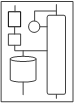
Models of Chemical recycling of plastic waste via production of ethylene from gasification syngas
August 23, 2024 (v1)
Subject: Modelling and Simulations
Keywords: Carbon Capture, chemical recycling, DGA, Distillation, methanation, oxidative coupling of methane
Herein, the Aspen models to the paper "Chemical recycling of plastic waste via production of ethylene from gasification syngas" are published. The model starts at syngas, as gasification was not modeled in Aspen Plus. Syngas is treated and fed into a methanation reactor. Ethylene is then produced via oxidative coupling of methane. The fractionation involves cryogenic distillation as well as CO2 capture. Latter one was modeled in a separate file.
488. LAPSE:2024.1752
Numerical Simulation of Rock Vibration Response under Ultrasonic High-Frequency Vibration with High Confining Pressure
August 23, 2024 (v1)
Subject: Modelling and Simulations
Keywords: high-frequency vibration, rock crushing, rock response
As deep oil and gas resources and Carbon Capture and Storage (CCS) are developed, enhancing drilling efficiency in hard rock formations has emerged as a critical technology in oil and gas extraction. The advancement of ultrasonic, high-frequency vibration rock-breaking technology significantly facilitates efficient rock crushing. When subjected to ultrasonic high-frequency vibrations, the rock’s response is a crucial issue in implementing ultrasonic vibration rock crushing technology. This study employed numerical simulation and theoretical deduction methods, utilizing a multi-physics approach that couples solid mechanics with pressure acoustics. It integrated information on common influencing parameters of ultrasonic generators and reservoir rock properties to establish model parameters, analyze simulation results, and perform theoretical deductions. The research investigated the response patterns of different-sized rock samples under high-frequency ultrasound vibration excitation acr... [more]
489. LAPSE:2024.1750
Optimization of Fine-Fracture Distribution Patterns for Multi-Stage and Multi-Cluster Fractured Horizontal Wells in Tight Gas Reservoirs
August 23, 2024 (v1)
Subject: Modelling and Simulations
Keywords: fracture distribution pattern, horizontal well, multi-stage and multi-cluster fracturing, numerical simulation optimization, tight gas reservoirs
The efficient development of tight gas reservoirs is significantly enhanced by multi-stage and multi-cluster fracturing techniques in conjunction with horizontal well technology, leading to substantial increases in reservoir drainage volume and individual well productivity. This study presents a tailored fine-fracturing approach for horizontal wells in tight gas reservoirs, supported by a gas−water two-phase numerical simulation model. Utilizing the orthogonal experimental design method, we simulated and optimized various fracture distribution schemes to refine fracturing parameters for maximum efficiency. The optimization was further validated through a comparison with actual well completion and development dynamics. The quantitative results highlight the optimal fracture distribution for horizontal wells, with a horizontal section length of 1400 to 1600 m and 14 to 16 fracturing stages. The pattern features a “dense at both ends and sparse in the middle” strategy, with stage spacing... [more]
490. LAPSE:2024.1741
Research and Application of Treatment Measures for Low-Yield and Low-Efficiency Coalbed Methane Wells in Qinshui Basin
August 23, 2024 (v1)
Subject: Modelling and Simulations
Keywords: coalbed methane, fracturing simulation, increase production, low-yield and low-efficiency well, production system optimization
China is rich in high-grade coalbed methane resources, accounting for one-third of the total amount of coalbed methane resources. Qinshui Basin is the main high ranking coalbed methane mining basin in China. In the early stage of CBM development, low-production and low-efficiency wells were formed in the process of block development because of an insufficient understanding of reservoir geological conditions. The existence of low-yield and low-efficiency wells with low output and a poor development benefit seriously restricts the efficient development of coalbed methane. In order to improve the overall development efficiency of coalbed methane fields, how to revitalize low-yield and low-efficiency wells is the main problem facing the development process of coalbed methane. With the deepening understanding of the study area geology, the formation of low-yield and low-efficiency wells has been basically identified. With the advancement of development technology, developers have the abilit... [more]
491. LAPSE:2024.1736
Study on the Influence of Working Characteristics of Centripetal Pump Based on VOF/Mixture Model
August 23, 2024 (v1)
Subject: Modelling and Simulations
Keywords: centripetal pump, numerical simulation, two-phase flow, working characteristics
Aviation fuel contamination can seriously affect aircraft flight safety, and the centripetal pump is the core component of aviation fuel purification equipment. The performance of centripetal pumps is highly demanded for purification equipment. The operating parameters of centripetal pumps significantly affect the internal flow characteristics, which affects the performance of centripetal pumps. However, the flow characteristics of a centripetal pump influenced by the operating parameters have not yet been elaborated upon. In this research, a three-dimensional numerical simulation of the air-fuel two-phase flow field inside a centripetal pump was carried out using the VOF/Mixture model to investigate the effects of three relatively independent physical quantities, namely, fuel flow, outlet fuel discharge pressure, and rotational speed, on the operating characteristics of the centripetal pump. The flow law inside the flow channel of a centripetal pump was analyzed based on a rotating fl... [more]
492. LAPSE:2024.1733
Computational Fluid Dynamics Modeling of Multiphase Flows in a Side-Blown Furnace: Effects of Air Injection and Nozzle Submerged Depth
August 23, 2024 (v1)
Subject: Modelling and Simulations
Keywords: injection angle, injection velocity, multiphase flow, nozzle submerged depth, side-blown smelting furnace
The side-blown smelting process is becoming popular in the modern metallurgical industry due to its large potential for dealing with complex materials. To further enhance its efficiency, it is essential to comprehensively understand the complex gas−liquid flow behavior in the smelting bath. In this study, the volume-of-fluid method is employed to establish computational fluid dynamics modeling on a 1:5 scaled model of a side-blown furnace. The simulation was validated against the experimental results. Notably, the influences of the nozzle’s submerged depth, injection velocity, and angle were systematically investigated. The results show that increasing the injection velocity from 29.44 to 58.88 m/s resulted in 52.97%, 116.67%, 500.00%, and 5.88% increases in the interface area, liquid velocity, liquid turbulent kinetic energy, and gas penetration depth, respectively. The maximum gas−liquid interface area, gas penetration depth, velocity, and turbulence of the liquid were found at an in... [more]
493. LAPSE:2024.1729
On the Feasibility of Deep Geothermal Wells Using Numerical Reservoir Simulation
August 23, 2024 (v1)
Subject: Modelling and Simulations
Keywords: closed-loop geothermal, enhanced geothermal systems, geothermal, hot dry rock, numerical simulation, reservoir modeling
This study examines the geothermal energy extraction potential from the basement rock within the Denver−Julesburg Basin, focusing on the flow performance and heat extraction efficiency of different geothermal well configurations. It specifically compares U-shaped, V-shaped, inclined V-shaped, and pipe-in-pipe configurations against enhanced geothermal system setups. Through numerical modeling, we evaluated the thermal behavior of these systems under various operational scenarios and fracture conditions. The results suggest that while closed-loop systems offer moderate temperature increases, Enhanced geothermal system configurations show substantial potential for high-temperature extraction. This underscores the importance of evaluating well configurations in complex geological settings. The insights from this study aid in strategic geothermal energy planning and development, marking significant advancements in geothermal technology and setting a foundation for future explorations and o... [more]
494. LAPSE:2024.1725
Toward Enhanced Efficiency: Soft Sensing and Intelligent Modeling in Industrial Electrical Systems
August 23, 2024 (v1)
Subject: Modelling and Simulations
Keywords: industrial electrical systems, intelligent modeling, machine-learning, soft sensing, state estimation
This review article focuses on applying operation state detection and performance optimization techniques in industrial electrical systems. A comprehensive literature review was conducted using the preferred reporting items for systematic reviews and meta-analyses (PRISMA) methodology to ensure a rigorous and transparent selection of high-quality studies. The review examines in detail how soft sensing technologies, such as state estimation and Kalman filtering, along with hybrid intelligent modeling techniques, are being used to enhance efficiency and reliability in the electrical industry. Specific case studies are analyzed in areas such as electrical network monitoring, fault detection in high-voltage equipment, and energy consumption optimization in industrial plants. The PRISMA methodology facilitated the identification and synthesis of the most relevant studies, providing a robust foundation for this review. Additionally, the article explores the challenges and research opportunit... [more]
495. LAPSE:2024.1720
A Study on Fault Localization Method of Three-Terminal Multi-Section Overhead Line−Cable Hybrid Line Using MEEMD Combined with Teager Energy Operator Algorithm
August 23, 2024 (v1)
Subject: Modelling and Simulations
Keywords: fault localization, hybrid line, modified ensemble empirical mode decomposition (MEEMD), Teager energy operator (TEO), triple-ended multistage
An improved fault localization method combining total aggregate empirical modal decomposition (MEEMD) and Teager energy operator (TEO) is proposed to address the fault localization issue of three-terminal multi-segment overhead line−cable hybrid transmission lines. This method solves the fault localization problem caused by wave impedance discontinuity in hybrid lines. First, the MEEMD algorithm, which improves modal aliasing, and the Teager energy operator, which reflects transient energy changes, are combined for the accurate detection of faulty traveling wave heads. The fault line section determination condition within the fault branch is used to determine the overhead line section or cable section where the fault is located after determining the faulty branch line. This condition is based on the time difference between the initial traveling wave of the fault arriving at each end measurement point and the T-node. Ultimately, the fault distance is determined using the double-ended tr... [more]
496. LAPSE:2024.1717
Pressure Transient and Production Analysis of Fractured Vertical Wells in Tight Sand Gas Reservoirs Considering Threshold Pressure Gradient, Phase-Change Phenomenon, and Stress Sensitivity
August 23, 2024 (v1)
Subject: Modelling and Simulations
Keywords: fractured well, phase-change phenomenon, pressure response, stress sensitivity, threshold pressure gradient
The productivity and pressure response of the tight sand gas wells are influenced by multiple flow mechanisms, such as threshold pressure gradient, phase-change phenomena, and stress sensitivity. Understanding the sensitivity of these factors is crucial for the effective development of tight sand gas reservoirs. This study aims to clarify the sensitivity of various factors affecting the productivity and pressure response of tight sand gas wells. Based on the percolation theory of tight sand gas reservoirs, we considered stress sensitivity, threshold pressure gradient, and phase-change phenomena to derive an unsteady mathematical model of a fractured well with an infinite boundary, and a point source solution was obtained. The proposed model was solved using series function properties, variable substitution, perturbation technique, Poisson superposition formula, Laplace transform, and numerical inversion. The influence of several important parameters on pressure response and productivit... [more]
497. LAPSE:2024.1711
Management of Production Processes in a Heating Company
August 23, 2024 (v1)
Subject: Modelling and Simulations
Keywords: combined production of electricity and heat, heating industry, non-combined production of electricity and heat, profit-maximizing objective function, technical–economic model
This paper is focused on researching the behaviour of heating companies in connection with current developments in the electricity market and flexibility in the context of market behaviour. The work assesses the increase in profitability through the creation of a technical−economic model using an objective function with profit maximization. The objective of the paper is to present the procedure and methodology for creating a model using the basic scheme of production processes integrated into the system platform. The result of the work is a comparative analysis of modelled cases of implemented operation deployment according to a defined period and modelling modes on selected time series. The description of individual outputs demonstrates the economic advantage of using combinations of modes of combined electricity and heat production, and non-combined electricity and heat production, including the use of heat-suppression mode because of overproduction of electricity.
498. LAPSE:2024.1700
Experimental and Numerical Studies of Modified Polyurethane Diffusion Behavior in Vertical Cracks Based on Line Source Grouting
August 23, 2024 (v1)
Subject: Modelling and Simulations
Keywords: model test, modified polyurethane, numerical simulation, rough crack, vertical crack
The diffusion behavior of polyurethane slurry in vertical cracks, especially rough cracks, is not clear and needs to be studied to provide an effective reference for grouting design. In this study, the diffusion morphology and characteristics of modified polyurethane slurry in vertical cracks were investigated through modeling tests using the line source grouting method. Based on the viscous time-varying characteristics of the slurry, a numerical model of slurry diffusion was established using the joint FVM-VOF method. The numerical model was found to be accurate and reliable compared to the test results. Finally, building upon the basic theory of three-dimensional structure, a rough surface model with Gaussian distribution, more consistent with reality, was established. A numerical simulation system was then employed to study the diffusion morphology and characteristics of slurry in different rough cracks. The results indicate that the diffusion of modified polyurethane slurry within... [more]
499. LAPSE:2024.1688
Analysis of Carbon Emission Reduction with Using Low-Carbon Demand Response: Case Study of North China Power Grid
August 23, 2024 (v1)
Subject: Modelling and Simulations
Keywords: carbon emission factor, empirical analysis, low-carbon demand response, low-carbon optimization, the simulation of power system operation
The power sector is the single industry with the largest carbon emission in China, the carbon emission of which accounts for more than 40% of China’s total carbon emissions. In relevant research on the simulation of power system operation, current studies focus more on energy conservation and economical operation, while few consider the low-carbon optimization of the power system from the perspective of carbon emissions. In addition, in relevant research on carbon reduction in the power system, current studies focus more on controlling the direct carbon emission of the source side and less on the indirect carbon emissions of the load side, which focus on the reverse effect of a user’s electricity consumption behavior on the carbon reduction goals of the power system. This article delved into a deterministic simulation model of power system operation based on time series load curves and proposed a carbon reduction mechanism called the low-carbon demand response mechanism, which guides u... [more]
500. LAPSE:2024.1687
Study on the Conveying Characteristics of a Hanged Harvester Vibrating Screen for Ligusticum Chuanxiong
August 23, 2024 (v1)
Subject: Modelling and Simulations
Keywords: Chuanxiong harvester, conveying characteristics, kinematic analysis, vibrating screen
The problem of soil and Chuanxiong tuber congestion on vibrating screens usually exists during the Chuanxiong mechanized harvesting process. To address this problem, the conveyance performance of a crankshaft rocker vibrating screen was studied. By establishing and solving the dynamics and kinematics equations for the crankshaft rocker vibrating mechanism and Chuanxiong soil residue, the acceleration of the vibrating screen and Chuanxiong-soil residue was studied. The sliding speed, motion process, and conveying distance of the Chuanxiong soil residue were also analyzed. The theoretical analysis results indicated that the acceleration of the vibrating screen depends on the rod lengths of the vibrating mechanism and the crank rotational speed and position. The displacement of the Chuanxiong-soil residue along the positive sliding direction in a cycle was more significant than that of the negative sliding direction. The appropriate advancement speed of the harvester was also obtained. Th... [more]
[Show All Subjects]
[0.1 s]